Beijing Robot Games: Humanoids Outrun Usain Bolt, but Dexterity Remains the Real Test
The second World Humanoid Robot Games concluded in Beijing with record-breaking sprints, but experts say the true challenge for investors lies in the machines’ ability to handle fine motor skills for industrial deployment.
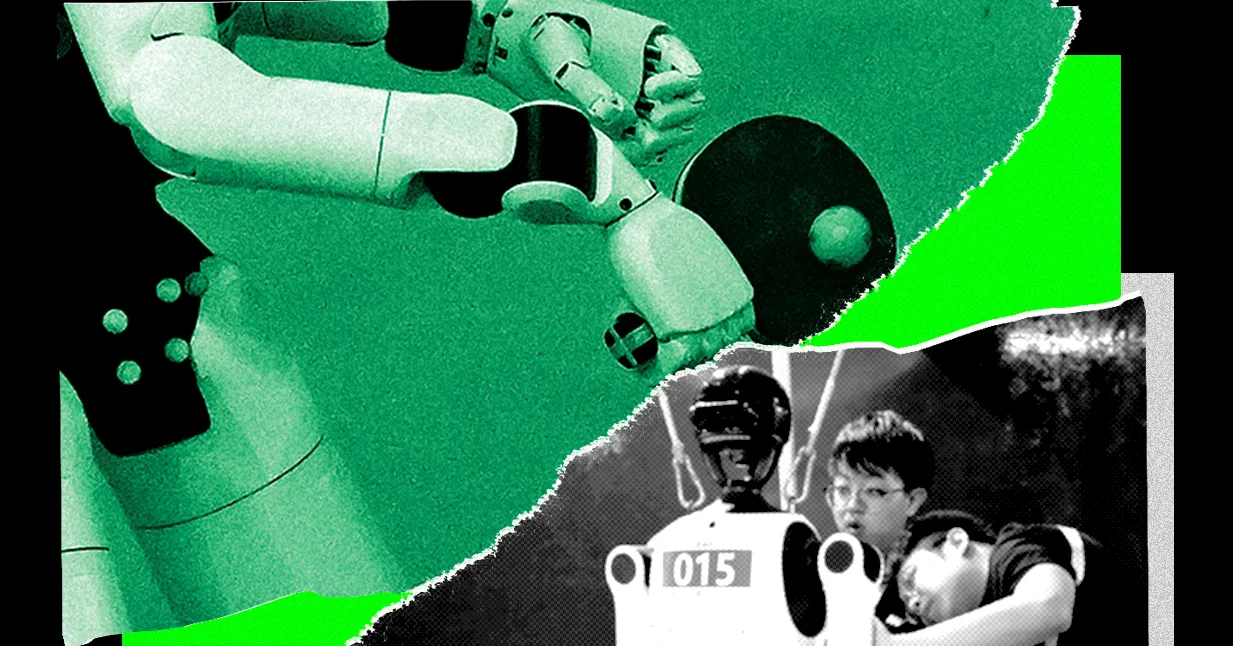
The second World Humanoid Robot Games concluded in Beijing on 26 August, bringing together more than 600 teams and over 2,000 robots from 16 countries. Held at the National Speed Skating Oval, the event served as a showcase for the latest hardware and algorithmic innovations in the rapidly expanding robotics sector. With China home to more than 100 humanoid robot manufacturers, the games highlighted the country’s significant industrial momentum in the field.
The headline-grabbing moments involved athletic feats that surpassed human records. The Tiangong Ultra, developed by the Beijing Humanoid Robot Innovation Center, completed the 100-metre dash in 8.86 seconds, beating Usain Bolt’s human world record of 9.58 seconds. Honor’s robot, named Lightning, also clocked a time of 9.47 seconds during the competition. The Tiangong Ultra further demonstrated its versatility by winning the long jump event with a distance of 7.97 metres.
Beyond gross motor skills, the games introduced new categories designed to test manual dexterity and object manipulation. These challenges included plugging cables into sockets, depositing trash in a mock bedroom, block building, and “tweezer bean picking.” Robotics experts note that advanced manipulation is often considered the “holy grail” of the field, as it requires navigating complex variables such as friction and slippage that are more difficult to predict than the mechanics of sprinting.
The progression from simple locomotion to fine motor control reflects the industry’s push toward practical deployment in industrial and retail settings. Galbot, for instance, participated in a supermarket scenario competition focused on stocking shelves. A representative for the company stated that the goal is to move from structured environments toward open, unpredictable real-world applications where robots must understand, adapt, and collaborate with humans.
Hardware advances, particularly in compact, high-power motors, have enabled robots to maintain dynamic balance at high speeds. However, the distinct, non-human running gaits observed in some competitors suggest that algorithms trained in simulation are prioritising optimal stability over biomechanical mimicry. While some robots required remote operation, the event demonstrated that machines are becoming deft enough to grasp tiny objects using tools, a significant step for automation in factories and warehouses.
Despite the impressive displays, the extent of autonomous control varies across different events. Some footage indicated that humans were remotely operating certain robots, a caveat that remains relevant for investors assessing the true level of technological maturity. Nevertheless, the games underscored a growing global interest in robotics as a solution for labour-intensive tasks, with companies like Unitree recently going public to capitalise on the trend.