Assam tea sector faces structural break as climate and wage gaps drive workforce exit
With labour costs now constituting 60% of production expenses and absenteeism exceeding 50% in key districts, the North Eastern Tea Association warns that the region’s dominant tea industry is entering a downward spiral driven by heat stress and stagnant market prices.
The tea industry in Assam, which accounts for 52% of India’s total output, is grappling with a compounding crisis that threatens the viability of its traditional labour-intensive model. Recent floods and a devastating storm have damaged more than 50 tea gardens in the upper districts, disrupting operations for weeks. This physical damage has compounded an existing economic squeeze, where oversupply has depressed market prices while the costs of fertiliser and fuel continue to climb.
The primary driver of the current instability is a severe labour shortage. According to statistics from the North Eastern Tea Association (NETA), labour costs now represent roughly 60% of all production costs. Despite this, plantation workers earn between 250 and 280 Indian Rupees per day, a figure that unions argue is significantly below the 350 to 500 Rupees required to reflect the rising cost of living. Consequently, absenteeism in some tea-growing districts has reportedly reached more than 50%, as experienced workers migrate to construction, urban sectors, and government employment schemes that offer more stable returns.
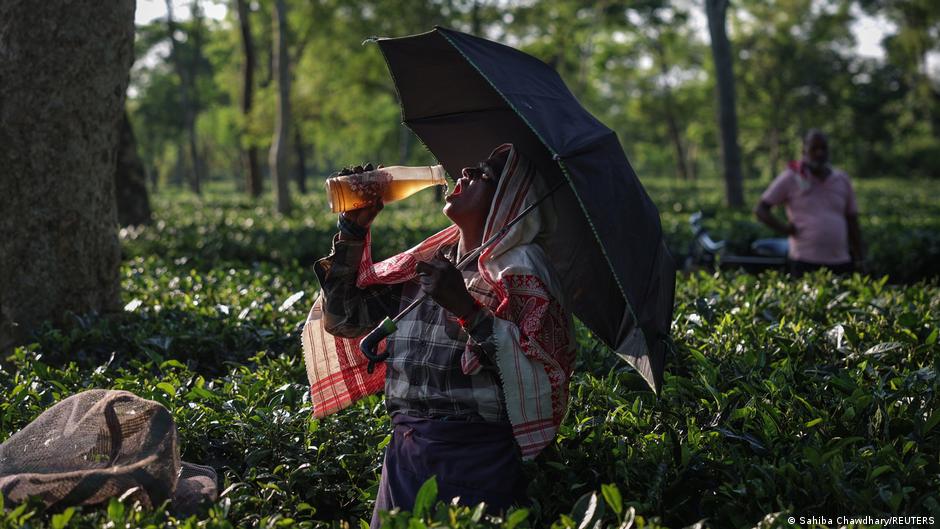
Climate change is exacerbating the economic pressures by directly impacting yields and worker welfare. In major tea-growing districts, temperatures now regularly reach between 36°C and 40°C, placing both plants and workers under severe stress. Research indicates that for every 1°C rise in temperature, tea yields in India decrease by approximately 87 kilograms per hectare. For workers spending hours outdoors, this heat has led to reported cases of dehydration, exhaustion, and fainting, further reducing the attractiveness of the profession.
The departure of skilled labour is also affecting product quality. Bidyananda Barkakoty, a tea farmer adviser at NETA and former vice-chairman of the Tea Board of India, noted that good tea depends on the careful plucking of specific leaves. As experienced workers leave, estates are increasingly relying on temporary or mechanical harvesting, which can reduce quality and further depress prices. This creates a difficult downward spiral: falling productivity reduces revenues, limiting the capital available for replanting, irrigation, and climate adaptation measures.
Small growers, who produce nearly half of Assam’s tea, face disproportionate risks. They often lack bargaining power and are forced to sell freshly picked leaves to factories at low prices. Sanjiv Gogoi, owner of a 162-hectare estate, highlighted that the widening gap between production costs and market realisation prices is the most fundamental concern for producers.
Industry veterans are calling for structural reforms to avert long-term decline. Harkirat Singh Sidhu, a planter with over 55 years of experience, argued that mechanisation is becoming a necessity rather than an option. He advocated for regenerative farming practices, including upgraded drainage networks, shade canopy management, and reduced reliance on chemical pesticides, to build resilience against a changing climate.
The sustainability of the industry now hinges on whether it can offer a viable future to the younger generation. Barkakoty stated that workers will remain only if they see prospects for better incomes and living conditions, potentially through skilled roles created by new technology. Without these institutional and economic adjustments, the backbone of India’s tea production remains at risk.