Amazon to expand Prime Air drone delivery to 500 US neighborhoods by 2026
Amazon plans a sixfold increase in its Prime Air drone delivery network, intensifying competition with Walmart, Zipline, and DoorDash while facing growing community concerns over noise and safety.
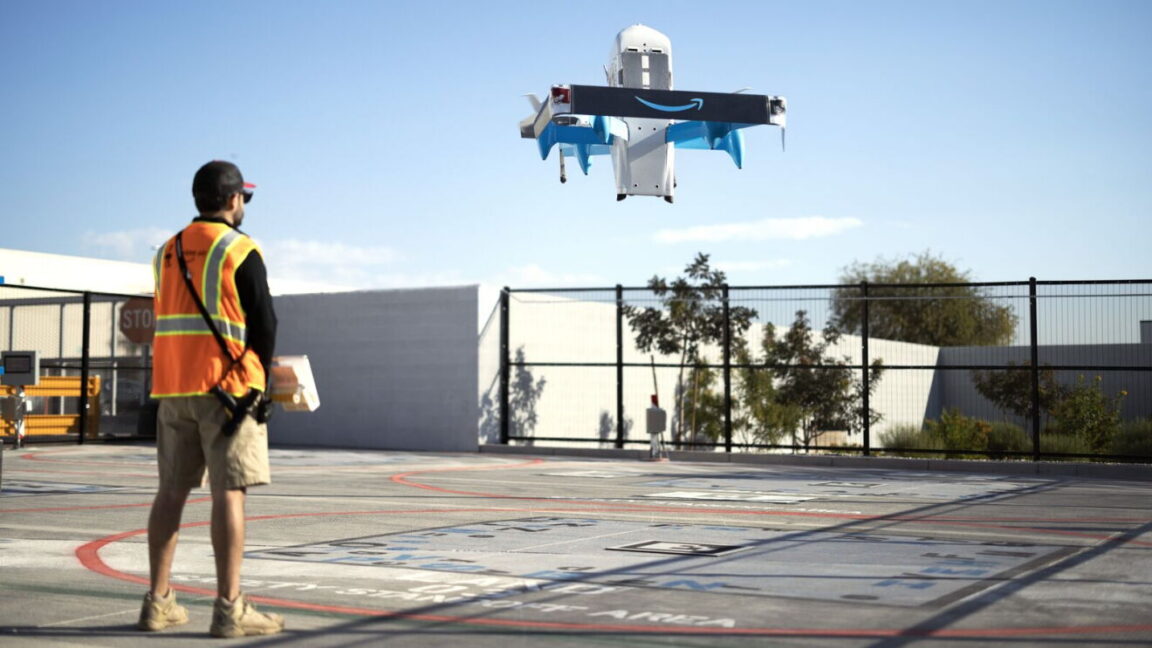
Amazon has announced plans to expand its Prime Air delivery drone service to nearly 500 cities and towns across the United States by the end of 2026. This represents a sixfold increase from its current operations, which are presently based in 10 cities across seven states. The company stated on 19 August that it will soon launch services in the metropolitan areas of Chicago, Cleveland, Atlanta, Syracuse, New York, and Boise, Idaho, with further expansions scheduled later in the year.
Each Prime Air site covers an area of approximately 175 square miles, offering delivery times ranging from 30 to 60 minutes. The service is designed to handle items weighing five pounds or less that fit within a large shoebox, relying on battery-electric power to potentially lower emissions and costs for last-mile deliveries. However, operational capabilities remain limited by weather conditions, as strong winds, heavy rain, snow, and extreme cold can prevent flights.
The expansion intensifies competition in the US logistics sector, where rivals are also scaling up their autonomous delivery operations. Walmart, which has partnered with Wing and Zipline, recently surpassed one million drone deliveries and aims to expand its service to more than 270 stores by 2027. Zipline has announced a partnership with Uber to scale up to one million drone deliveries per day by the end of 2029, building on its existing global delivery volume of more than 2.7 million. Additionally, DoorDash received FAA Part 135 certification in July to launch its own in-house drone program, DoorDash Air, though it remains in the early phases of design and planning.
Despite the logistical benefits, the rapid growth of drone delivery has triggered significant community concerns regarding noise pollution, privacy, and safety. Residents in serviced areas have reported hearing drones multiple times a day, with some describing the sound as comparable to a leaf blower or small helicopter hovering overhead. In Richardson, Texas, residents held a public protest over drone noise in June, while others have filed complaints with the Federal Aviation Administration.
Safety incidents have also drawn regulatory attention. Amazon Prime Air operations have led to several accidents, including a collision with an apartment building in Richardson, Texas, in February 2026, and previous crashes involving construction cranes and overhead cables in Arizona and Texas. David Carbon, vice president of Prime Air at Amazon, acknowledged in an internal meeting that real-world performance initially fell short of algorithmic expectations. In contrast, Zipline maintains a strong safety record, with backup parachutes having proven useful in preventing injuries during minor incidents.
Amazon has addressed privacy concerns by stating that its drones use onboard cameras and sensors solely for navigation and obstacle detection, with no live camera feeds monitored by humans. The company emphasises its commitment to public outreach and engagement with local communities. As the FAA continues to monitor the sector, the total number of registered noise complaints for drones remains relatively low compared to helicopters and fixed-wing aircraft, though this metric is expected to evolve as nationwide operations expand.