NASA scraps Swift rescue mission as Link satellite struggles with control issues
The robotic Link satellite will not boost the ageing observatory’s orbit, leaving the $500 million mission to burn up in the atmosphere later this year.
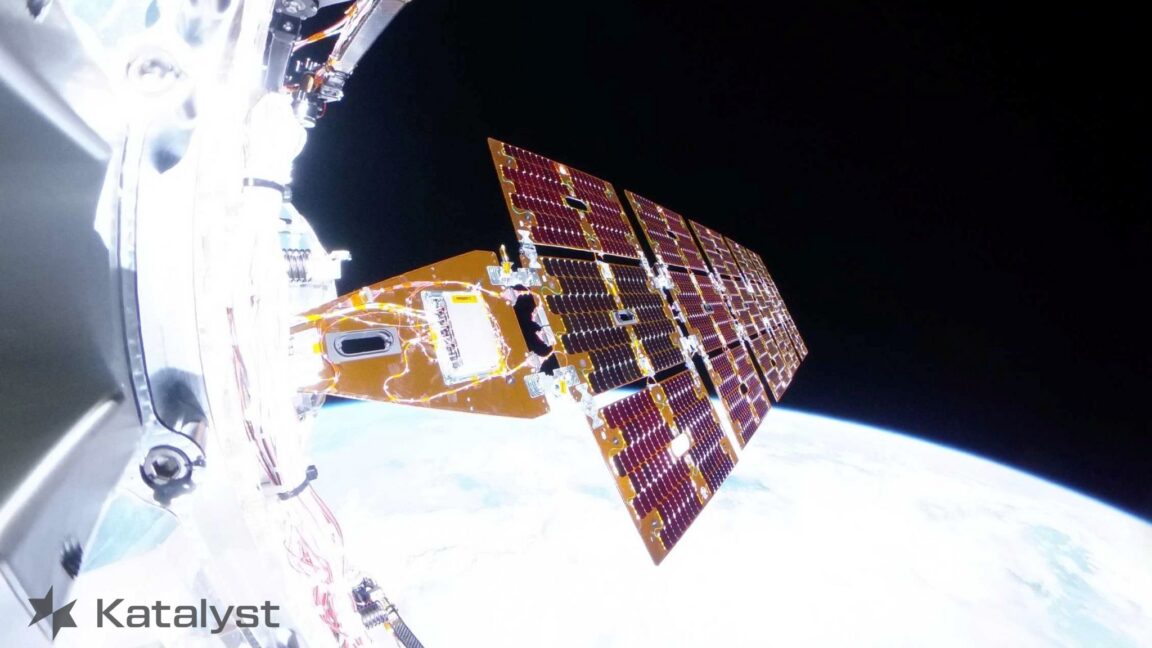
NASA and Katalyst Space Technologies have cancelled a robotic mission to rescue the Swift gamma-ray observatory from re-entry. The Link satellite, launched on 3 July to capture and boost Swift’s orbit, has suffered ongoing attitude control issues that prevent the rescue. Consequently, the Swift Observatory is expected to re-enter Earth’s atmosphere and burn up later this year.
The Link satellite, approximately the size of a refrigerator and equipped with three xenon-fuelled electric thrusters, was designed to fly up to Swift, capture it with robotic arms, and boost its orbit. However, in late July, the spacecraft spun out of control when two of its three reaction wheels stopped working. Katalyst also reported issues with the cold gas thrusters used for finer pointing control, leaving the satellite’s low-impulse plasma thrusters as the only means of regaining orientation.
Katalyst stated that the spacecraft remains operational and may still attempt a close-in navigation demonstration near Swift, though the primary rescue objective is abandoned. The company said it will continue working to extract technical and operational value from the spacecraft, assessing what milestones remain ahead.
NASA Administrator Jared Isaacman defended the decision to proceed with the mission despite the tight nine-month development schedule. He described it as a "smart risk" that yielded valuable lessons, noting that NASA should be willing to move quickly when the potential return is worth it. The contract awarded to Katalyst was for $30 million, a timeline significantly shorter than the usual multi-year development period for first-of-its-kind spacecraft.
The Swift Observatory is a $500 million astrophysics mission that has operated for nearly 22 years, far exceeding its original two-year design life. It is critical for detecting and studying gamma-ray bursts, the most powerful explosions in the known universe, but lacks its own thrusters to maintain orbit. A rescue effort like Katalyst’s Link mission was the only way to keep the observatory going.
Katalyst is one of several US companies developing satellite servicing technologies, including rendezvous sensors and robotic arms, intended for future in-space repair and refuelling missions. Shawn Domagal-Goldman, director of NASA’s astrophysics division, stated that building and operating the mission has strengthened America’s space industry pipeline, advancing in-space servicing capabilities in new ways.