Al Jazeera's Reframe explores links between colonialism, capitalism and modern conflict
In a recent episode of the podcast, Varsha Gandikota-Nellutla of the Progressive International discusses systemic economic change and degrowth with Professor Hickel
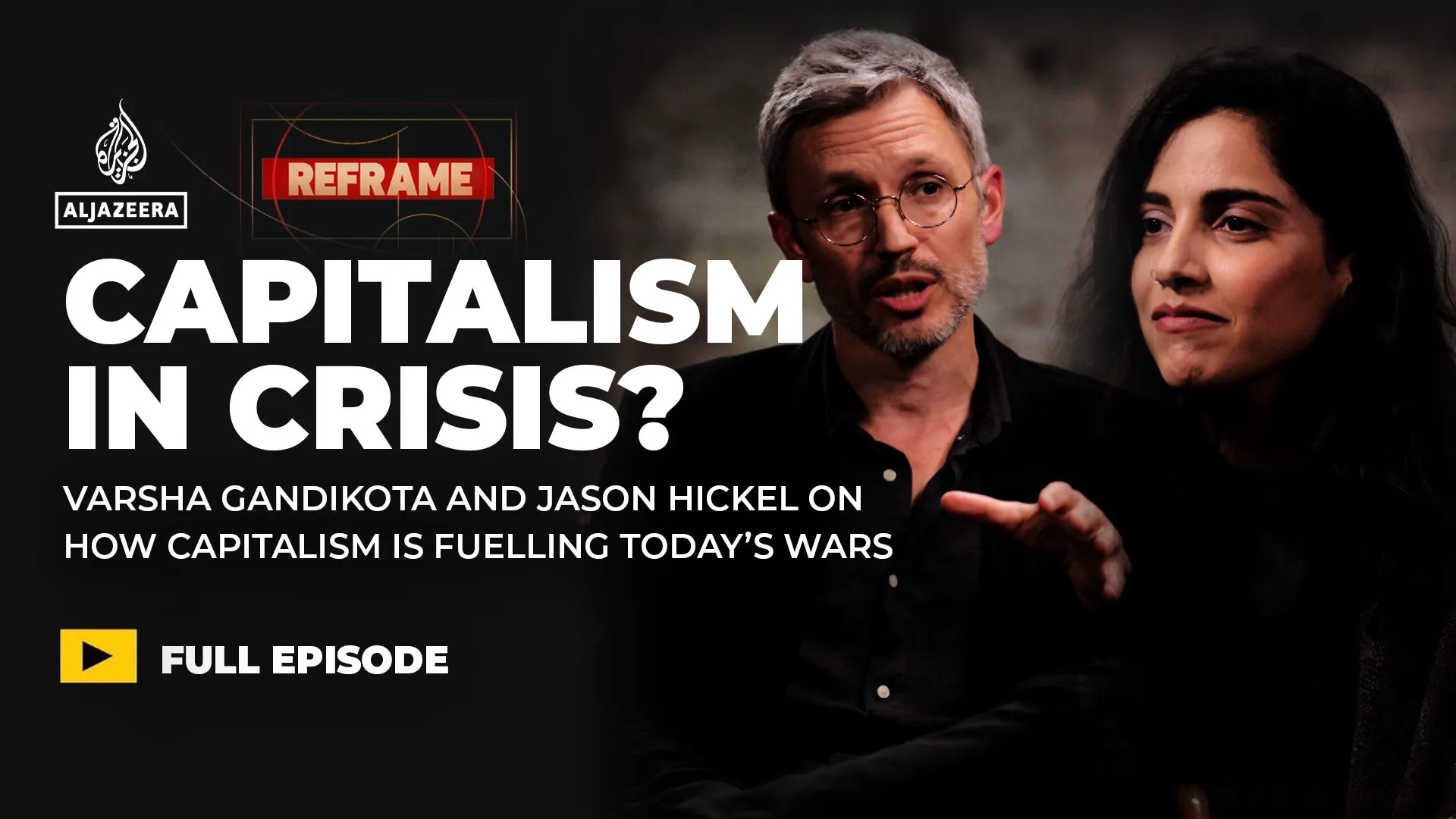
A recent episode of Al Jazeera's Reframe podcast has examined the hypothesis that contemporary global conflicts represent a direct continuation of centuries of colonialism and economic policies designed to favour wealthy nations. The discussion, hosted by Varsha Gandikota-Nellutla, general coordinator of the Progressive International, centres on whether current military engagements serve as mechanisms for maintaining capitalist dominance over the Global South.
Gandikota-Nellutla posed specific questions to political economist Jason Hickel regarding the capacity of nations in the Global South to reclaim their sovereignty. The interview explicitly links modern military conflicts to historical patterns of colonial extraction, framing them within a broader context of economic inequality and the structural advantages held by the richest and most powerful nations.
Hickel, a professor at the Institute of Environmental Science and Technology at the Autonomous University of Barcelona, elaborated on his research concerning systemic economic change. An established economic anthropologist and author of Less is More and The Divide, he brings academic weight to the argument that current geopolitical tensions are rooted in long-standing economic dynamics rather than isolated incidents.
During the dialogue, Hickel discussed the concept of degrowth as a potential response to these entrenched dynamics. He defined this as the planned reduction of resource and energy use in wealthier economies, aiming to curb environmental harm and improve wellbeing while challenging the prevailing models of expansion that critics argue fuel instability.
The Progressive International, the organisation coordinating progressive movements globally, provided the platform for this exchange through Gandikota-Nellutla's coordination. The episode serves as a dialogue between an activist leader and an academic, highlighting the intersection of political strategy and economic theory in addressing the causes of modern warfare.
While the discussion presents a specific ideological perspective connecting all modern wars to capitalism and colonialism, it is framed here as the viewpoint of the interviewees. The term degrowth remains a contested economic concept, and its application to solving complex geopolitical conflicts is presented as a theoretical proposition rather than a universally accepted solution.
The conversation underscores a growing discourse within progressive circles that seeks to reframe the understanding of global security through the lens of economic history and systemic inequality, challenging conventional narratives about the drivers of international conflict.