Afghanistan faces projected surge in child marriages as new divorce laws entrench gender inequality
Writer and journalist Mursal Sayas warns that up to 70 per cent of girls in Afghanistan may soon be subjected to early or forced marriages, while a new legal framework removes women’s ability to dissolve marriages unilaterally.
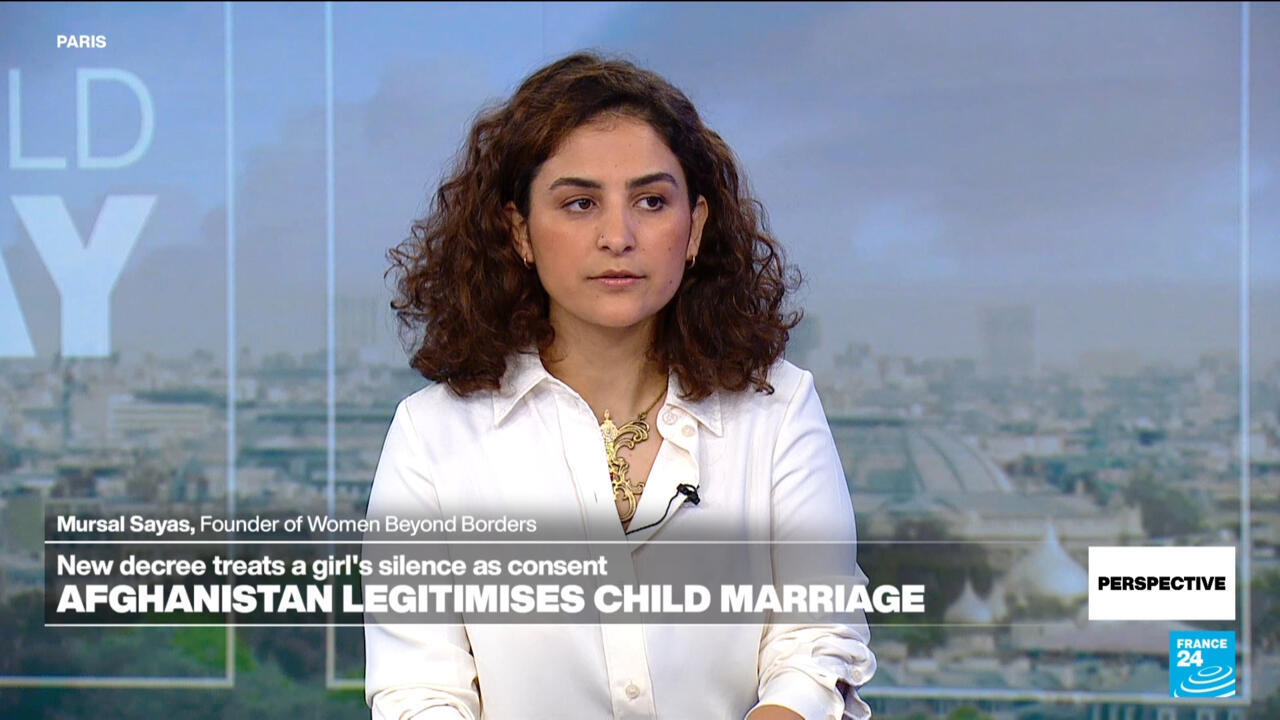
Writer and journalist Mursal Sayas has drawn attention to the escalating crisis of child marriage in Afghanistan, describing the situation as an epidemic during a recent appearance on France 24’s Perspective programme. Sayas, who is also the founder of the NGO Women Beyond Borders, highlighted alarming projections regarding the future of Afghan women, noting that fears exist that up to 70 per cent of girls in the country may soon be subjected to early or forced marriages.
The discussion underscored a significant shift in the legal landscape governing family law in Afghanistan. Sayas pointed to a new statutory provision that fundamentally alters the mechanics of marital dissolution. Under this legislation, divorce is rendered impossible at any future stage if the husband disagrees with the decision, effectively removing the agency of women to exit marriages against their spouse’s will.
Activists and observers have strongly condemned this legislative change, characterising it as shameful. The prevailing view among rights advocates is that this law serves to cement women’s position in a legally subordinate and unequal status relative to men. By stripping women of the ability to initiate divorce, the state is seen as institutionalising gender disparity within the private sphere of the family.
The convergence of these two factors—the projected rise in child marriages and the removal of divorce rights—presents a complex governance challenge. The legal framework appears designed to prioritise male consent in all marital matters, thereby limiting the recourse available to women in both existing and future marriages. This structural change exacerbates the vulnerability of girls who may be entering into unions at a young age.
Sayas’ commentary provides a critical lens through which to view the current trajectory of women’s rights in Afghanistan. The combination of demographic fears regarding child marriage and the rigidities introduced by the new divorce law suggests a systemic hardening of gender roles. The situation highlights the urgent need for international scrutiny regarding how legal reforms are impacting the fundamental rights and protections of women and girls in the region.