Advocacy group cites systemic judicial failure in Lyhanna case
The president of 'Face à l'inceste' states that the justice system failed to act on complaints against the suspect dating back to 2017, highlighting under-resourced investigations and institutional overload as key drivers of the tragedy.
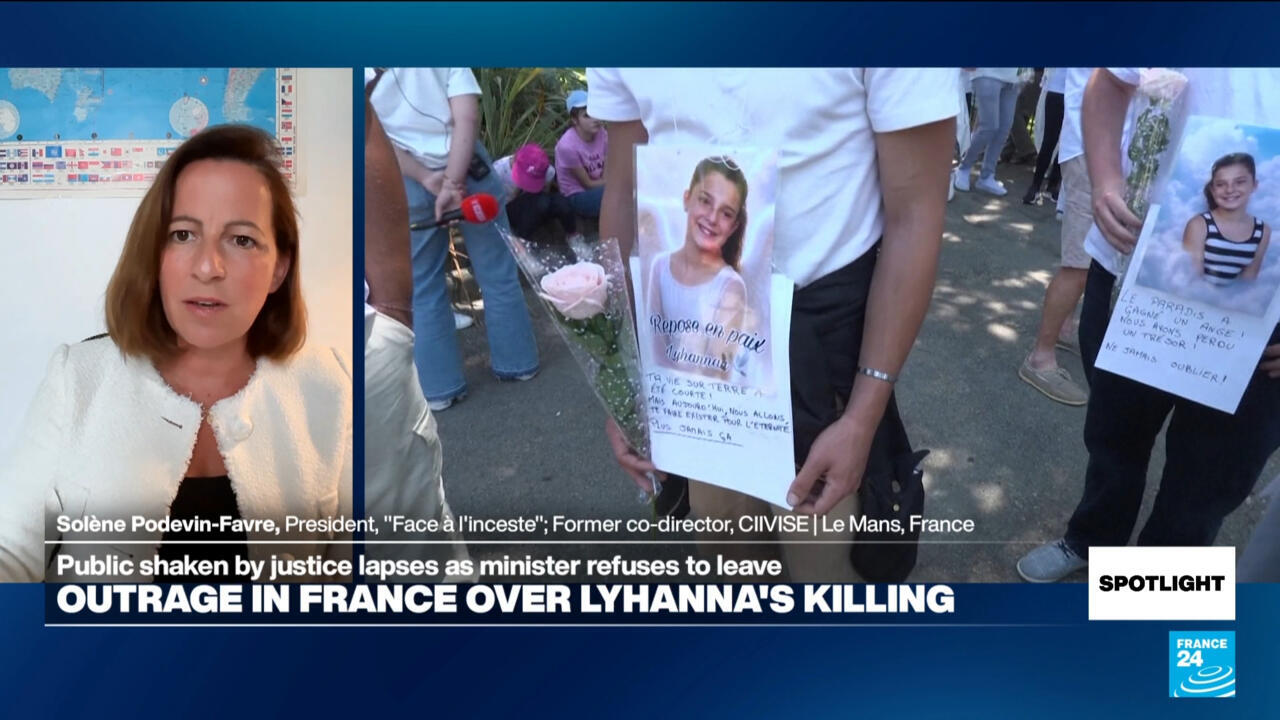
The death of Lyhanna has been characterised by child protection advocates as evidence of profound systemic failures within France’s judicial and social services, rather than an isolated incident. Solène Podevin-Favre, president of the 'Face à l'inceste' advocacy group and former co-director of Ciivise, stated that the case exposes a persistent gap between institutional knowledge and effective action in safeguarding minors.
According to Podevin-Favre, the suspect in Lyhanna’s death had been the subject of multiple complaints and investigations regarding allegations of sexual abuse of minors since at least 2017. These allegations were supported by medical evidence, yet the justice system failed to follow up on the cases. She argued that the central problem is not a lack of expertise, financial solutions, or documented recommendations, but rather a failure to implement existing safeguards.
Podevin-Favre highlighted that while child protection is frequently the subject of legislative proposals and public commitments, implementation remains fragmented. She identified specific operational deficiencies, including under-resourced investigations, insufficient training for professionals, and judicial responses constrained by institutional overload. These factors have led to missed opportunities for intervention as warning signs accumulated over years.
The advocacy group noted that the crisis illustrates how failures across prevention, training, care, and justice reinforce one another. When children are not interviewed according to established protocols and when prosecutorial decisions are made under severe resource constraints, the system ceases to function as a protective mechanism. Podevin-Favre emphasised that the question is no longer whether solutions exist, but why political systems repeatedly acknowledge these failures without undertaking the structural reforms necessary to prevent them.
This incident occurs against a backdrop of heightened scrutiny regarding child safety in France. Lawmakers are set to debate new legislation aimed at protecting children and combating violence in schools, a push following a parliamentary investigation into the Bétharram abuse scandal. Additionally, Paris authorities are conducting ongoing investigations into allegations of abuse by non-teaching staff recruited for positions in dozens of schools.
Growing public mobilisation reflects a broader demand for accountability and a child protection framework that prioritises prevention over post-tragedy response. Podevin-Favre stated that the current discourse must shift towards a system that acts before tragedy occurs, addressing the structural deficiencies that allow such failures to persist across the judicial and social sectors.