Webb Telescope Reveals New Detail in Lion Nebula Structure
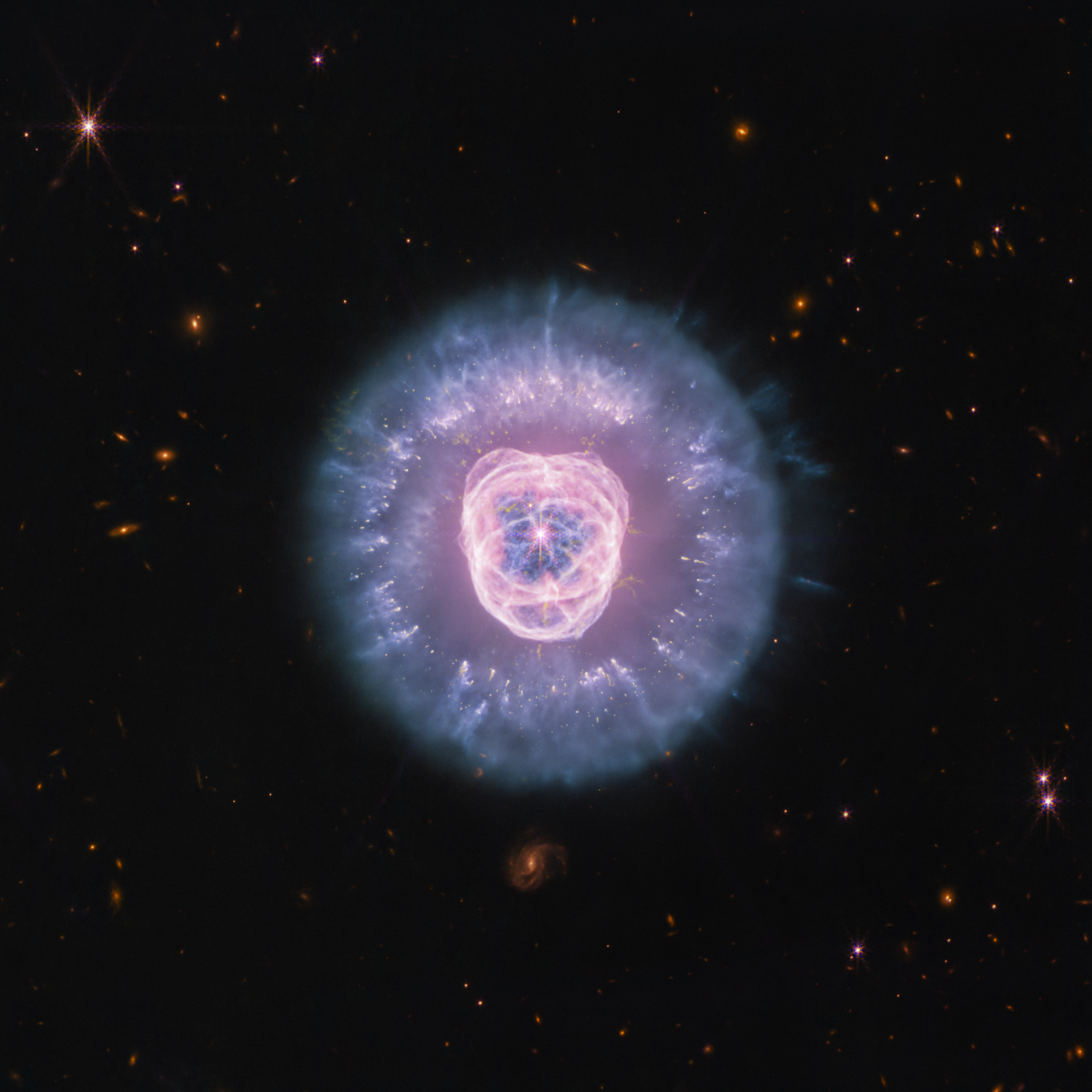
NASA’s James Webb Space Telescope has released fresh observations of NGC 2392, offering a clearer view of the planetary nebula’s remains than previous Hubble Space Telescope data from 2000.
Event
NASA’s James Webb Space Telescope has released high-resolution images of NGC 2392, known as the Lion Nebula, on August 10, 2026. The images highlight the nebula's detailed structure.
2 published stories · artificial-intelligence · source reliability 33%

NASA’s James Webb Space Telescope has released fresh observations of NGC 2392, offering a clearer view of the planetary nebula’s remains than previous Hubble Space Telescope data from 2000.
Background
On 10 August 2026, NASA released high-resolution images of NGC 2392, colloquially known as the Lion Nebula, captured by the James Webb Space Telescope (JWST). Processed by Alyssa Pagan of the Space Telescope Science Institute (STScI), the imagery utilises data from the Near-Infrared Camera (NIRCam) and Mid-Infrared Instrument (MIRI) to reveal the detailed structure of the planetary nebula. The observations highlight dust clumps and ionised gas surrounding the remains of a dying star, features that were not visible in previous Hubble Space Telescope images from 2000. The release underscores the telescope’s capability to provide clearer views of stellar evolution compared to earlier instruments.
On 10 August 2026, NASA released high-resolution images of NGC 2392, colloquially known as the Lion Nebula, captured by the James Webb Space Telescope (JWST). Processed by Alyssa Pagan of the Space Telescope Science Institute (STScI), the imagery utilises data from the Near-Infra
Fact cards
Key entities: NASA, James Webb Space Telescope, NGC 2392, Lion Nebula, ESA, CSA, STScI, Alyssa Pagan.
What is NGC 2392? It is a planetary nebula often referred to as the Lion Nebula. Which instruments on the James Webb Space Telescope were used? The Near-Infrared Camera (NIRCam) and the Mid-Infrared Instrument (MIRI). How do these images differ from previous observations? They re
NASA News Releases | https://www.nasa.gov/image-article/lion-nebula-roars-in-webbs-sights | published 2026-08-11T17:02:49.000Z | primary source | NASA News Releases | https://science.nasa.gov/missions/webb/lion-nebula-roars-to-life-with-nasas-webb | published 2026-08-10T14:00:00.
2000: Hubble Space Telescope captures images of NGC 2392, though certain dust and gas features remain obscured. 10 August 2026: NASA releases high-resolution images of the Lion Nebula (NGC 2392) captured by the James Webb Space Telescope. 11 August 2026: NASA publishes the news a
Timeline
Hubble Space Telescope captures images of NGC 2392, though certain dust and gas features remain obscured.
NASA releases high-resolution images of the Lion Nebula (NGC 2392) captured by the James Webb Space Telescope.
NASA publishes the news article detailing the release and processing of the images.
FAQ
It is a planetary nebula often referred to as the Lion Nebula.
The Near-Infrared Camera (NIRCam) and the Mid-Infrared Instrument (MIRI).
They reveal dust clumps and ionised gas that were not visible in Hubble Space Telescope images from 2000.
Alyssa Pagan of the Space Telescope Science Institute (STScI).
NASA, ESA, CSA, and STScI.
The Near Infrared Camera (NIRCam) and the Mid Infrared Instrument (MIRI).
It provides greater clarity and reveals detailed structures of dust clumps and ionised gas that were not as clearly defined in Hubble’s 2000 visible-light views.
Astronomers estimate the nebula will disperse in approximately 10,000 years.
NASA, the European Space Agency (ESA), and the Canadian Space Agency (CSA).