
ScienceDraft
Perseverance sets Mars rover driving-distance record
NASA says Perseverance had passed Opportunity’s record by 11 October, though its infographic gives no exact distance in the supplied material.
Science DeskRead story
Research, discovery, space, energy systems, and the breakthroughs redrawing what is possible.
NASA says Perseverance had passed Opportunity’s record by 11 October, though its infographic gives no exact distance in the supplied material.
The missions aim to test propulsion technologies, study galactic dust and radiation, and improve inspection of inactive satellites. NASA’s image article does not confirm whether the launch took place.
The Office of the General Counsel directs applicants to USAJobs for current NASA openings, but the supplied announcement gives no role details or deadline.
A NASA brief describes how coupling between closely spaced structural modes can change their shapes, frequencies and decay rates, even when overall damping is low.

Voyager Technologies’ lander has returned to its manufacturing facility for final assembly after environmental and launch simulations at NASA’s Jet Propulsion Laboratory.

NASA says Dragon is due to dock on 15 October with the station’s final pair of roll-out solar arrays and experiments spanning biology and materials science.

The wide-angle composite, captured in July 2025, shows the Desert Staircase beneath the Milky Way and other night-sky features.

NASA’s image shows an eroded impact structure in Western Australia’s Kimberley region, whose age remains uncertain.

The research will examine brain tissue, crop disease, health testing and antibiotic-resistant bacteria, with possible applications for future missions and work on Earth.

NASA’s 12 October Astronomy Picture of the Day presents a series of exposures showing the Moon near Jupiter and its four bright Galilean moons.

NASA and the National Snow and Ice Data Center estimate the ice peaked on 14 September at 17.59 million square kilometres.

NASA’s Astronomy Picture of the Day explains how detectors embedded in Antarctic ice register signals from high-energy neutrinos.

Jared Isaacman is scheduled to pilot one of three jets at MetLife Stadium, where NASA will also host a pre-game fan zone.

The image featured in NASA’s 10 October Astronomy Picture of the Day combines more than 15,000 Lunar Reconnaissance Orbiter images captured from 2009 to 2011.

Companies have until 8 December to propose low Earth orbit stations and transport services for human spaceflight, with contract awards expected in spring 2027.

Twelve sensor-equipped capsules aboard Northrop Grumman’s Cygnus XL are set to gather data as the spacecraft breaks up in Earth’s atmosphere.

NASA’s image shows MACS J0454.1-0300 bending and magnifying light from galaxies much farther away.

The crater spans more than 9 kilometres. The enhanced-colour image featured on 9 October was captured by a NASA orbiter in 2008.

Flooding has reached 50 provinces since mid-September, with dozens of deaths reported and about 270,000 hectares of farmland damaged.

A 15 October briefing will detail NASA’s instruments and mission support for JAXA’s planned exploration of Phobos and Deimos.

The agency says the two programmes are intended to advance scientific understanding and support emerging researchers, but has not released details on funding or eligibility.

The SSPICY mission will test autonomous navigation and inspection systems as Starfish Space’s Otter approaches up to four inactive objects in low Earth orbit.

SpaceX’s Crew Dragon Freedom splashed down in the Pacific Ocean off California on 8 October, carrying four International Space Station crew members.

Observations of 37 nearby brown dwarfs show signatures of water, carbon dioxide, carbon monoxide and methane, while cloud transitions remain difficult for models to reproduce.

The host galaxy’s measured distance places the burst about 3 billion years after the big bang. Its properties are consistent with a young magnetar, though the source remains uncertain.

The four astronauts splashed down in the Pacific off Los Angeles after a mission NASA says included more than 3,792 orbits and research for future exploration.

The all-glass Engineering Test Unit is a step towards flight hardware for the ESA-led gravitational-wave mission, planned for launch in the mid-2030s.

The memorandum covers research, fuel production, testing and mission operations, and takes effect on 1 November 2026.

NASA reports severe 2026 crop damage in the Texas High Plains, where scarce groundwater and failing wells have compounded the drought.

NASA’s 8 October Astronomy Picture of the Day features astrophotographer Tom Williams’s image, made by combining the clearest of thousands of short exposures.

NASA and SpaceX plan to send more than 6,300 pounds of cargo, including the final set of station roll-out solar arrays, to orbit.

NASA and SpaceX plan to send more than 6,300 pounds of supplies, equipment and research investigations to the International Space Station.

A six-image panorama shows sunrise on wind-carved features of Mount Sharp as scientists investigate how the geological layer formed.

NASA’s rover reached 1 kilometre above Gale Crater’s floor before capturing a 95-image panorama looking back across the crater.

NASA says astronauts aboard Orion saw five brief flashes linked to rocky fragments striking the Moon. The mission’s lunar science dataset is now public.

The nebula may be linked to a “guest star” recorded in 1181, but how the explosion occurred remains uncertain.
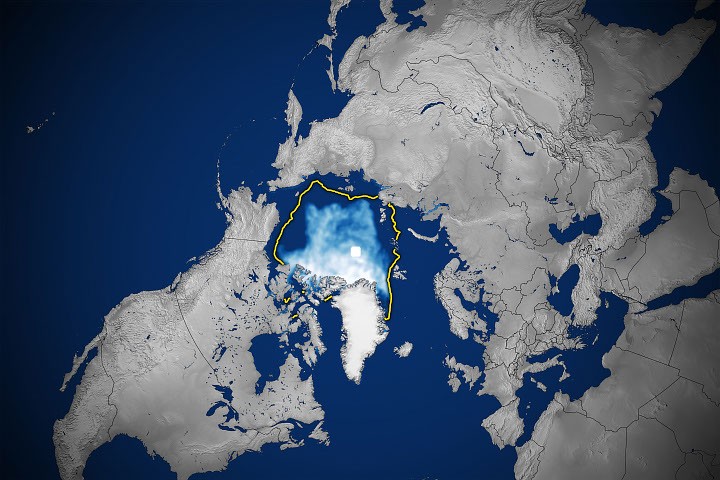
The estimated 2026 minimum was 4.6 million square kilometres, as satellite records continue to show a long-term decline in Arctic ice extent.
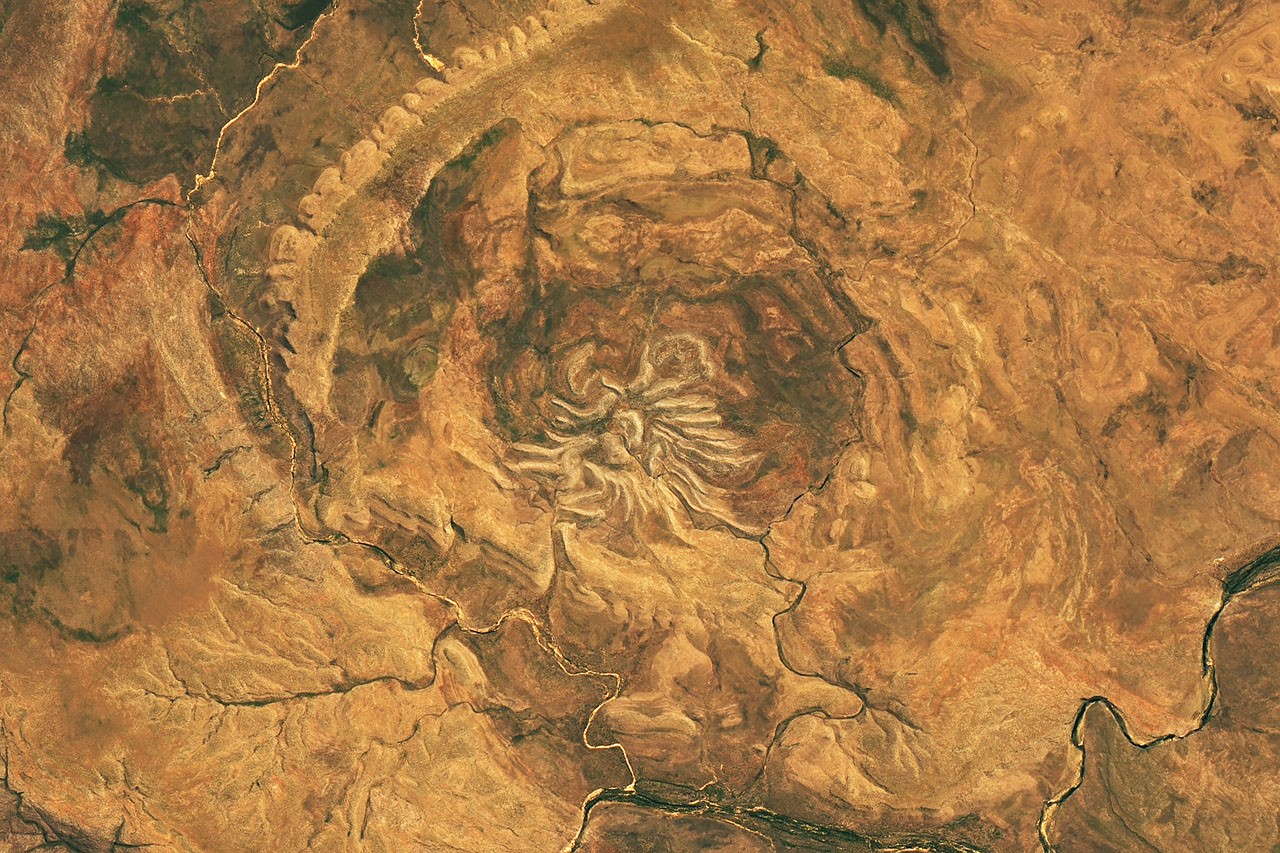
The October challenge shows a fossil-like pattern against rust-coloured terrain. NASA plans to reveal the location about a week after publication.
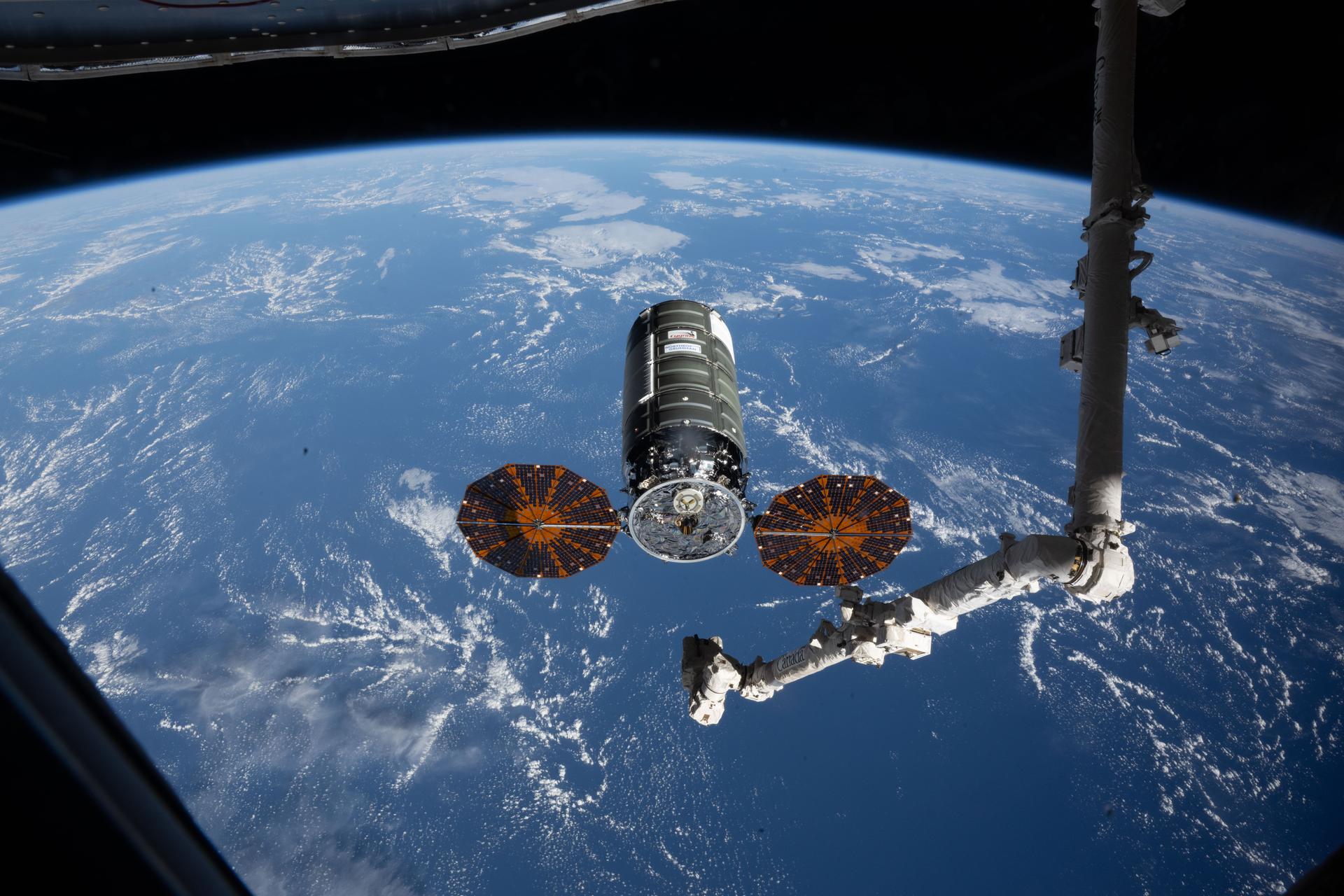
NASA plans to cover the spacecraft’s scheduled departure on 9 October. Cygnus XL is due to burn up in Earth’s atmosphere two days later.
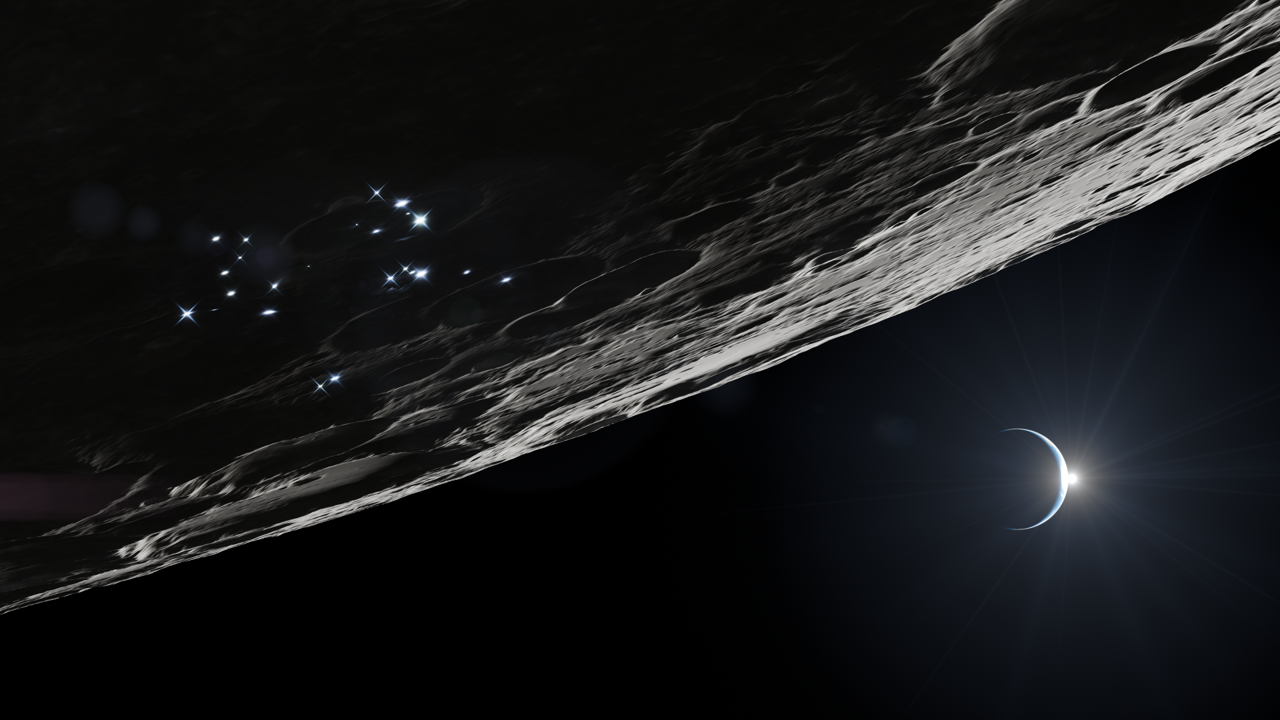
The Lunar Grounding Challenge invites designs and procedures to safely discharge static electricity from spacesuits during South Pole surface activities.

A chemical clue in observations of HS 0209+0832 suggests a planet may have formed from material shed by the star. The planet has not been confirmed.

NASA’s six-image panorama shows yardangs on the mountain’s north-western reaches. Scientists hope to study them up close in 2027.

NASA’s James Webb Space Telescope reveals dust-obscured stars and protostars shaping glowing gas about 3,300 light-years from Earth.

NASA’s Astronomy Picture of the Day featured about an hour of footage showing the full oval and its shifting auroras.

NASA says dissolved organic matter stains the river water brown, while tides and currents stir mud across the bays’ broad flats.

NASA’s rover used CheMin and a laser spectrometer to analyse the “Basque Lakes” sample; the results will guide a decision on further testing.

Preliminary data points to gabbro, while nearby breccia may offer clues to how the rocks reached the surface.

The four-person crew is scheduled to undock on 7 October and splash down off California the following day, with NASA planning live coverage.