Zelenskyy to meet Trump as US Senate weighs Russia-Iran sanctions
Proposed legislation targets five largest importers of Russian energy with 100 percent tariffs, while Washington considers extending penalties to Tehran.
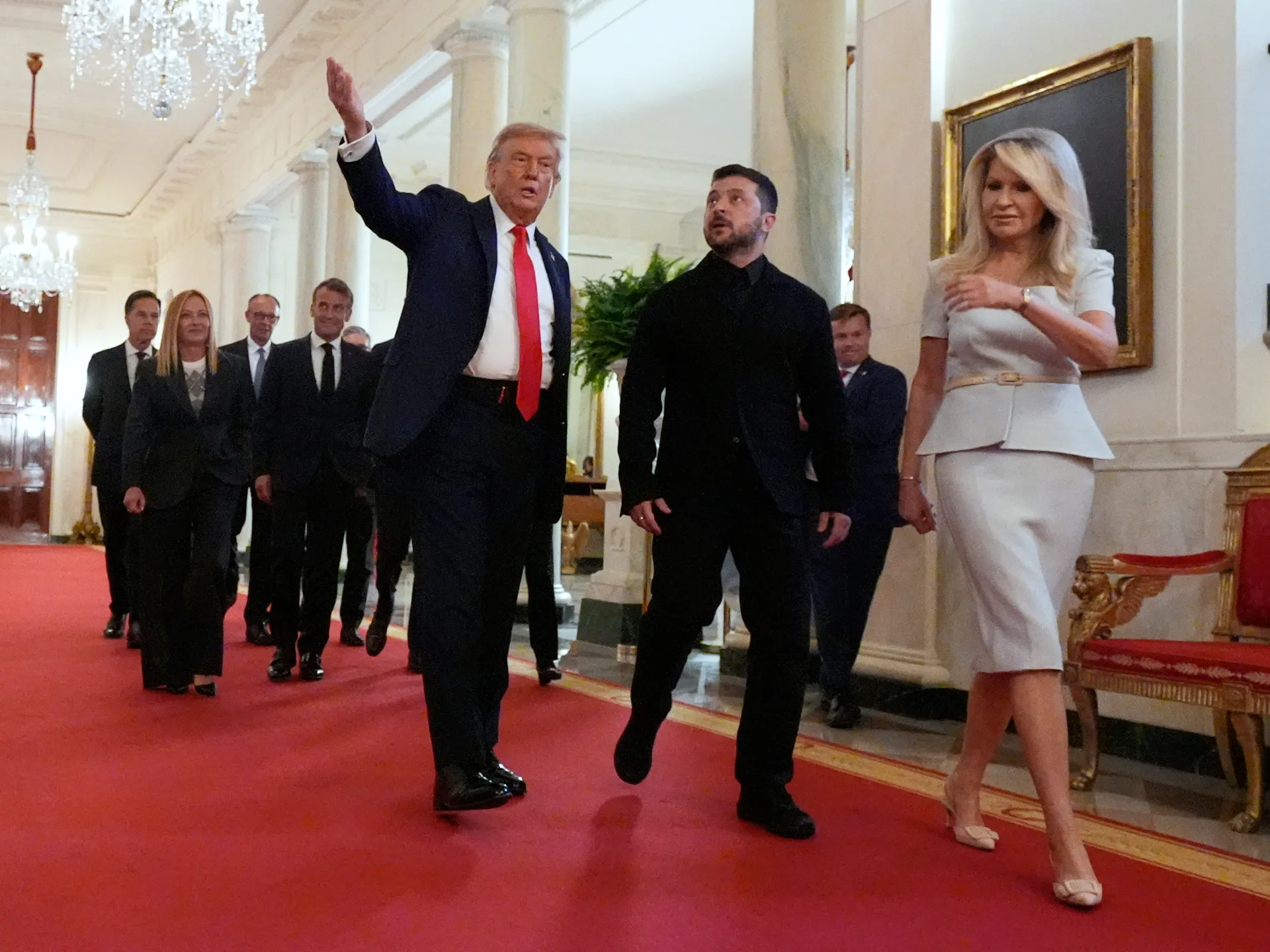
Ukrainian President Volodymyr Zelenskyy is scheduled to meet US President Donald Trump at the White House on Tuesday, a diplomatic engagement timed to coincide with a US Senate vote on new sanctions against Russia. The meeting follows a period of significant thawing in bilateral relations, which had previously soured during a heated exchange in February 2025. Zelenskyy is also expected to attend the funeral of US Senator Lindsey Graham, a key champion of the proposed Russian sanctions legislation, and will meet with the Senate on Tuesday evening.
The pending legislation, which has been under consideration for months, seeks to impose 100 percent tariffs on goods from the five largest importers of Russian oil and gas. This list reportedly includes China and India. In a last-minute development, President Trump sought to amend the bill to include sanctions on Iran. Zelenskyy has expressed support for this expansion, telling Trump ally Laura Loomer last week that he viewed the move as a “great idea”.
The diplomatic push comes as the conflicts in Ukraine and the Middle East appear to converge. On Saturday, Ukraine attacked an Iranian tanker in the Caspian Sea. Yevgen Korniychuk, Ukraine’s ambassador to Israel, stated that the vessel was transporting drones and military components from Iran to Russia. Iran has since promised retaliation for the attack.
William Courtney, the former US ambassador to Kazakhstan and Georgia, noted that while targeting Iranian ships aligns with US interests by striking Washington’s “enemy number one”, Kyiv may exercise caution regarding its association with the broader US stance on Iran. Courtney observed that while the attack pleases the US, Ukraine is unlikely to want to be too closely linked to what he described as the “unpopular” US war on Iran.
Despite the cessation of direct financial aid from the US for Ukraine’s war effort, Washington continues to provide crucial intelligence for long-range strikes and sells weapons to European allies, which are subsequently passed on to Kyiv. Cooperation has deepened in other areas, with leaders agreeing earlier this month to allow Ukraine to jointly produce Patriot air defence interceptors.
Negotiations are also underway for a joint drone production deal. Ukraine is on track to manufacture between 6 million and 7 million short-range attack drones this year. In contrast, the Pentagon’s $1.1 billion drone production programme is projected to have ordered just under 200,000 drones cumulatively by February 2027.
On the ground, heavy fighting persists in the Donetsk region, particularly in the Konstantinyvka and Pokrovsk directions. On Monday, Russian strikes in eastern Ukraine killed seven people and injured more than 20. In response, a Ukrainian drone strike on a commercial building in Russia’s Belgorod region killed one person and injured two.