Zambian Incumbent Hichilema Leads Early Vote Amid Opposition Violence Claims
President Hakainde Hichilema holds nearly 59 percent of counted votes, but the electoral process is under scrutiny following reports of violence, ballot theft, and an alleged raid on opposition leader Brian Mundubile’s home.
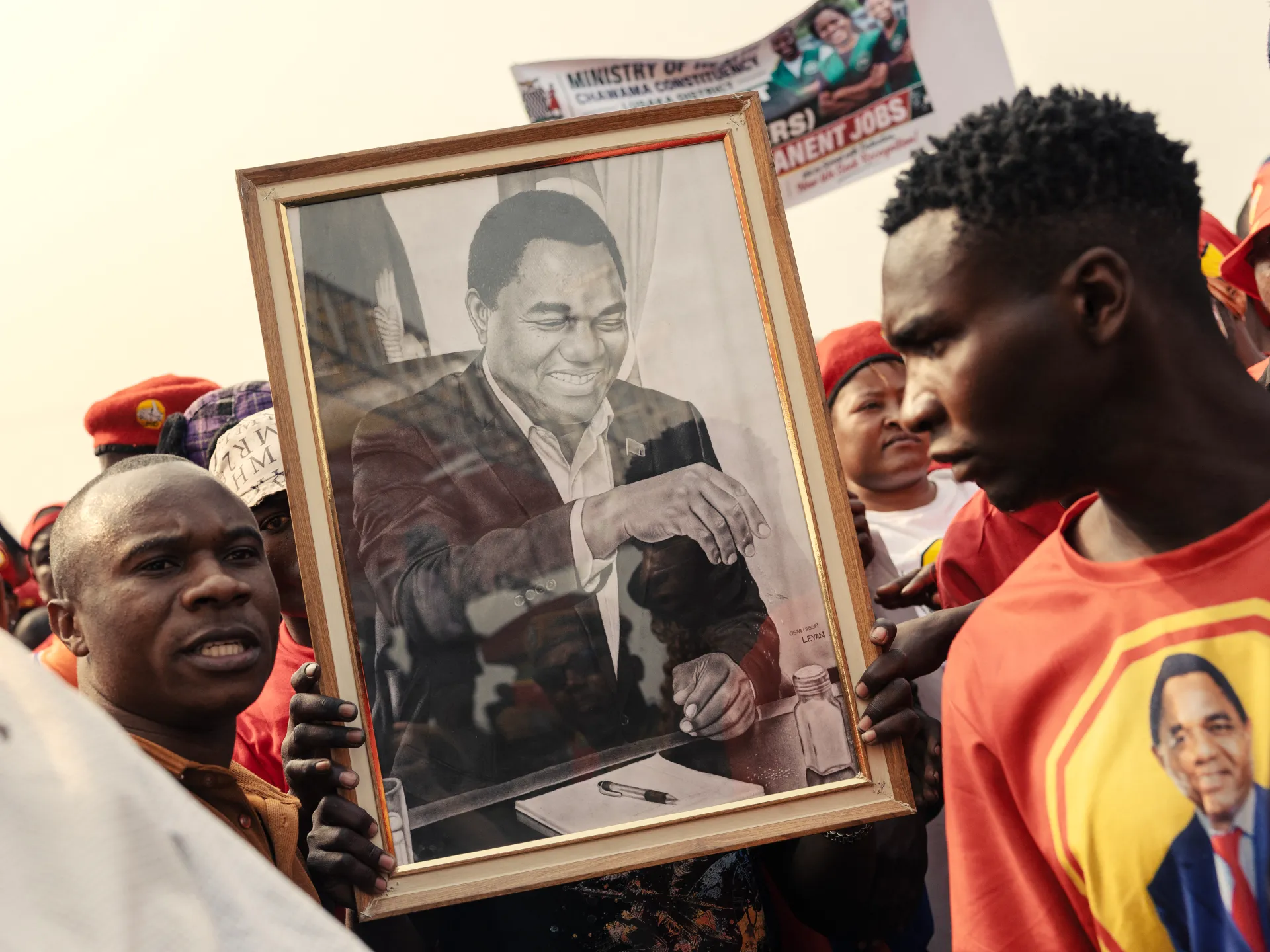
Zambian President Hakainde Hichilema has secured an early lead in the country’s general election, placing him on course for an outright first-round victory. With more than half of the constituencies counted by Sunday, the electoral commission reported that Hichilema had captured nearly 59 percent of the vote. His nearest rival, Brian Mundubile of the National Reconciliation Party for Unity and Prosperity (NRPUP), trailed with approximately one-third of the total. A candidate requires more than 50 percent to avoid a run-off, with final results expected within days.
The incumbent’s numerical advantage is being weighed against a campaign that international monitors have described as fundamentally uneven. The European Union observer mission released preliminary findings on Saturday, characterising the election as competitive but skewed towards the incumbent. The mission cited heavy bias in state media coverage and a blurring of government business with campaigning as key factors distorting the political playing field.
Tensions escalated during the vote count when tallying was suspended for roughly six hours on Friday. The pause followed reports of violence against polling staff and allegations that marked ballots had been stolen. The EU mission described the suspension as disproportionate, noting that only a small fraction of polling stations were affected. The electoral commission stated that the threat to the count has since been brought under control.
Further violence marred the election day, including the killing of a 57-year-old polling agent near the capital, Lusaka. Police have arrested nine suspects in connection with the death. Additionally, the EU mission reported witnessing a person being seized by armed personnel on the morning of August 10, adding to concerns regarding the conduct of security forces during the electoral period.
The opposition has levelled more serious allegations regarding the conduct of state security apparatuses. The NRPUP, contesting as part of the Tonse-Pamodzi alliance, stated that armed personnel believed to be members of the Zambian army raided Mundubile’s home in Lusaka on Friday night. The party alleges that live ammunition was fired, wounding a member of parliament, and that several individuals were forcibly removed, with their whereabouts remaining unconfirmed.
Mundubile condemned the incident, stating that no political language could sanitise the event, but he appealed to supporters against retaliation. The party has called for urgent regional and international engagement to demand answers from the government. Zambian authorities have not responded to these allegations at the time of writing.
In response to the opposition’s claims, officials from Hichilema’s governing United Party for National Development (UPND) have accused the opposition of exaggerating irregularities to cast doubt on a legitimate result. Zambia has a history of peaceful power transitions since returning to multiparty politics in 1991, with Hichilema winning a landslide victory in 2021. His first term has seen a return to economic growth, although the World Bank notes that more than 70 percent of the population still lives on less than $3 a day.