Yuanisation and shadow integration: Chinese and Iranian firms deepen economic foothold in occupied Ukraine
A Ukrainian monitor reveals that the local economy in Donetsk and Luhansk is now “totally yuanised,” with Chinese companies dominating construction, telecommunications, and finance sectors under Russian permission.
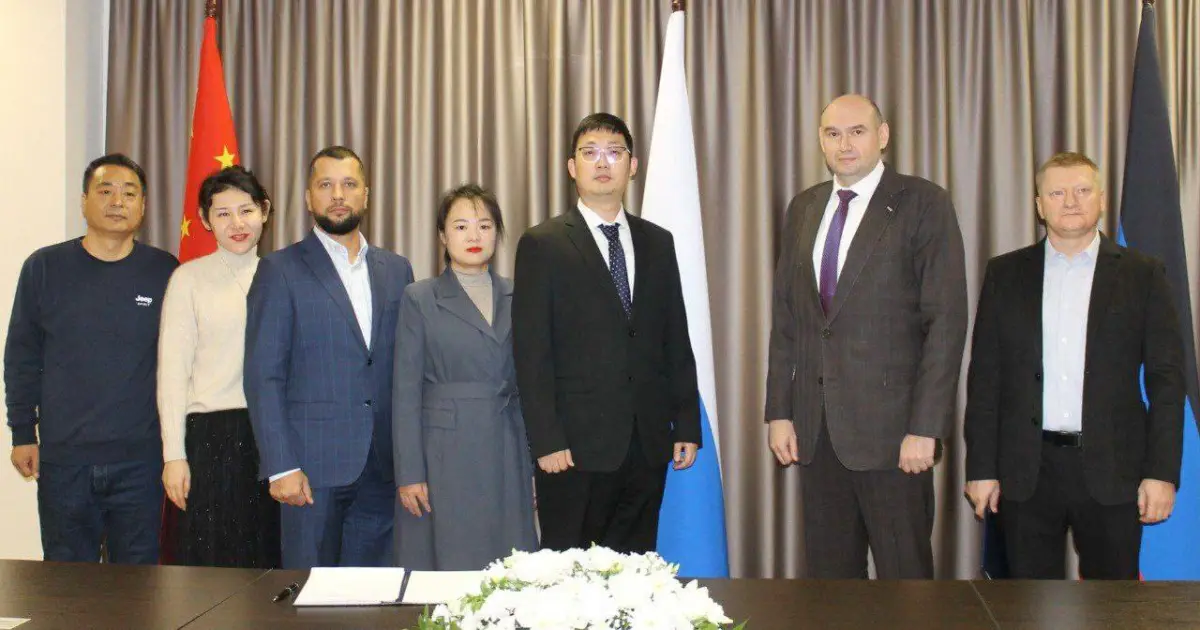
Chinese and Iranian enterprises are significantly expanding their commercial operations within the Russian-occupied territories of Donetsk and Luhansk, fundamentally reshaping the regional economy. According to a report by the Eastern Human Rights Group (EHRG), the local economy has become “totally yuanised,” with Chinese firms dominating key sectors including construction, telecommunications, and financial services. While Beijing maintains an official stance of neutrality and supports Ukraine’s territorial integrity, these companies continue to operate with the permission of Russian authorities, often citing lower costs and a lack of viable alternatives.
The depth of Chinese economic penetration is evident in the infrastructure and financial systems of the occupied regions. At least 17 Chinese companies are currently active in the area, supplying construction machinery and telecommunications equipment. This includes the installation of approximately 6,000 Chinese-made relay stations for cellular connections and the provision of stone-crushing machinery to sites such as the Karansky quarry in southern Donetsk. Companies identified in the report include Zhongxin Heavy Industrial Machinery and Amma Construction Machinery, which signed deals in Moscow in November 2023 to supply equipment for construction projects in the region.
Financial integration has proceeded rapidly, with the Chinese yuan becoming the de facto currency for local commerce. The EHRG notes that the yuan is sold in 79 banks within the occupied areas, and local businesses utilise Chinese electronic payment systems via Telegram channels for currency exchange and transfers. Maksym Butchenko of the EHRG described this shift as “shadow integration,” noting that it violates international agreements and represents a significant precedent in international politics and law.
The industrial landscape in the Donbas has also been reoriented towards these foreign partners. Of the 94 coal mines that operated in the region before 2014, only five remain open, and they have shifted their operations to work with China and Russia. Concurrently, Moscow is encouraging economic ties with Iran, facilitating the export of coal and grain to Tehran. Donskiye Ugli, a Russian coal mining company with ties to fugitive Ukrainian oligarch Viktor Medvedchuk, is reportedly shipping fossil fuels to Iran, while local food producers have expressed readiness to supply casein, a milk protein, to the Iranian market.
Despite Kyiv’s sanctions and calls for Western nations to follow suit, Chinese firms continue to operate, often as free agents willing to risk secondary sanctions. Major entities such as Alibaba and Huawei remain active in the region, with the latter’s equipment being installed in occupied areas due to its cost advantages and technical expertise. Volodymyr Fesenko, head of the Penta think tank, noted that Beijing effectively turns a blind eye to these activities, allowing companies to pursue market interests even as they risk being sanctioned by Ukraine and Western nations.