Youth-led 'Cockroach' movement expands across India as police clamp down
The 'Cockroach Janta Party' has mobilised tens of thousands in solidarity rallies from Maharashtra to Chhattisgarh, prompting criminal cases and gathering restrictions as the government faces mounting pressure.
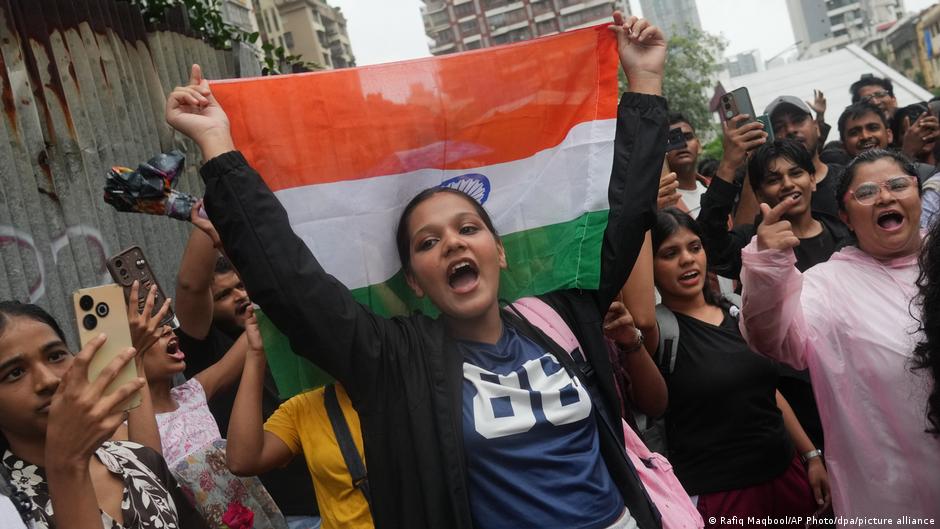
A youth-led protest movement in India, known as the 'Cockroach Janta Party' (CJP), is gaining traction nationwide following initial demonstrations in New Delhi. Originating from anger over a Supreme Court justice's remark referring to unemployed youth as 'cockroaches', the movement has mobilised tens of thousands of young people against corruption, youth unemployment, and an education system marred by exam leaks. Solidarity rallies have emerged in Maharashtra, Bengaluru, Kolkata, and other states, prompting police crackdowns and criminal cases. While the ruling BJP dismisses the movement's national potential, experts and opposition leaders suggest the protests reflect widespread disillusionment and may evolve into a sustained political force.
The movement began in May after Indian Supreme Court Chief Justice Surya Kant referred to unemployed young people as "cockroaches" during a court hearing. Young people embraced the moniker, which has become a banner for anger over failings in the country's education system and massive youth unemployment. Frustrations mounted during a campaign for accountability over a scandal involving a highly competitive university entrance exam, where leaked question sheets exposed long-running grievances over privileged access. Fueled by millions of young followers on social media, the movement tapped into wider frustrations over shrinking opportunities.
Until recently, many in the ruling Bharatiya Janata Party (BJP) dismissed the movement as little more than a social media phenomenon. That perception shifted after activist Sonam Wangchuk staged a three-week hunger strike and police launched a crackdown in response to a march on India's parliament. Images of tear gas, baton charges, and injured students spread rapidly online, prompting solidarity rallies across India and forcing the government onto the political defensive. Protesters are demanding the resignation of Education Minister Dharmendra Pradhan, who has promised "answers, reforms and accountability."
Delhi remains the nerve centre of the movement, but rallies have been staged in several other states. The western state of Maharashtra has emerged as the movement's strongest base outside of Delhi. In Pune, thousands gathered at Savitribai Phule Pune University in June, where CJP founder Abhijeet Dipke unveiled the movement's education manifesto. In Mumbai, police issued restrictions on public gatherings until August 6 after solidarity demonstrations. Authorities there also opened eight criminal cases involving around 900 protesters, citing intelligence reports that warned of possible violence and threats to public order.
Supporters have also begun organizing demonstrations in Bengaluru, Kolkata, Guwahati, Shillong, Dimapur, Hyderabad, Ahmedabad, Thiruvananthapuram, Jammu, and parts of Uttar Pradesh. In several states, support appears to be driven by students, local activists, and civil society groups rather than formal structures run from the centre. The Samyukta Kisan Morcha (SKM) issued a statement of solidarity, linking student struggles to those of farmers. Political scientist Gilles Verniers noted that the movement's demands are broadly nonpartisan and simple enough to mobilise supporters without centralised leadership.
However, BJP spokesperson Tom Vadakkan dismissed suggestions that the movement could quickly develop into a nationwide political force, arguing that it faces significant structural obstacles outside the capital. He stated that the CJP must bridge India's urban-rural divide and overcome language barriers before claiming to be a national movement. Media commentator Pamela Philipose believes the movement has already crossed an important threshold, noting that the government's response has inadvertently created unity among disparate youth groups.
The challenge facing the CJP has moved beyond attracting attention towards converting solidarity into sustained organisation. Many protest movements in India have drawn national attention before fading once the immediate trigger passed. Whether the Cockroach movement follows that pattern or develops into a broader nationwide campaign will depend on its ability to build local leadership, sustain mobilisation, and convince young people outside Delhi that it speaks to their own aspirations.