Yemen government reconsiders Sanaa offensive as Houthi blockade escalates regional tensions
The internationally recognised Yemeni government has centralised its military decision-making and is weighing a large-scale offensive to retake the Houthi-controlled capital, Sanaa, as rebel forces impose a maritime blockade on Saudi shipping.
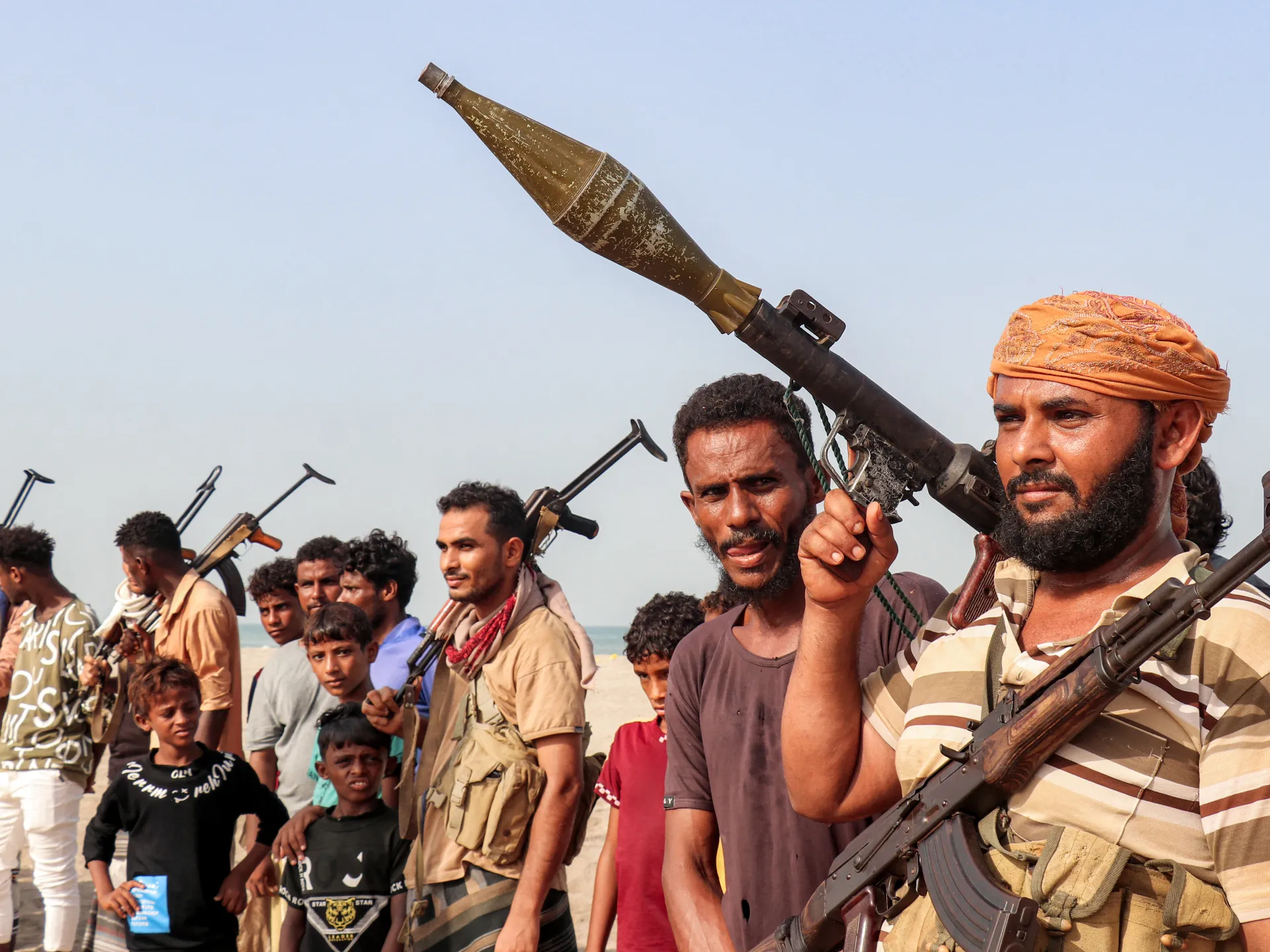
The civil war in Yemen has entered a volatile new phase following the declaration by Houthi rebels of a maritime siege on all shipping to Saudi Arabia. The group, also known as Ansar Allah, has attacked several Saudi tankers in the Red Sea, placing the Bab al-Mandeb Strait at the centre of the broader conflict between the United States and Iran. This escalation has heightened pressure on global trade routes, as the strait serves as a critical passage for Europe’s energy supplies and imports to Saudi Arabia.
In response to the growing threat, the internationally recognised Yemeni government, based in Aden and backed by Saudi Arabia, has restructured its military command into a single decision-making centre. This administrative shift suggests that the military option to retake Sanaa is back on the table, reversing previous assumptions that the objective had been shelved. The government recently claimed responsibility for an airstrike on Sanaa airport, alleging it was conducted to prevent an Iranian plane from landing, while the Houthis blamed Saudi Arabia for the attack.
The anti-Houthi camp comprises a fragmented array of forces, including the National Army, the Giants Brigades, and the Guardians of the Republic. The National Army, estimated at 400,000 personnel, is concentrated in Marib, Taiz, and southern governorates, while the Homeland Shield Forces, created in 2022, were tasked with securing camps in Hadramout and southern areas in December 2025. Following the defeat of the Southern Transitional Council separatists after Saudi intervention and UAE withdrawal, the cohesion of these groups has been impacted, though many remain in the south with elements nominally absorbed into government structures.
Despite holding numerical superiority with over 500,000 affiliated personnel, the government faces significant challenges in launching a large-scale offensive. The Houthis, with more than 200,000 fighters, maintain a strategic advantage through a centralised command structure and experience in asymmetric warfare. Their control over the mountainous northwest provides a defensive advantage, while government forces are dispersed across multiple fronts, complicating operational coordination. The disparity in training and discipline further hinders the government’s ability to mobilise effectively at a decisive point.
Reports from sources within the Yemeni state indicate a possibility of waging war against the Houthis with US support, although no international power has publicly declared a plan for a large-scale ground operation. Saudi Arabia, which has traditionally focused on managing the conflict to protect its southern borders, may be re-evaluating its strategy in light of the maritime threats. Any successful operation to take Sanaa would require unifying military command, securing political cover, and ensuring the ability to govern the city post-conflict, conditions that remain complex and uncertain.