Yayoi Kusama, the Japanese avant-garde artist who defined a generation, dies aged 97
The creator of the “infinity mirror room” and psychedelic polka dots has died in Tokyo, leaving behind a legacy that bridged the gap between high art and global pop culture.
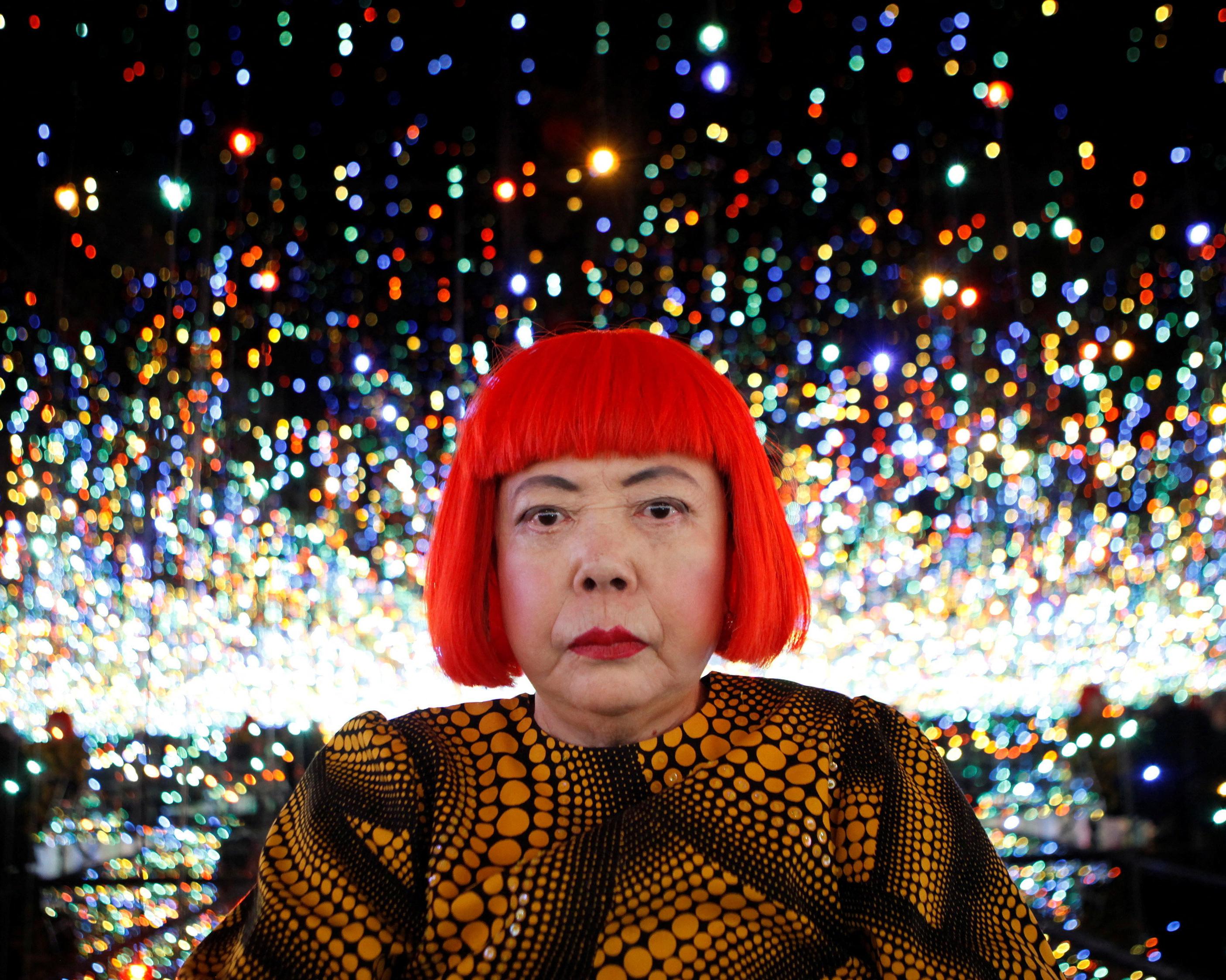
Yayoi Kusama, the Japanese artist whose immersive installations and psychedelic aesthetics transformed the global art landscape, has died at the age of 97. She passed away in a Tokyo hospital on 14 August, according to a statement released by her company, Yayoi Kusama Inc, on Thursday. The announcement confirmed that the artist continued to paint until her final days, describing her life as an extraordinary pursuit of artistic creation that encompassed visual art, performance, fiction, and poetry.
Born in Matsumoto in 1929, Kusama’s work was deeply influenced by lifelong hallucinations, which she first experienced as a child seeing flowers swarm around her. These visions became the foundation of her signature style, characterised by vibrant colour schemes, polka dots, and the concept of “self-obliteration.” Her ability to translate personal psychological struggles into universal visual experiences allowed her to connect with audiences far beyond the traditional art world.
Her career trajectory was marked by early controversy and later mainstream triumph. In the 1960s, Kusama was a provocative figure in New York, staging “body festivals” and a “homosexual wedding” that scandalised her conservative family back in Japan. Although she felt her ideas were appropriated by contemporaries like Andy Warhol and that she was written out of art history, her persistence paid off in the late 20th century.
Recognition finally arrived with retrospectives at major institutions, including the Museum of Modern Art in New York, Tate Modern in London, and the Hirshhorn Museum in Washington DC. Her “infinity mirror room” installations, which originated in the 1960s, found a new resonance in the age of social media, offering perfect backdrops for the selfie culture that defined the 2010s and 2020s.
The artist’s connection to Australia was particularly significant, with her 2024 exhibition becoming the most popular in the country’s history. This record-breaking attendance highlighted her status as a global superstar, with fans queuing for hours to experience her immersive environments. The commercial success of her work demonstrated a rare ability to maintain artistic integrity while achieving massive public engagement.
Kusama lived in a psychiatric hospital in Tokyo from 1977, where she received art therapy and maintained a nearby studio. This arrangement provided the stability she needed to continue working from morning until night. Her company stated that they would carry forward her wishes to bring hope and strength to people around the world through her art.