Xi seeks predictability in Trump summit amid Taiwan red lines and Iran tensions
Chinese President Xi Jinping is expected to press Donald Trump on arms sales to Taiwan and seek stability for the remainder of the US president’s term, while maintaining a stance of non-intervention in the ongoing conflict in Iran.
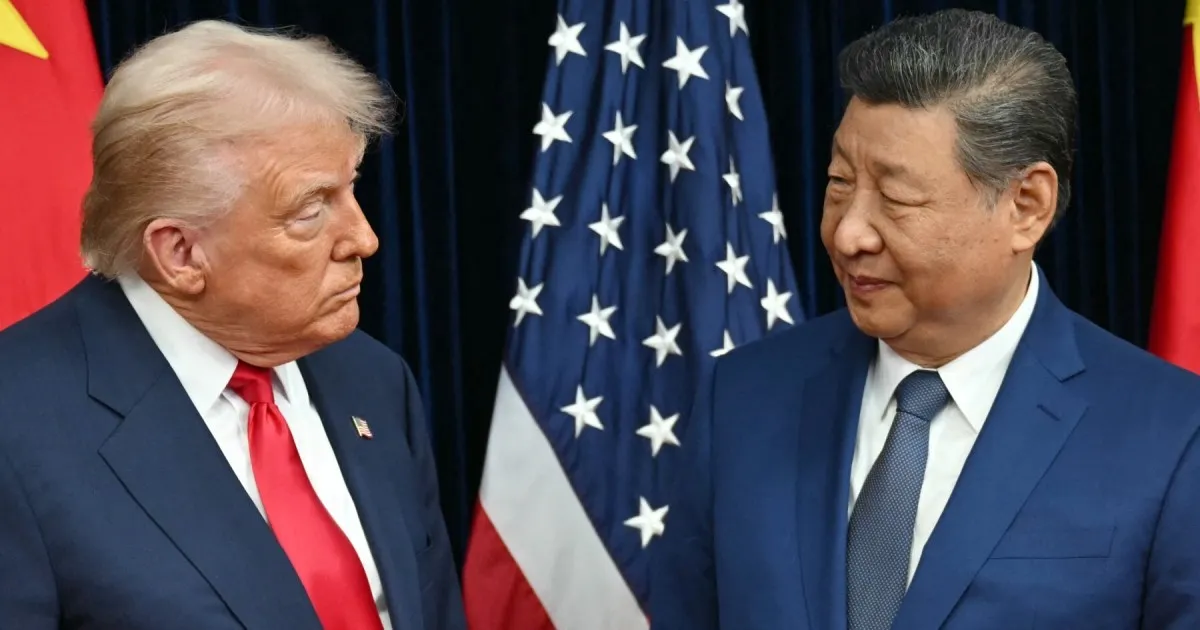
Chinese President Xi Jinping is hosting US President Donald Trump for a three-day summit in Beijing, marking the first visit by a US leader to the country since 2017. The high-stakes diplomatic engagement takes place against a backdrop of escalating geopolitical tensions, including the war in Iran and the recent shutdown of the Strait of Hormuz. Analysts suggest Xi’s primary objective is to secure predictability for the remainder of Trump’s term, aiming to stabilise trade relations following an 18-month period of escalating tariffs and punitive measures.
A central focus of the summit is the issue of Taiwan, which Chinese Foreign Minister Wang Yi has designated as the first of “four red lines” that must not be challenged. During a call with US Secretary of State Marco Rubio last month, Wang described the issue as the “biggest risk” in bilateral relations. The US Congress approved a $14 billion arms package for Taiwan earlier this year, but the sale requires final approval from President Trump. Xi is expected to urge Trump to scale back or suspend these sales, a move that would break with longstanding US policy against consulting Beijing on such matters.
William Yang, a Taipei-based analyst at the Crisis Group, told Al Jazeera that Xi aims to influence Trump’s decision to create a situation where it is harder for the Taiwanese government to request more special defensive spending. Cancelling or watering down the deal would be a significant blow to Taiwanese President William Lai Ching-te, who is currently engaged in intense political battles over defence spending. While analysts doubt the US will fundamentally alter its position on Taiwan, the potential suspension of the arms deal remains a key point of contention.
Trade relations are also a priority, with both sides seeking to move past the tit-for-tat tariffs that briefly pushed duties above 100 percent. Feng Chucheng, a founding partner of Beijing-based Hutong Research advisory, noted that Beijing needs certainty for its economic planning through January 2029. Xi is expected to agree to increased purchases of US agricultural exports and Boeing aircraft, and could support the creation of a “Board of Trade” and a “Board of Investment” to oversee economic ties. However, China is unlikely to compromise on rare earth exports unless the US makes major political concessions.
The ongoing war in Iran looms large over the summit, with the shutdown of the Strait of Hormuz impacting global energy supplies. Xi is expected to urge dialogue and a ceasefire, consistent with China’s principle of non-intervention. While the White House has pressured Beijing to influence Iran to reopen the strait, Trump has stated he does not need China’s “help” in resolving the conflict. Xi is likely to maintain a behind-the-scenes mediating role, avoiding direct involvement beyond diplomatic engagement.