Xi Jinping travels to Pyongyang as Beijing weighs North Korea’s deepening military ties with Russia
Amid concerns over Pyongyang’s acquisition of sensitive military technology from Moscow and a shifting balance of power in East Asia, President Xi Jinping arrives in Pyongyang for talks with Kim Jong Un.
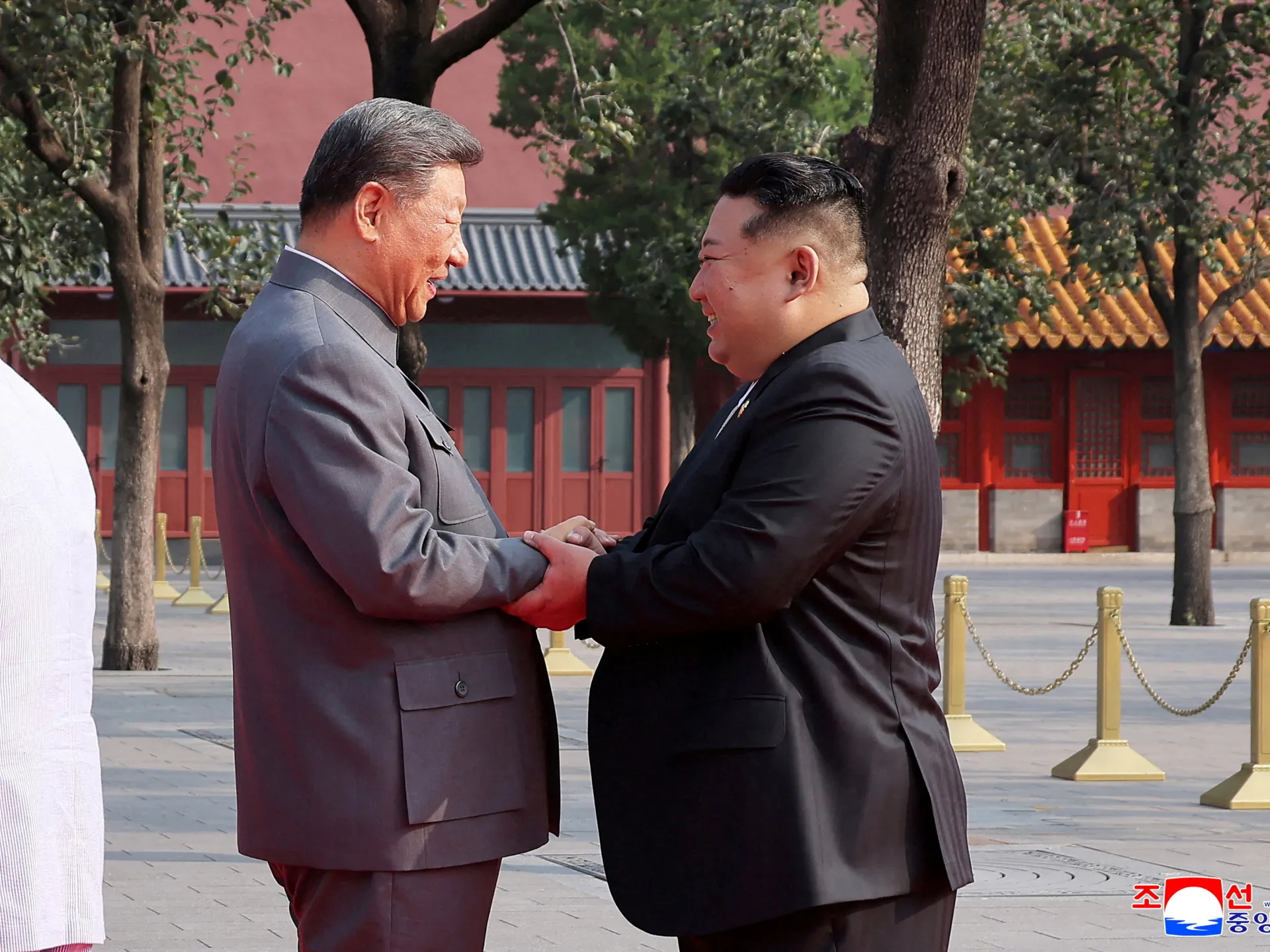
Chinese President Xi Jinping has arrived in Pyongyang for a meeting with North Korean leader Kim Jong Un, marking his first visit to the North Korean capital in seven years. The trip underscores a significant shift in diplomatic protocol, as world leaders such as US President Donald Trump and Russian leader Vladimir Putin typically travel to Beijing to meet with the Chinese leader.
According to William Yang, senior analyst for Northeast Asia at the International Crisis Group, Xi’s decision to travel personally indicates the high level of significance China attaches to the current situation. Data from the Asia Society shows that Xi’s overseas travel frequency has decreased substantially, averaging approximately 14 trips a year between 2013 and 2019, but dropping to around six annually between 2022 and 2025.
The visit occurs against a backdrop of heightened regional tensions, specifically North Korea’s deepening military cooperation with Russia. Since Russia’s 2022 invasion of Ukraine, Pyongyang has supplied critical weapons, artillery, and manpower to Moscow. South Korea’s Institute for National Security Strategy estimates that Moscow has paid North Korea up to $14.4 billion since 2023 for these deployments, with a significant portion likely exchanged for sensitive military technology rather than goods.
Beijing is reportedly concerned that North Korea’s acquisition of such technology could disrupt the regional balance of power. Although China shares a mutual defence treaty with North Korea, it remains wary of a militarily emboldened neighbour. Yang noted that a stronger North Korea, bolstered by Russian support, could become a source of disruption to the status quo on the Korean Peninsula.
Recent developments have further intensified security concerns. North Korea has conducted eight missile launches since the start of 2026 and unveiled a new AI-guided tactical cruise missile in May. State media also recently released images of Kim touring a new factory for weapons-grade nuclear materials, which observers say could expand Pyongyang’s nuclear capability at an exponential rate.
South Korea’s Ministry of Foreign Affairs has expressed hope that Xi’s trip will play a constructive role in addressing issues related to the Korean Peninsula. This follows statements by South Korean Minister of Unification Chung Dong-young, who indicated expectations for a potential meeting between Kim and Trump later in the year. Tensions between the two Koreas have been severe since 2024, when Kim abandoned the goal of unification and largely cut off communications.
Xi may also be responding to broader security shifts in East Asia, including news of a possible military-logistics support pact between South Korea and Japan, which was raised at the Shangri-La Dialogue in Singapore last weekend. Beijing has long objected to Tokyo’s expansion of its de facto military capabilities, compounding diplomatic friction in the region.