Xi and Putin sign trade deals in Beijing, but silence on Ukraine raises European concerns
Following a week of high-profile visits from US and Russian leaders, Beijing secured over 20 agreements with Moscow while omitting any reference to the war in Ukraine, a move that has sparked debate over China’s neutrality.
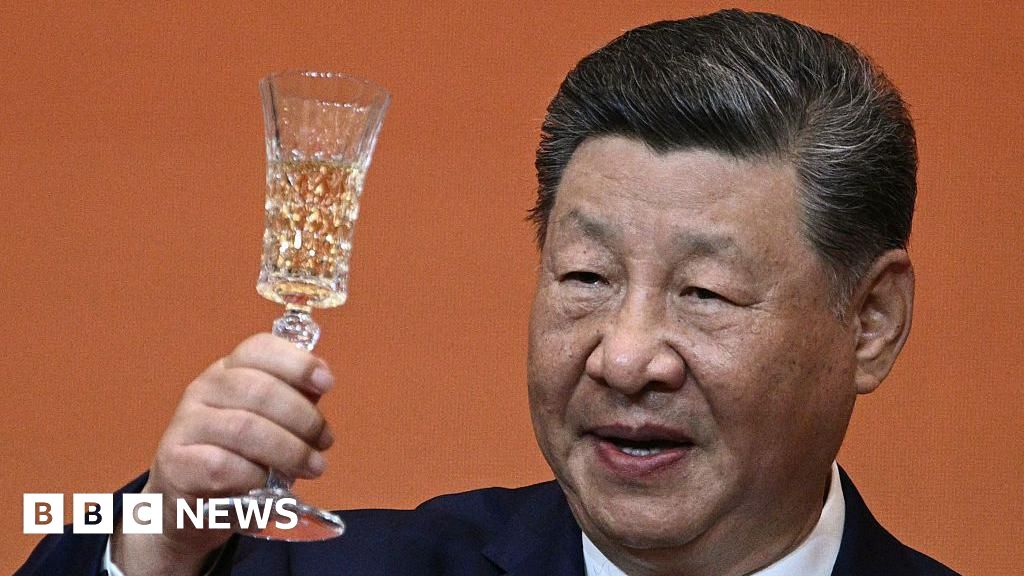
Chinese President Xi Jinping hosted Russian President Vladimir Putin at the Great Hall of the People, marking the second high-profile presidential visit in days after receiving US President Donald Trump. The sequence of events was designed to project an image of China as a central, independent diplomatic power, with the visual reception for Putin mirroring that of Trump, featuring cheering children, a military honour guard, cannon fire, and a marching band.
Talks concluded with over 20 agreements on trade and technology, reinforcing the economic ties between the two nations. However, no approval was granted for a stalled Russian gas pipeline that Putin has been pushing for years. Experts note that while Putin has visited China more than 20 times, indicating a close personal relationship with Xi, the partnership is described as unequal due to Russia’s reliance on Beijing following Western sanctions.
A joint statement yielded no major breakthroughs on geopolitical conflicts. Xi Jinping did not mention Russia’s invasion of Ukraine, instead calling for an end to the conflict in Iran, a stance that has raised questions in Europe regarding Beijing's neutrality and credibility as a global mediator. The statement did, however, call out "treacherous military strikes against other countries" and the "hypocritical use of negotiations as cover for preparing such strikes," language that appears directed at US actions.
China’s diplomatic style has shifted from the aggressive "wolf warrior" rhetoric of five years ago to a more moderate approach aimed at securing foreign investment and trade. This repositioning comes as China’s economic slowdown necessitates stable international ties to support its export-reliant economy, leading to repaired ties with key US allies including Australia, Canada, and the UK.
The selective focus on the Iran conflict, which has blocked the Strait of Hormuz and impacts Chinese energy interests, contrasts sharply with the silence on Ukraine, now in its fifth year. Analysts suggest that this ambiguity may damage China’s standing as a neutral mediator and strain relations with Europe at a time when Beijing is seeking to strengthen those ties.