WIRED turns a fruit-fly brain map into an experimental pitch generator
PitchFly uses an open-source connectome to remix hundreds of WIRED headlines, producing novel-sounding ideas without understanding their meaning.
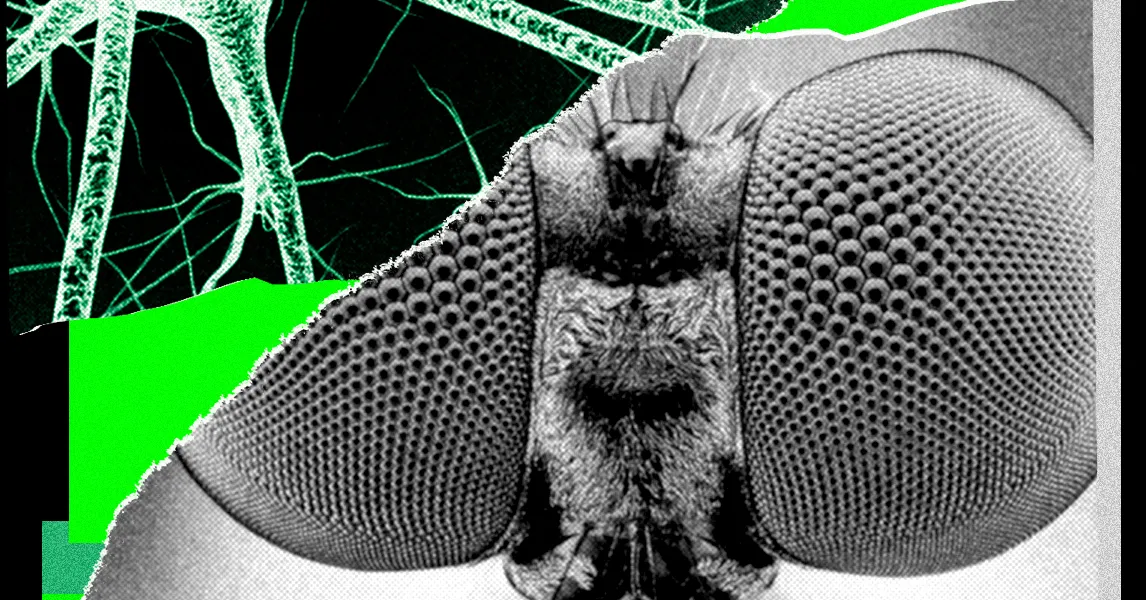
WIRED has created PitchFly, an experimental system that uses an open-source map of a male fruit fly’s brain to generate story ideas. The project applies a connectome — a map of neural connections — as a simple form of biological-intelligence-based artificial intelligence.
The connectome, developed by Google researchers and academic institutions, maps approximately 166,000 neurons and 125 million synaptic connections in a male drosophila. WIRED used it to process hundreds of its most popular headlines from the past year.
The headlines were broken into words and phrases, then converted into representations for the fruit-fly neural network. PitchFly generated new suggestions that sounded plausible in form but were often nonsensical.
The system does not understand language in the way a conventional language model does. It appears to remix patterns from the material it has processed, making PitchFly a proof of concept rather than an intelligent digital fruit fly or a replacement for journalists.
The connectome’s open-source release has also prompted reported experiments involving games, stock trading, virtual driving and neuroscience tools. WIRED noted that it had not verified whether all of those projects genuinely use the connectome, with some possibly being animations or spoofs.
Researchers say mapping smaller animal brains could help investigate the biological foundations of intelligence, the effects of neural damage and tools for manipulating neural circuitry. The work also offers a way to explore specialised AI systems built from biological intelligence.