WIRED review brands Logitech G512 X 98 a 'hybrid mish-mash' over flawed switch integration
A recent assessment by WIRED concludes that the Logitech G512 X 98 keyboard is inferior to its individual components, citing awkward tactile simulations and inefficient sensor utilisation.
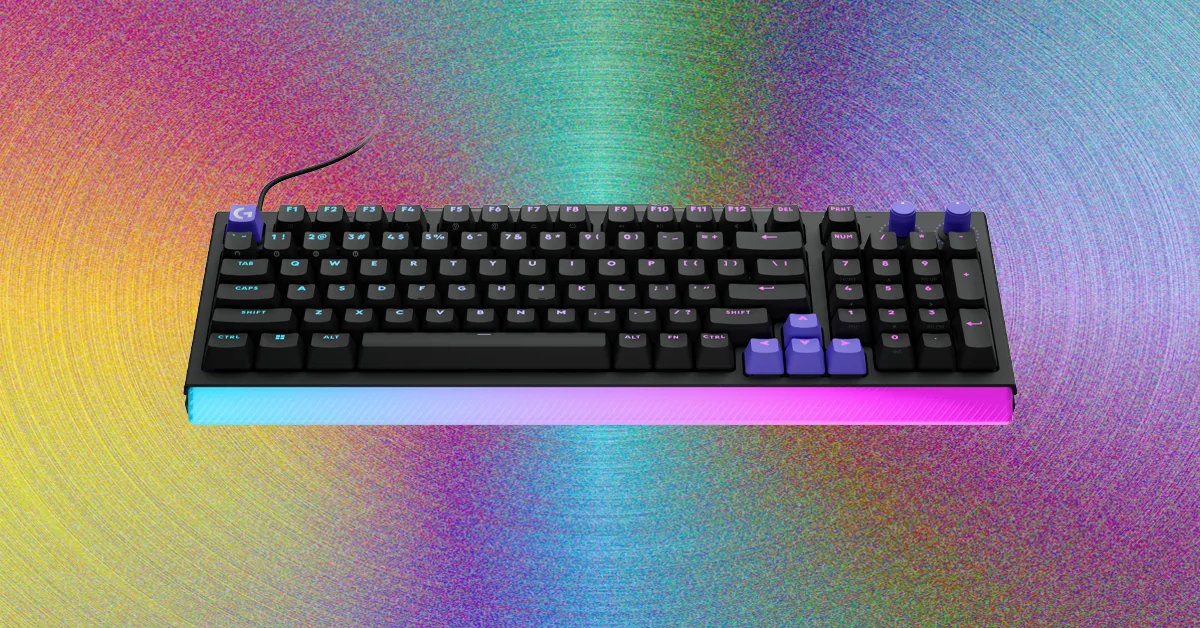
A recent review by WIRED has delivered a scathing assessment of the Logitech G512 X 98 gaming keyboard, describing the device as a "hybrid mish-mash" that fails to successfully integrate mechanical and analog switch technologies. The publication concluded that the keyboard’s attempt to combine the speed of analog inputs with the tactile feedback of mechanical switches results in a product that is worse than its individual components, recommending a fundamental redesign rather than a minor update.
The G512 X 98 utilises Tunneling Magnetoresistance (TMR) switches, which employ magnets for higher precision than standard Hall Effect sensors, alongside traditional tactile mechanical switches. Logitech’s design philosophy aimed to resolve the lack of tactile feedback inherent in analog keyboards by including small rubber rings between the keycap and the switch to simulate a "faux tactile bump". However, the reviewer found these rings functioned more like dense rubber stoppers, providing stiffness without the physical feedback expected from a traditional tactile bump.
Significant criticism was directed at the keyboard’s hardware configuration and sensor utilisation. While the board contains 39 internal TMR sensors, it only includes nine physical TMR switches in a transparent case on the rear. This limitation means that at any given moment, only 25 per cent of the available analog sensors are usable. The review noted that the inclusion of only five rubber rings for these nine switches further restricted the user’s ability to configure the board for different gaming scenarios, forcing frequent and tedious reconfiguration.
Software integration also drew ire, with the G-Hub application identified as a source of input errors. Although the software detects when a mechanical switch is plugged in, it does not default to standard input, leading to issues where multi-input functionality remains semi-active. This caused erratic behaviour during testing, such as unintended capitalisation when switching between modes, undermining the precision that analog technology is designed to provide.
Despite the functional flaws, the review acknowledged the keyboard’s robust internal construction. The device features Kailh hot-swap sockets, four layers of foam, and a gasket mount-like design that isolates the internals from the case. The removable angled feet were also praised for doubling as keycap and switch pullers, though the reviewer noted this design choice was impractical for storage. Ultimately, the assessment suggested that while the concept is technically impressive, the execution requires a return to the drawing board.