WIRED article redefines entropy as probability, not disorder
A recent piece in WIRED argues that entropy is a mathematical bridge between atomic microstates and macroscopic reality, driven by probability rather than a mysterious force toward chaos.
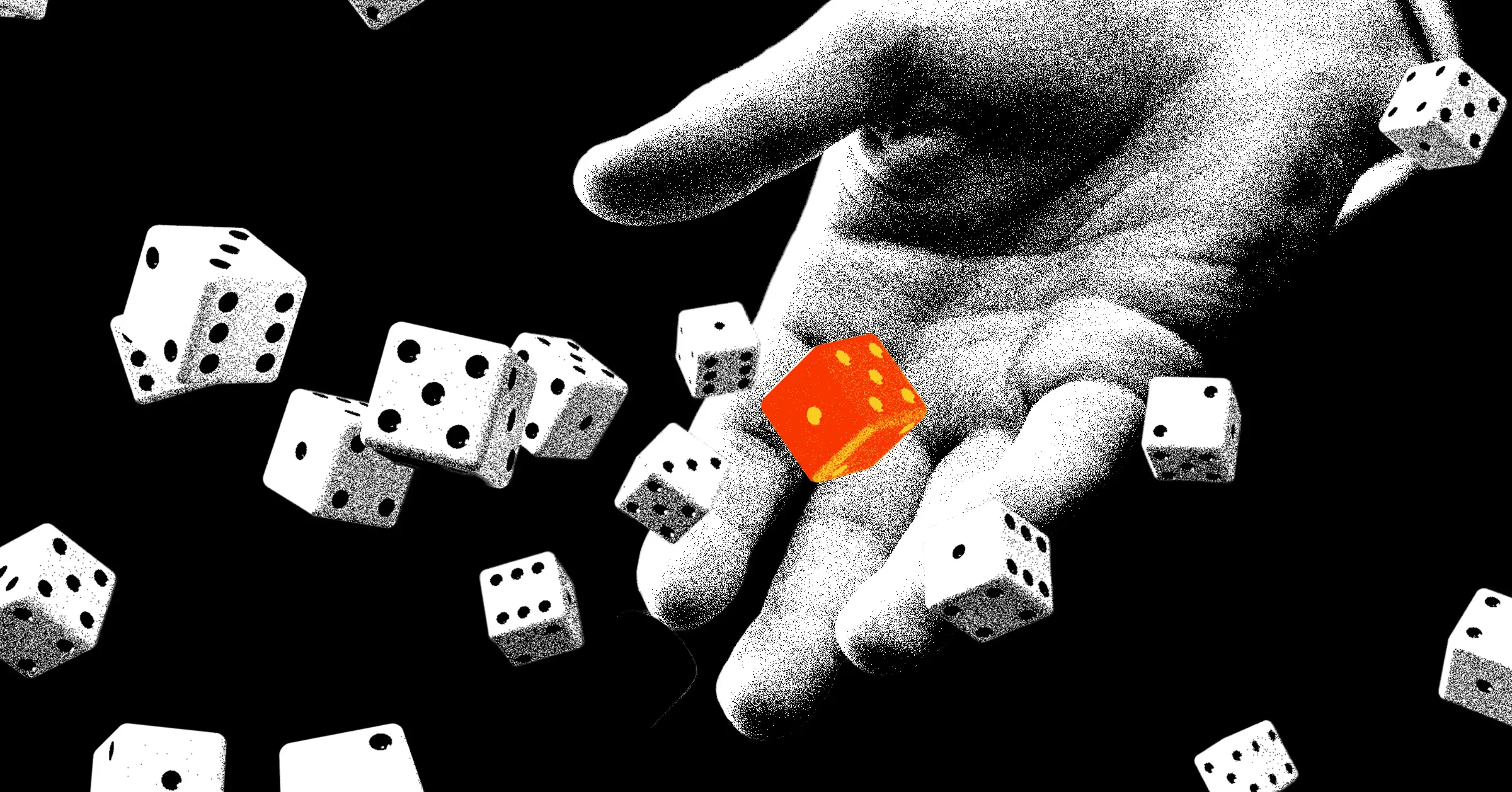
A WIRED article published on 24 July 2026, titled "What Is Entropy, Really?", challenges the widespread popular science description of entropy as merely "disorder" or "messiness". The piece redefines the concept as a measure of the number of possible arrangements, or microstates, of a system's parts that result in the same overall observable state, known as a macrostate. By utilising analogies such as dice rolls and thermal energy distribution, the article frames the second law of thermodynamics not as a mysterious force driving chaos, but as a statistical probability.
The publication argues that the "messy room" metaphor often used to introduce the idea is misleading because it fails to capture the mathematical nature of the concept. Instead, entropy refers to the number of ways the parts of a system can be arranged without changing its overall state. For example, in a box of air, gas molecules bounce around in trillions of possible microstates every second, yet the macro-level property, such as air pressure, remains constant. Entropy, therefore, acts as a conceptual and mathematical bridge between the invisible atomic realm and the visible, measurable world.
To illustrate the role of probability, the article employs analogies involving dice, including references to Dungeons & Dragons mechanics. It explains that while a specific outcome like rolling an 18 with three six-sided dice is possible, it is statistically rare because there is only one way to achieve it. Conversely, a sum of 10 is more likely because there are 27 distinct permutations that result in that total. The piece asserts that states with higher entropy have a higher probability of occurring simply because there are more ways for them to occur, removing the need for a mysterious force to drive systems toward chaos.
The analysis extends to thermal energy distribution, using a hypothetical scenario of a hot copper ball dropped into cold water. While energy conservation laws allow for the possibility of the hot ball getting hotter and the cold water getting colder, the article notes this is statistically so unlikely that it is treated as a certainty that heat flows from hot to cold. This perspective suggests that the second law of thermodynamics is not a fundamental "law" in the traditional sense, but a reflection of the higher probability of states with more possible arrangements.
The article concludes that while the model of atoms as dice is a simplification, the principles hold when scaled up to real-world quantities, such as the 1.7 sextillion molecules in a single drop of water. As the number of microstates increases, the probability distribution becomes more concentrated around the state with the highest entropy. The piece ultimately posits that the second law is "just the odds", asserting that God "really does play dice with the universe" and that thermal equilibrium is the most likely outcome simply due to statistical probability.