Wildfire smoke pushes Toronto to global air quality low as US Northeast braces for impact
Smoke from over 800 active fires across Canada has engulfed Toronto and spread to the northeastern United States, prompting evacuations, health alerts, and concerns for major public events including the FIFA World Cup final.
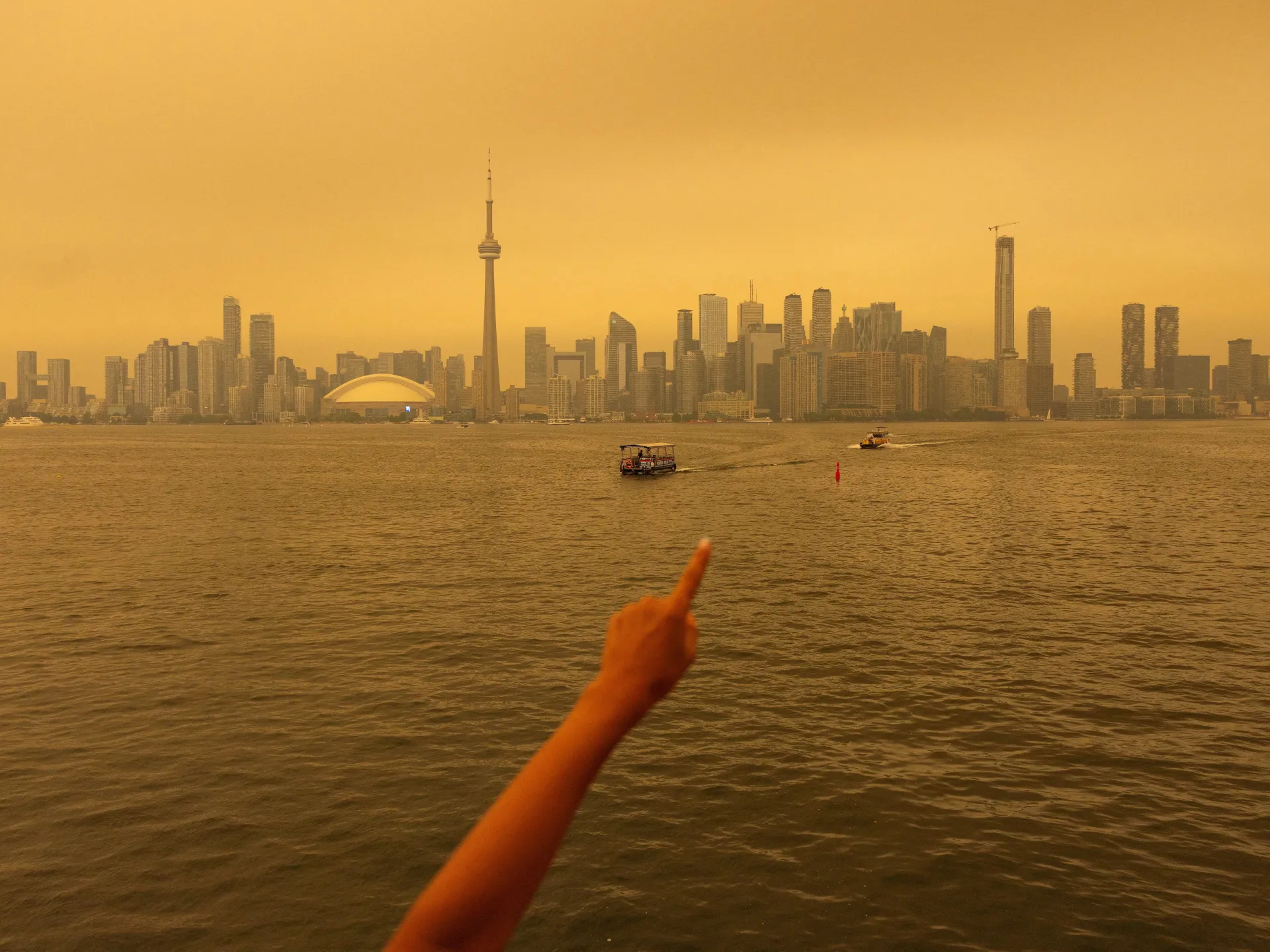
Toronto’s air quality has deteriorated to the worst levels globally, surpassing Kinshasa in the Democratic Republic of the Congo and New Delhi in India, according to monitoring data from IQAir. The Swiss air quality technology company attributed the spike in pollution primarily to wildfires in northwestern Ontario, with higher-than-average temperatures acting as a secondary contributor. Environment Canada reported an Air Quality Health Index of 10 or above for the city, a classification indicating very high risk, with hazardous conditions forecast to persist through Thursday night.
The smoke plume has extended across the border into the northeastern United States, affecting air quality in New York, Pennsylvania, Connecticut, Massachusetts, Maine, and New Hampshire. Authorities in New York City have issued alerts urging residents to reduce strenuous outdoor activity, particularly on Wednesday and Thursday. Dan Westervelt, an associate research professor at Columbia University’s Lamont-Doherty Earth Observatory, cautioned that the situation may intensify before improving. “We probably haven’t seen the worst of it yet for New York City. We probably haven’t seen the worst of it yet for the Great Lakes and upstate, and New England yet either,” Westervelt told Reuters.
Domestically, the fire season has seen more than 800 active blazes burning across Canada, with 112 currently considered out of control. These fires have consumed approximately 1.9 million hectares, predominantly in the central provinces of Manitoba, Saskatchewan, and Ontario. While the Canadian government noted that the current season has been milder than the severe years of 2023 and 2025, it warned that warmer-than-usual temperatures are driving the activity. The crisis has disrupted infrastructure, with Canadian National suspending rail operations near Armstrong, Ontario, on Monday night after a video showed a train surrounded by fire. Employees and local residents were evacuated as a precaution.
Public health measures are being implemented across the affected regions. New York Governor Kathy Hochul has urged people, especially those with pre-existing health conditions, to exercise caution. In response to the combined heat and air quality crisis, New York City has opened cooling centres and distributed masks at select locations. The National Weather Service indicated that smoke could linger in the region until the end of the week, compounding existing heat risks.
The environmental degradation coincides with major sporting events, raising logistical and health concerns. More than 80,000 people are expected to attend the FIFA World Cup final at an open-air stadium in New Jersey on Sunday, with an additional 50,000 planning to watch from New York City’s Central Park, where skies are already hazy. Greg Evans, a professor at the University of Toronto, highlighted the increasing frequency of simultaneous heat and wildfire smoke events. “I expect that this will occur more frequently over the coming decades, so cities and residents need to prepare for this in the future,” Evans said.