Beijing and Pyongyang deepen strategic ties as senior Chinese delegation arrives in North Korea
The visit by China’s fourth-highest-ranking official underscores efforts to consolidate the “far-reaching blueprint” agreed upon by Presidents Xi Jinping and Kim Jong Un, despite North Korea’s growing defence alliance with Moscow.
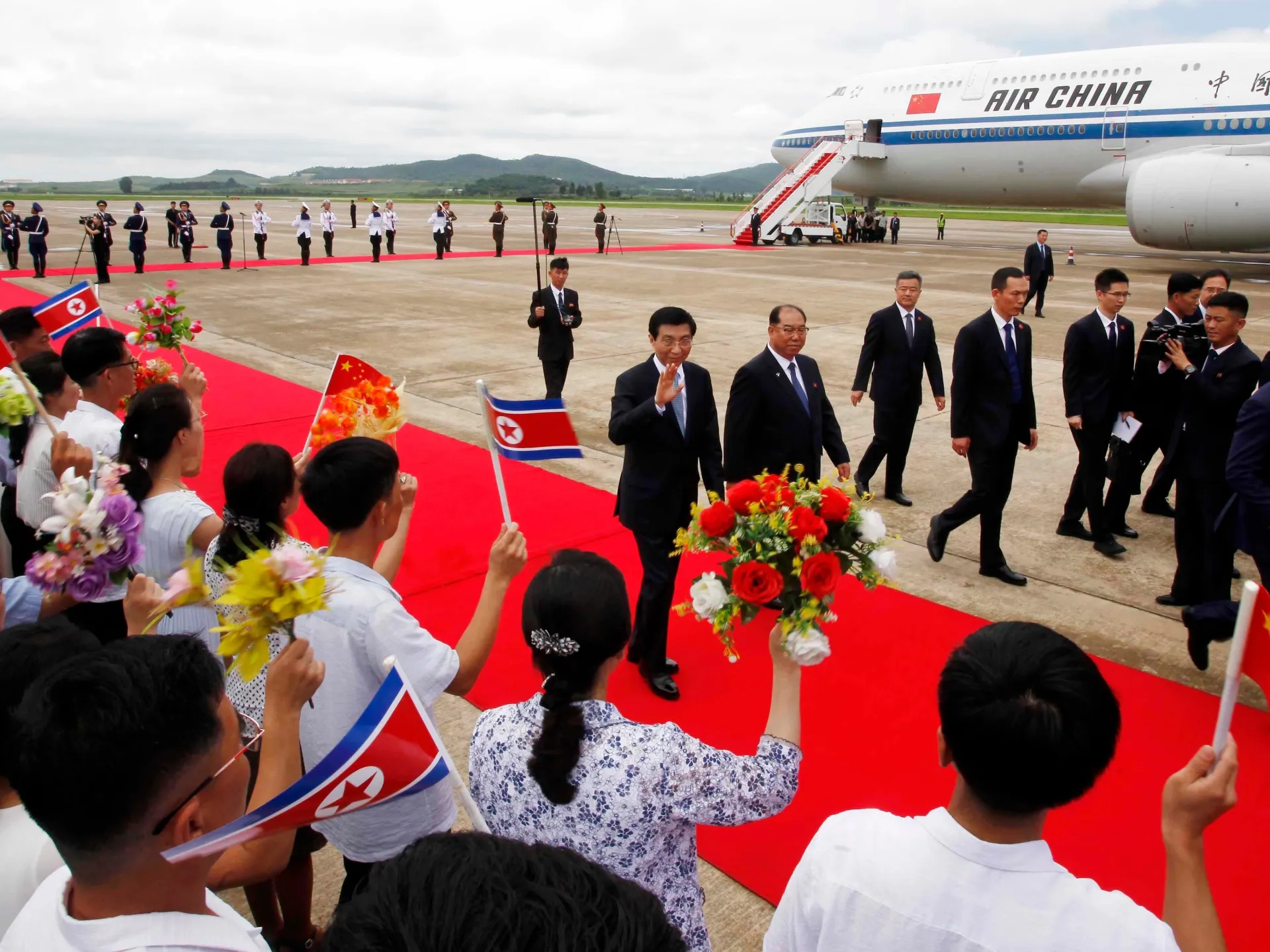
A senior Chinese delegation led by Wang Huning, the country’s fourth-highest-ranking official, arrived in Pyongyang on Wednesday for high-level talks with North Korean leadership. The visit marks the latest in a series of diplomatic exchanges between Beijing and Pyongyang, aimed at implementing the agreements reached during President Xi Jinping’s historic trip to North Korea in June.
During the meeting, Wang Huning held discussions with Jo Yong Won, a top official of the Workers’ Party of Korea. According to reports from the Korean Central News Agency (KCNA), cited by Reuters, Wang affirmed the “will of the Chinese party and the government” to fully execute the accord established between Xi and North Korean leader Kim Jong Un last month.
The June summit, which was the first visit by a Chinese president to North Korea in seven years, resulted in what state media described as a “far-reaching blueprint” to strengthen “the most powerful and strategic relations” between the two nations. During that visit, Xi advocated for closer cooperation in diplomatic, law enforcement, and military sectors.
In Pyongyang this week, the dialogue expanded to include broader bilateral interests. Wang referenced the 65th anniversary of friendship ties between the two countries, while Jo Yong Won stated that North Korea seeks to develop strategic communication and tactical cooperation with Beijing. The officials also discussed measures to improve public welfare and deepen mutual cooperation in business, culture, and party-to-party relations.
The timing of the visit occurs against a complex geopolitical backdrop. While Pyongyang has significantly strengthened its defence alliance with Moscow—including a strategic defence agreement that facilitated the deployment of North Korean troops to support Russia’s war in Ukraine—China remains North Korea’s largest economic partner.
Yang Moo-jin, a professor at the University of North Korean Studies in Seoul, noted that the flurry of high-level meetings reflects a shared desire to consolidate influence. He told Reuters that North Korea aims to secure China’s economic and geopolitical backing, while Beijing seeks to maintain its influence on the Korean Peninsula and prevent losing the initiative in Northeast Asian affairs.