WHO Assembly adopts resolutions on global health reform, stroke and precision medicine
The Seventy-ninth World Health Assembly has passed a series of resolutions aimed at strengthening the global health architecture, addressing the rising burden of stroke, and establishing pathways for precision medicine and teleradiology.
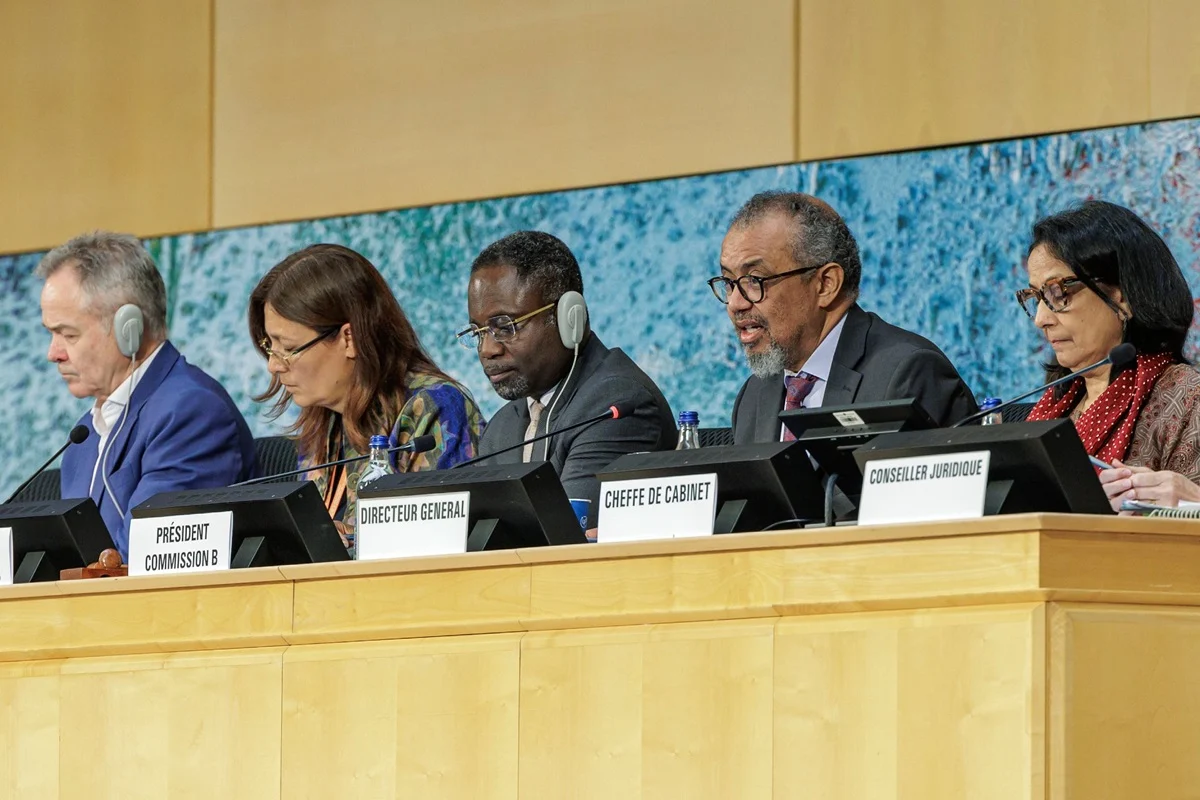
The Seventy-ninth World Health Assembly, convened on 22 May 2026, has adopted a suite of resolutions designed to reform the global health architecture and address urgent public health priorities. Member States agreed to establish a joint process, led by countries and hosted by the World Health Organization (WHO), to develop recommendations for system reforms that enhance equity and access. This process will draw on existing initiatives, including the UN80 Initiative, and involves meaningful engagement with civil society and youth stakeholders.
Delegates acknowledged that while the current global health architecture has delivered significant improvements in disease control and norm-setting, it has not kept pace with evolving challenges such as changing disease burdens, rapid technological advancement, and contractions in health financing. The Assembly requested the WHO Director-General to submit a final report with options for transformation to next year’s assembly.
A key outcome of the session was the approval of the first-ever resolution on stroke, titled “Reducing the burden of stroke: strengthening prevention, acute care, rehabilitation and health-system readiness”. Proposed by Egypt and co-sponsored by Chile, Georgia, Palestine, Paraguay and Tunisia, the resolution highlights that the lifetime risk of stroke has increased by 50 per cent over the past two decades. In 2021, stroke was the third leading cause of death and disability globally, accounting for an estimated 93.8 million cases. The resolution calls for strengthened national and global action to reduce this burden through improved prevention and care systems.
The Assembly also endorsed a new Global Strategy for Integrated Emergency, Critical and Operative (ECO) Care for 2026–2035. This strategy provides a roadmap to countries to strengthen health systems and deliver timely, affordable, and quality ECO services. Conditions addressable by ECO care account for an estimated 38 million deaths and 1.3 billion disability adjusted life years annually. WHO will develop an action plan with implementation targets by the end of 2026.
In a move to improve access to safe medicines and vaccines, members approved a resolution to strengthen global pharmacovigilance systems. Recognising lessons from the COVID-19 pandemic, the resolution supports the modernisation of national monitoring systems, the integration of patient reporting mechanisms, and the use of digital technologies and artificial intelligence to enhance safety surveillance. Progress will be reported to future assemblies between 2028 and 2032.
Other significant decisions included a resolution to scale up access to essential diagnostic imaging through teleradiology, aiming to bridge gaps in remote and underserved areas. Additionally, the Assembly approved a landmark resolution on precision medicine, setting a global path toward more targeted and personalised healthcare, while requesting WHO to develop a global strategy and framework for country readiness. The assembly also adopted resolutions on strengthening radiation protection and addressing the public health impact in Gulf Cooperation Council countries and Jordan.
Regarding Argentina’s status, the Assembly considered proposals concerning the country’s withdrawal notification and agreed on a compromise text by consensus. The assembly took note of the communication and decided that no further action was desirable at this stage, while affirming that WHO would always welcome Argentina’s full cooperation.
The assembly also continued reporting on the health crisis in the occupied Palestinian territory, following a director-general’s report highlighting severe strain on healthcare services. The report noted health sector losses estimated at US$ 6.78 billion, including US$ 1.39 billion in infrastructure damage, and recorded 1,947 attacks on healthcare since October 2023. Delegates agreed to continue reporting on these conditions to the next assembly.