White House seeks $87.6bn in supplemental spending for Iran war amid congressional resistance
The Trump administration’s request for $67bn in defence funding follows a recent war powers resolution, facing stiff opposition from Democrats and a faction of Senate Republicans who cite the conflict’s unpopularity and lack of clear objectives.
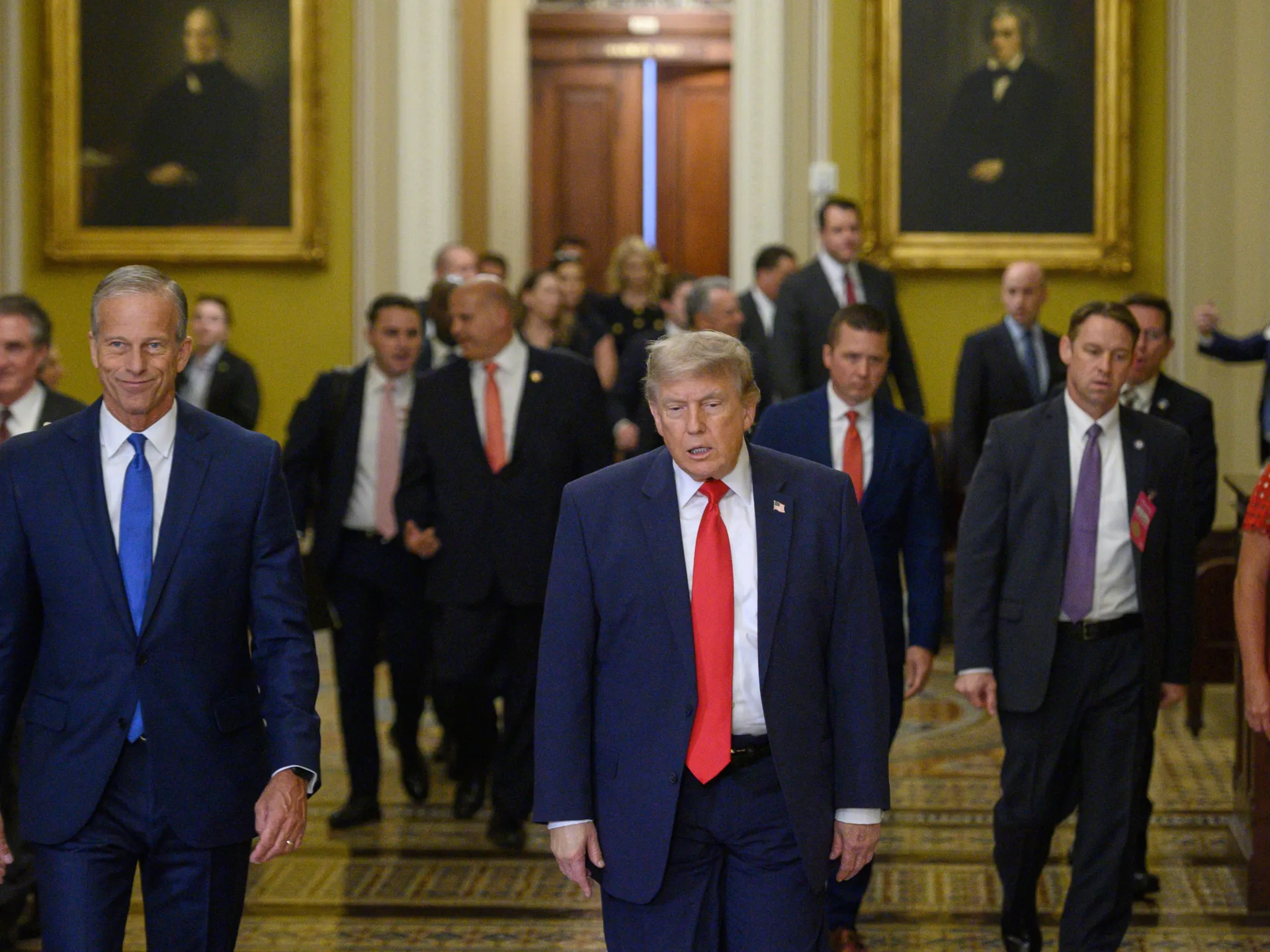
The Trump administration has formally requested $87.6bn in additional spending from Congress, with approximately $67bn designated for the Department of Defense to support military operations in the US-Israel war on Iran. Office of Management and Budget Director Russell Vought submitted the proposal to House Speaker Mike Johnson on Wednesday, urging immediate legislative action to address urgent national security needs.
The majority of the defence allocation is earmarked for military personnel, readiness expenses, and operational costs to rebuild stockpiles. Specific figures within the package include $21bn for munitions, $17.3bn for operational costs, and $21.1bn for classified programmes. This request follows a $150bn defence appropriation approved by Congress last year under the One Big Beautiful Bill Act.
The spending proposal arrives just one day after Congress passed a war powers resolution urging the president to halt military activities against Iran or seek formal legislative approval. The vote exposed a significant rift within the Republican Party, with Senators Lisa Murkowski, Susan Collins, Bill Cassidy, and Rand Paul crossing party lines to support the resolution. Two other senators did not vote on the measure.
Political opposition to the funding request is intensifying, driven by the war’s declining public support and concerns over unrelated Pentagon priorities. An Ipsos and Reuters survey released earlier this week indicated that only 24 percent of respondents believed the war was worth its cost. Senator Patty Murray of Washington stated she would not “rubber-stamp” the request, describing it as an attempt to secure funding for a “disastrous war of choice” outside the annual appropriations process.
Internal Republican dissent was further highlighted during a closed-door luncheon, where Senator Bill Cassidy reportedly confronted President Trump. Cassidy noted that the conflict had lasted four months rather than the expected four weeks and that original objectives had not been achieved, pledging to continue voting for war powers resolutions until Congress received a full briefing on the war effort.
To incentivise passage, the White House has included $11.1bn in farm aid, $1.4bn for Ebola outbreak response in Africa, and $1.5bn for infrastructure projects. The infrastructure component includes $1bn for New York’s Penn Station improvements and $500m for restoration and construction in Washington, DC, including the demolition of the White House’s East Wing.
Despite the inclusion of domestic priorities, the proposal faces an uphill battle in Congress. Representatives Tom Cole and Ken Calvert backed the request, arguing that defence strength must be maintained, but the political appetite for another large spending bill remains low with midterm elections approaching in November.