West Bank graffiti signals settler impunity and displacement strategy
Experts describe the brazen defacement of Palestinian homes and schools as a calculated declaration of ownership, with perpetrators operating under the assumption that they will not face accountability.
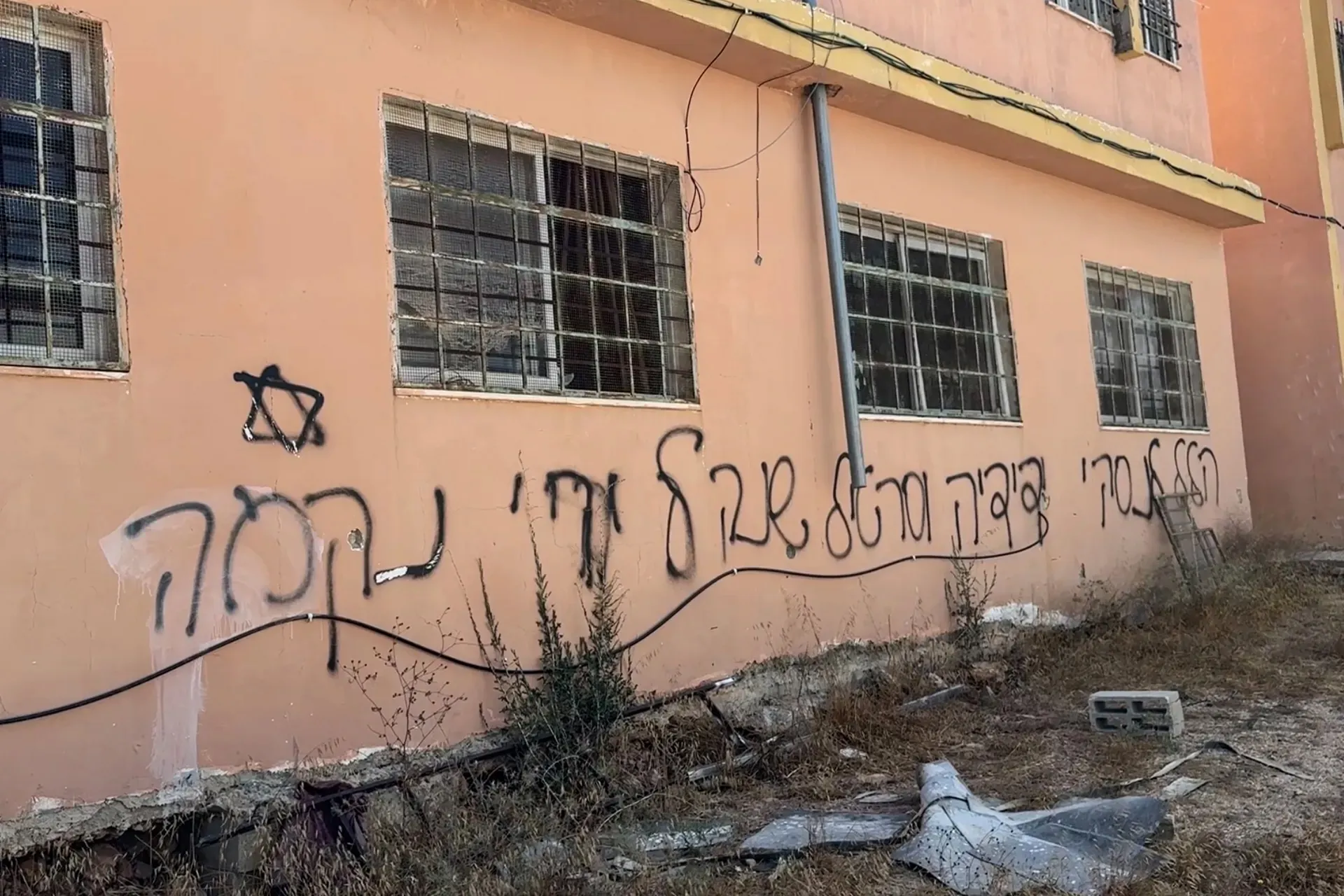
Israeli settlers have intensified campaigns of intimidation against Palestinian communities in the occupied West Bank, utilising racist graffiti and arson to assert territorial control. In the village of Jalud, located 27km south of Nablus, residents have reported repeated defacement of public institutions and private residences with slogans such as “Burn in hell” and “Get out of the village.” These acts, often accompanied by the burning of vehicles and property, are attributed to far-right settler groups including the Hilltop Youth and the Price Tag movement.
The latest major assault in Jalud occurred on 4 August 2026, when settlers targeted a residential building with hate speech and set fire to vehicles. This incident marks the fifth major attack on the village since January. Village officials note that the graffiti frequently bears the names of settlers killed in Gaza, framing the violence as retaliatory. Raed al-Haj Mohammed, head of the village council, described the messages as “racist and liquidationist,” noting that they are designed to instil fear in children and signal that expulsion is inevitable.
Analysts view the graffiti as more than mere vandalism; it is a strategic tool for displacement. Azzam Abu al-Adas, a researcher in Israeli affairs, told Al Jazeera that slogans like “Death to Arabs” reflect a mainstreaming of genocidal ideology within Israeli society since the war on Gaza began in October 2023. He argued that the Price Tag movement, a clandestine network of far-right groups, views Palestinians as occupiers who must pay a price for their presence until they are permanently removed.
The content and placement of the messages serve a dual purpose. While some slogans are directed at Palestinians to terrorise them, others written in Hebrew or featuring the Star of David act as an “ownership mark” for other settlers and the Israeli state. Walid Habbas, another researcher, described the Star of David as a “sovereign signature” intended to declare the land subject to settler control. Targeting mosques and crops is seen as a deliberate strategy to destroy the elements of Palestinian survival and collective identity.
The crude and unhidden nature of the writing suggests a belief among perpetrators that they will not be held accountable. Habbas noted that the public visibility of the crimes serves as a message about the balance of power, indicating a “structural complicity” that allows such violence to recur. This impunity is further reinforced by the Hilltop Youth’s strategy of creating fait accomplis through settlement outposts, aiming to force legalisation of illegal structures.