West Bank funeral restricted as Abbas condemns violence and Netanyahu orders new outposts
Governing authorities in the occupied West Bank imposed strict movement controls and mass detentions after a confrontation with settlers, while political leaders issued sharply divergent responses to the escalating instability.
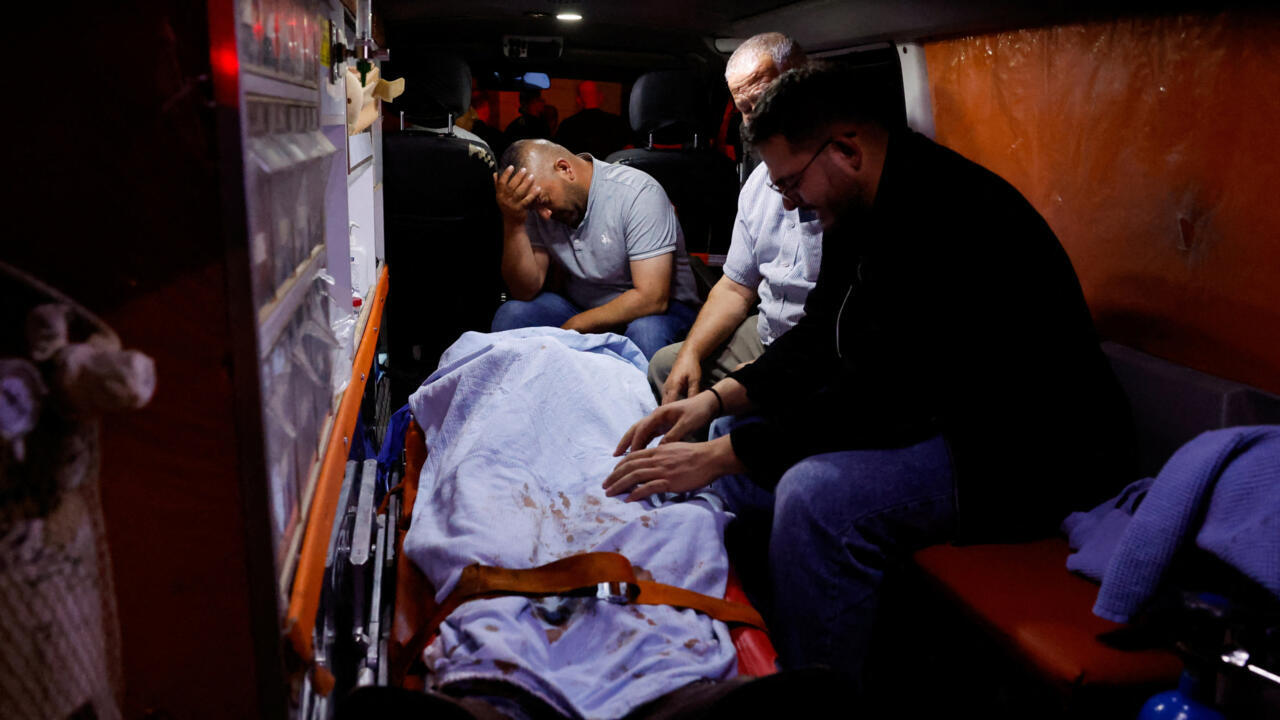
Families in the occupied West Bank village of Tell buried four Palestinian men on Saturday, following a violent confrontation with Israeli settlers that occurred the previous day. The burial, held around 01:00 local time, was conducted under heavy military restriction, with Walid Zidan, head of the Tell village council, confirming that only approximately 30 attendees were permitted to enter the area.
The incident began on Friday when approximately 20 settlers from a nearby settlement entered Tell, leading to a clash with residents defending their property. According to local officials, the situation escalated after a Palestinian villager seized an Israeli weapon and shot one settler dead. This prompted an emergency response team from the settlement to arrive at the scene, resulting in further gunfire that left four Palestinians and a second Israeli dead, as reported by the Israeli military.
In the aftermath of the shooting, Israeli forces implemented severe movement restrictions across the West Bank, closing gates and checkpoints. By Saturday morning, military personnel remained in Tell, where they had detained 51 residents for questioning. Only six of those detained were released. Ghassan Daghlas, the governor of the Nablus region, attended the funeral, which his office described as having a large public turnout despite the military presence.
Violence extended beyond Tell to other villages in the northern West Bank. In Farata, near Havat Gilad, settlers set fire to olive groves. Abdel Moneim Shanneh, head of the local council, stated that the army prevented young men from extinguishing the fires and opened fire on them. The Palestinian Red Crescent reported transporting eight individuals injured in the Farata attack, including six with bullet wounds, while two additional men were wounded in Sarra.
Palestinian President Mahmoud Abbas’ office condemned the killings as "Israeli colonists' terrorism," denouncing the events in Tell alongside attacks in Awarta, Sarra, Urif, Amriha, and Masafer Yatta. Conversely, Israeli Prime Minister Benjamin Netanyahu ordered the establishment of new settler outposts in the occupied West Bank on Saturday, promising to accelerate the legalisation of farm outposts and the creation of new ones.
The West Bank has seen a surge in violence since the Gaza war began following the October 7, 2023 attacks. Data from the Palestinian health ministry indicates that at least 1,094 Palestinians have been killed by Israeli soldiers or settlers since the conflict began. Israeli figures show that at least 48 Israelis, including civilians and security personnel, have been killed in Palestinian attacks or during military operations over the same period.
More than 500,000 Israelis currently reside in settlements in the West Bank, a territory occupied by Israel since 1967 and home to approximately three million Palestinians. Under international law, all settlements in the territory are considered illegal, a status that also applies to unapproved outposts, which are typically small, temporary structures established on hilltops.