West Bank Bedouin leader describes 'third Nakba' as displacement accelerates
UN data reveals over 5,900 Palestinians displaced since January 2023, with 45 communities erased, as violence in Area A and B continues to displace families despite legal protections.
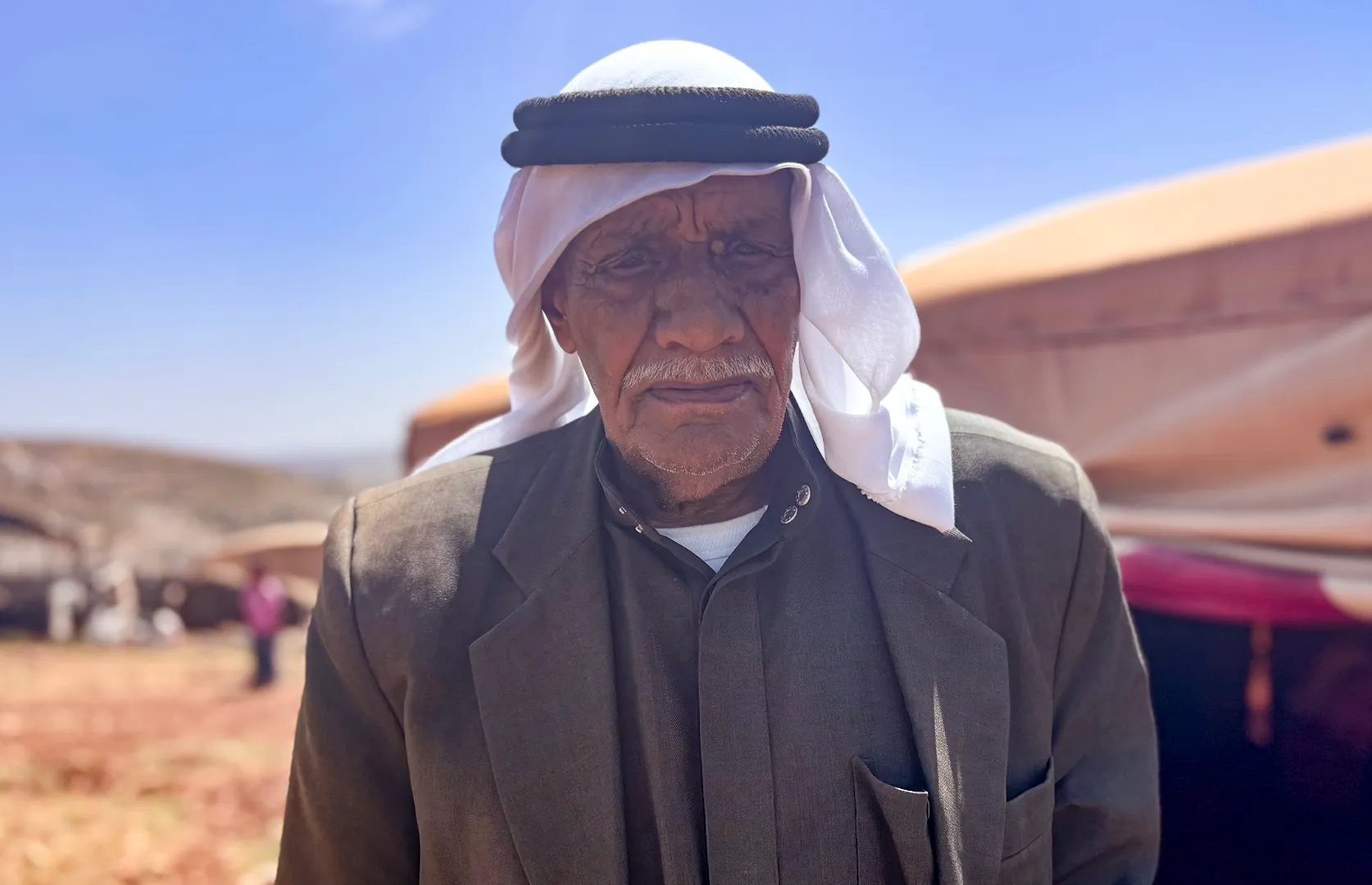
Abu Najjeh, the mukhtar of the former Ein Samiya Bedouin community in the occupied West Bank, has been forcibly displaced for the seventh time since 1948, relocating to a precarious tent encampment near Rammun. Describing the current wave of violence as the 'third Nakba', Najjeh leads a community that has been systematically uprooted from its historical grazing lands in the Naqab Desert and subsequent West Bank settlements over eight decades.
The latest displacement follows the killing of 16-year-old Yousef Kaabneh, a member of Najjeh’s extended clan, by armed settlers in Jiljilyya on Wednesday morning. Prior to the shooting, settlers stole hundreds of sheep and two tractors from the family in the village, which is located in Area A under Palestinian Authority administration. Despite Israeli law prohibiting civilian entry into Area A, dozens of settlers rampaged through Jiljilyya, Sinjil, and Abwein, opening fire on residents and killing Kaabneh.
Najjeh’s family had relocated to Jiljilyya in 2023, hoping to find safety from settler attacks that had previously displaced them from Ein Samiya. However, the community’s history reflects a continuous cycle of expulsion, beginning with their removal from the Bir al-Saba area in 1948, followed by displacement from Masafer Yatta in 1967. Since then, military orders and settler encroachment have prevented the community from establishing permanent roots, forcing them through various locations including Khirbet Abu Falah in Area B before their most recent move to Rammun.
Conditions in the new encampment are severe, with no electricity and water trucked in at a cost of 250 shekels ($86) per tank. The land is unsuitable for their traditional herding lifestyle, and the remaining livestock have become an economic burden rather than a livelihood. Najjeh noted that illegal settler outposts have appeared within metres of the encampment, including one established within the past week, leaving the family with no viable relocation options.
According to the United Nations Office for the Coordination of Humanitarian Affairs, more than 5,900 Palestinians from 117 communities have been displaced in the West Bank since January 2023 due to settler attacks and access restrictions. Forty-five communities have been completely erased, with approximately 2,000 people driven from their homes in 2026 alone. The UN reports that settler attacks and Israeli military raids have killed at least 1,090 Palestinians since October 2023, highlighting a systematic pattern of displacement rather than isolated incidents.
Najjeh characterised the current situation as a deliberate strategy to make life impossible for Palestinians, stating, "They want the world to starve... To make life impossible so that the world emigrates." With the eastern face of the West Bank cleared of grazing land and new outposts established in previously secure areas, the community remains in a state of constant crisis, with Najjeh rushing to respond to unfolding violence in Jiljilyya while his grandchildren sleep in tents near settler settlements.