Washington imposes 25 per cent tariff on Brazilian imports citing unfair trade practices
President Lula da Silva condemns the move as politically motivated, alleging it aims to favour rival Flavio Bolsonaro ahead of upcoming elections.
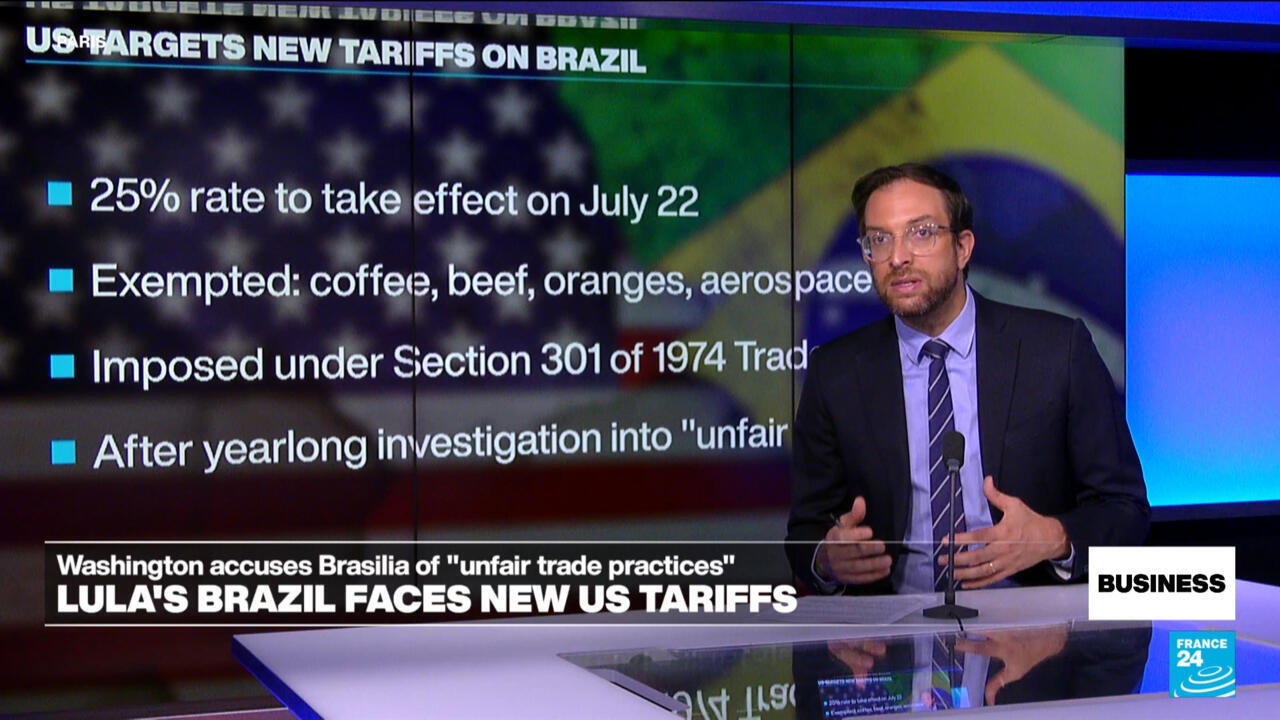
The United States has announced the imposition of a 25 per cent tariff on certain Brazilian goods, effective from 22 July. The measure follows a 12-month investigation conducted under the Trade Act of 1974, which determined that Brazil engaged in unfair trade practices.
The decision marks a significant escalation in bilateral trade relations, with Washington citing structural imbalances as the basis for the punitive duties. While the specific categories of goods subject to the tariff were not detailed in the initial announcement, the blanket 25 per cent rate signals a broad-based approach to correcting what US authorities view as market distortions.
Brazilian President Luiz Inácio Lula da Silva has strongly condemned the decision, describing it as a politically motivated intervention. In his response, Lula alleged that the timing and nature of the tariffs were designed to influence the outcome of upcoming elections in Brazil by favouring his political rival, Flavio Bolsonaro.
The reference to Flavio Bolsonaro as the primary beneficiary of the policy has drawn attention, noting his status as a prominent political figure and the son of former president Jair Bolsonaro. Lula’s assertion frames the trade dispute not merely as an economic disagreement, but as an external attempt to interfere in Brazil’s domestic political landscape.
The investigation under the Trade Act of 1974 provided the legal framework for the US action, concluding that Brazilian policies constituted unfair competition. However, the precise nature of these practices remains unspecified in the available reporting, leaving the exact scope of the grievance open to interpretation by market observers.
As the July 22 implementation date approaches, the trade barrier introduces new uncertainty for exporters on both sides of the Atlantic. The dispute highlights the increasing use of trade legislation as a tool for geopolitical and domestic political leverage, with economic measures now explicitly linked to electoral outcomes.