WA government removes Nicky Winmar statue amid debate over colonial monuments
The swift removal of the Perth Stadium statue follows the former AFL player’s domestic violence conviction, sparking scrutiny of enduring tributes to colonial figures linked to Aboriginal dispossession.
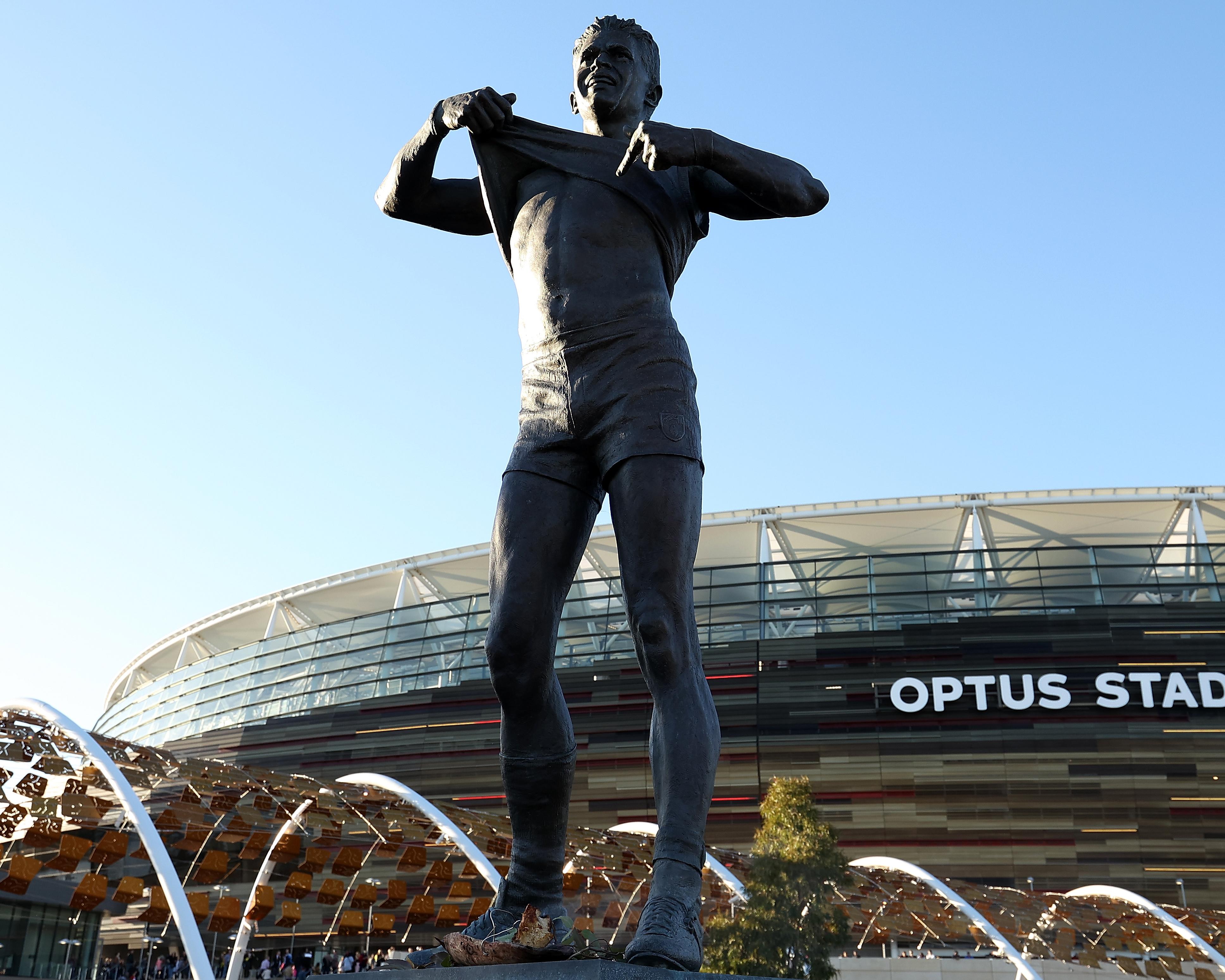
The Western Australian government has removed a statue honouring former AFL player Nicky Winmar following his conviction for domestic violence. The decision to unilaterally take down the Perth Stadium monument, which depicted the Noongar man lifting his jersey in response to racial abuse in 1993, has ignited debate regarding the memorialisation of living figures and the criteria used to determine public honour.
Guardian Australia columnist Paul Daley argues that the removal symbolises a “wilful cancellation” of Winmar due to his crime. While the action addresses the transgression, it has drawn comparisons to the continued presence of monuments to colonial figures involved in the dispossession and killing of Aboriginal people. Critics note a perceived double standard in public spaces, where statues of settlers associated with violence remain largely intact.
Perth historian Chris Owen points out that the crimes of colonial figures were well-documented at the time their monuments were erected. A statue of former WA governor James Stirling, who led the 1834 Pinjarra massacre, was recently moved into storage. This occurred amid renewed public debate about his legacy, although it remains unclear if the relocation was directly linked to this scrutiny, particularly as his crimes were established long before the statue’s dedication in 1979.
Other monuments to colonial figures remain in prominent locations. Statues of the Forrest brothers, John and Alexander, stand in Kings Park and on Barrack Street. John Forrest, the first premier of WA, advocated in parliament for the killing of Aboriginal people and had personal experience of violence against Indigenous groups during his expeditions. Alexander Forrest’s statue features him with a slung rifle, a detail critics view as a nod to the state’s brutal pastoral history.
Similar debates have influenced monument management in other states. In Melbourne, the colonial-era statue of Burke and Wills, Victoria’s oldest public monument, has been removed to storage and is likely to be replaced by an Indigenous-themed monument. In Sydney, a statue of Lachlan Macquarie, dedicated in 2013 despite his role in the 1816 Appin Massacre, remains a point of contention regarding the eulogising of colonial governors.