Von der Leyen floats first-of-its-kind associate membership for Canada
The European Commission President’s proposal to grant Canada a new status aims to coordinate trade responses to US tariffs, setting a precedent distinct from existing arrangements with Switzerland, the UK, and EFTA states.
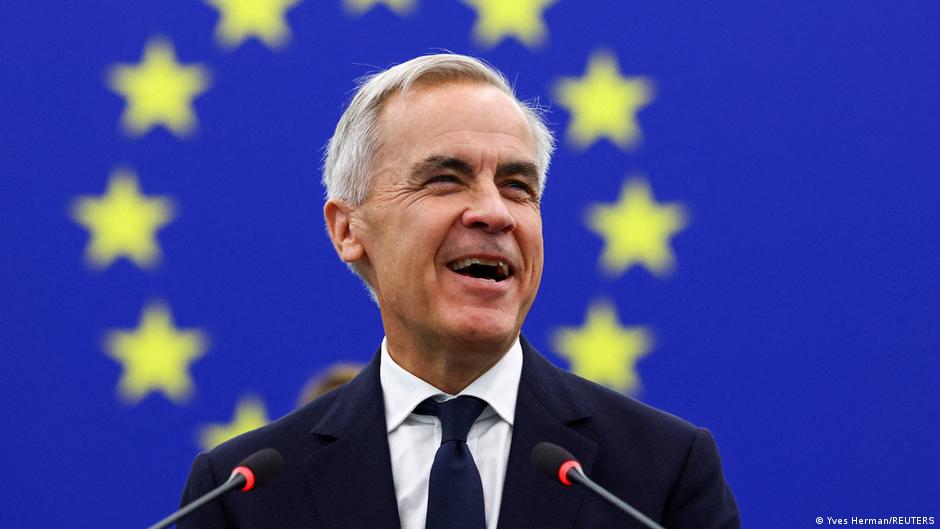
European Commission President Ursula von der Leyen has proposed that Canada become the European Union’s first associate member, a move designed to deepen political ties and coordinate responses to tariffs imposed by the United States. The suggestion was put forward during the state of the European Union speech on Thursday, with Canadian Prime Minister Mark Carney in attendance. Carney responded by stating that Canada and the EU “see the world with the same eyes,” citing shared deep roots in the rule of law and democracy.
The concept of associate membership is currently undefined, making it difficult to determine the precise institutional implications. The proposal appears to be a pragmatic response to the need for an effective mechanism to deal with the administration of Donald Trump. While the status is novel, it draws on precedents set in other contexts, such as a similar arrangement Germany proposed for Ukraine earlier this year, which was rejected by President Volodymyr Zelenskyy in favour of full membership.
The EU already maintains various special relationships with non-member states, though none are officially designated as associates. The European Free Trade Association (EFTA) countries, for instance, are part of the EU’s internal market, allowing the free movement of people, goods, and services within the Schengen area. These nations follow many EU rules in areas such as tourism, environment, and education, but they lack voting rights in the decision-making process and are not bound by the EU’s common trade policy or justice laws.
Switzerland offers another model of close association, having never become a full member despite bordering four EU states. Over the past 50 years, the EU and Switzerland have agreed on more than 120 bilateral deals covering trade, transport, security, and education. A new package of these deals was finalised last year, two decades after the previous agreement. This framework allows more than 1.5 million EU citizens to live and work in Switzerland, while 466,200 Swiss citizens reside in the EU, facilitated by Switzerland’s participation in the Schengen area.
The relationship between the EU and the United Kingdom remains distinct, governed by a trade and cooperation agreement signed more than four years after the 2016 referendum. The UK now has limited access to the EU market and is aligned with the bloc on certain policy and regulatory areas, though free movement of people has ended. Since the centre-left Labour party replaced the Conservatives in government in 2024, discussions regarding a return to the customs union and further policy alignment have become more frequent, although a return to full membership appears unlikely in the near term.
In the Western Balkans, the EU is pursuing a “stabilization and association process” designed to prepare partner countries for accession through economic reforms and investment. Nations such as Albania, Bosnia and Herzegovina, Kosovo, Montenegro, North Macedonia, and Serbia must meet specific criteria to become official candidates. This multi-stage process, which includes negotiations and the ratification of an accession treaty, has not resulted in a new member state since Croatia joined in 2013.