Volvo deploys vehicle-to-vehicle hazard alerts for electric fleet
The Swedish automaker is updating its EX90, ES90, and EX60 models with connected safety features that transmit real-time data on animals, pedestrians, and roadwork to other vehicles on the same route.
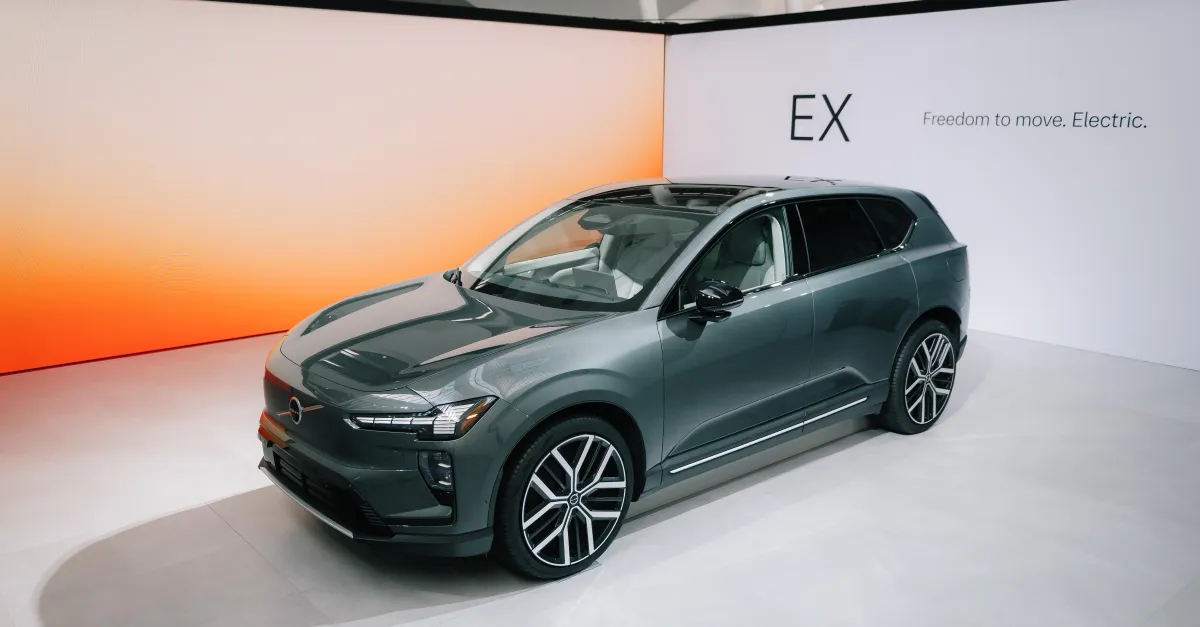
Volvo is expanding its connected safety ecosystem by introducing new hazard alerts for its EX90, ES90, and EX60 electric vehicles. The update allows the cars to warn drivers of specific risks ahead, including large animals, vulnerable road users such as pedestrians and cyclists, roadwork, and accidents. This development marks a shift towards direct vehicle-to-vehicle communication, distinguishing the system from the crowdsourced data models employed by popular navigation applications like Google Maps and Waze.
The mechanism relies on sensors and cameras within Volvo’s existing fleet in Europe, the United States, and Canada. When a vehicle identifies a hazard, it logs the location and transmits the data to Volvo’s servers. These alerts are then distributed to other Volvo vehicles travelling along the same route. While the system depends on cloud connectivity and the road being present in the map database, Volvo notes that its newer electric models possess sufficient computing power to manage the real-time processing requirements.
Volvo has been utilising connected vehicle technology since 2016, a capability developed in partnership with Ericsson. The existing cloud-based system already provides warnings for slippery roads using feedback from steering, braking, and acceleration sensors, and notifies nearby vehicles when hazard lights are activated. The company states that it currently has one million vehicles on the road equipped with these connected safety alert capabilities.
The data generated by this network is not exclusive to Volvo owners. The automaker shares alert information with traffic management centres and other vehicle brands, allowing non-Volvo vehicles to potentially benefit from the safety data. This broader data sharing aims to enhance overall road safety beyond the immediate Volvo customer base.
In a separate update, Volvo announced that the EX90 will receive Spatial Audio support for Apple CarPlay users. The feature is designed to provide a multi-dimensional and immersive sound experience, placing music and vocals around the cabin to enhance the in-car audio environment.
The rollout of these new alerts represents a significant step in the integration of real-time data into vehicle safety systems. By leveraging a large, connected fleet, Volvo is creating a dynamic safety network that relies on collective sensor data rather than individual driver input.