Volunteer networks fill governance gaps in Ukraine’s post-strike reconstruction
As Russian forces continue infrastructure targeting, civilian-led organisations are delivering faster aid and military support than state agencies, highlighting systemic inefficiencies in government response.
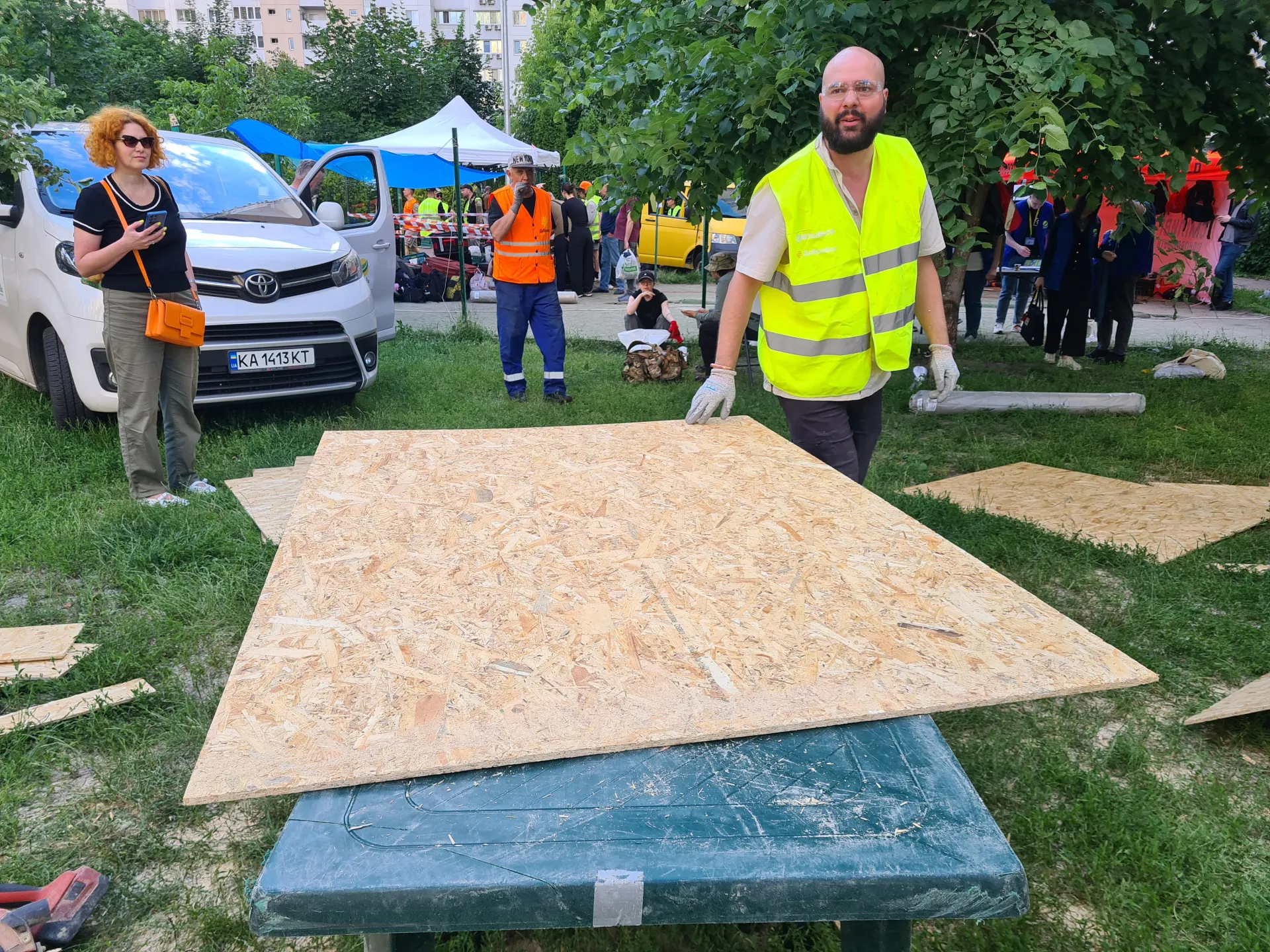
Ukraine’s largest volunteer organisation, Dobrobat, deployed more than 100 personnel to Kyiv within hours of a Russian missile strike on June 15 that killed five civilians and damaged numerous residential buildings. The group, which operates as the country’s primary civilian infrastructure repair force, boarded up windows and cleared rubble in affected apartments, providing immediate security against looting and weather exposure while residents await government subsidies for permanent replacements.
The attack involved 70 missiles fired at the capital, causing widespread structural damage including shattered windows and fires at the Kyiv-Pecherska Lavra complex. Dobrobat, a Ukrainian abbreviation for “Battalion of Kindness,” ensures that damaged zones are cleared of unexploded mines and hazards before dispatching volunteers. The organisation comprises over 55,000 members, including locals and foreigners from approximately 30 countries, and has assisted more than one million Ukrainians in restoring homes since the start of the full-scale invasion in 2022.
International participation in the volunteer effort has intensified, with individuals such as Lars Fersters from Sweden and Jason Hercula from the United States travelling to Ukraine for extended periods to assist with repairs. Hercula, a hair stylist from North Carolina, funded his travel by selling plasma, while Fersters, a retired blacksmith, utilised translation apps to coordinate with Ukrainian colleagues. These volunteers provide both rapid-response measures, such as tarpaulin roofs, and long-term retrofitting projects, including the reconstruction of homes in suburbs like Irpin that were damaged in the initial phases of the conflict.
Dobrobat operates within a broader volunteer movement that supplies military equipment, evacuates civilians, and delivers aid more rapidly than government agencies. Groups such as Army SOS have developed software enabling soldiers to transmit coordinates for drone strikes, while others raise funds for drones, flak jackets, and medical supplies. Ukrainian schoolchildren also contribute by assembling drones and weaving camouflage nets, demonstrating a societal mobilisation that extends beyond traditional civil defence roles.
The efficiency of these civilian networks stands in stark contrast to state institutions, which are frequently accused of bureaucracy and corruption. A serviceman identified as “Baloo” noted that volunteer-led initiatives are significantly more reliable than state responses, stating that dealing with the government carries a 50/50 chance of success. This disparity underscores the critical role volunteer groups play in maintaining civilian resilience and supporting military operations in the absence of timely state intervention.