Venezuela’s La Guaira grapples with recovery limbo weeks after twin quakes
Search operations in northern Venezuela have shifted from rescue to recovery, with authorities establishing field offices to process reports while residents struggle with a lack of heavy machinery.
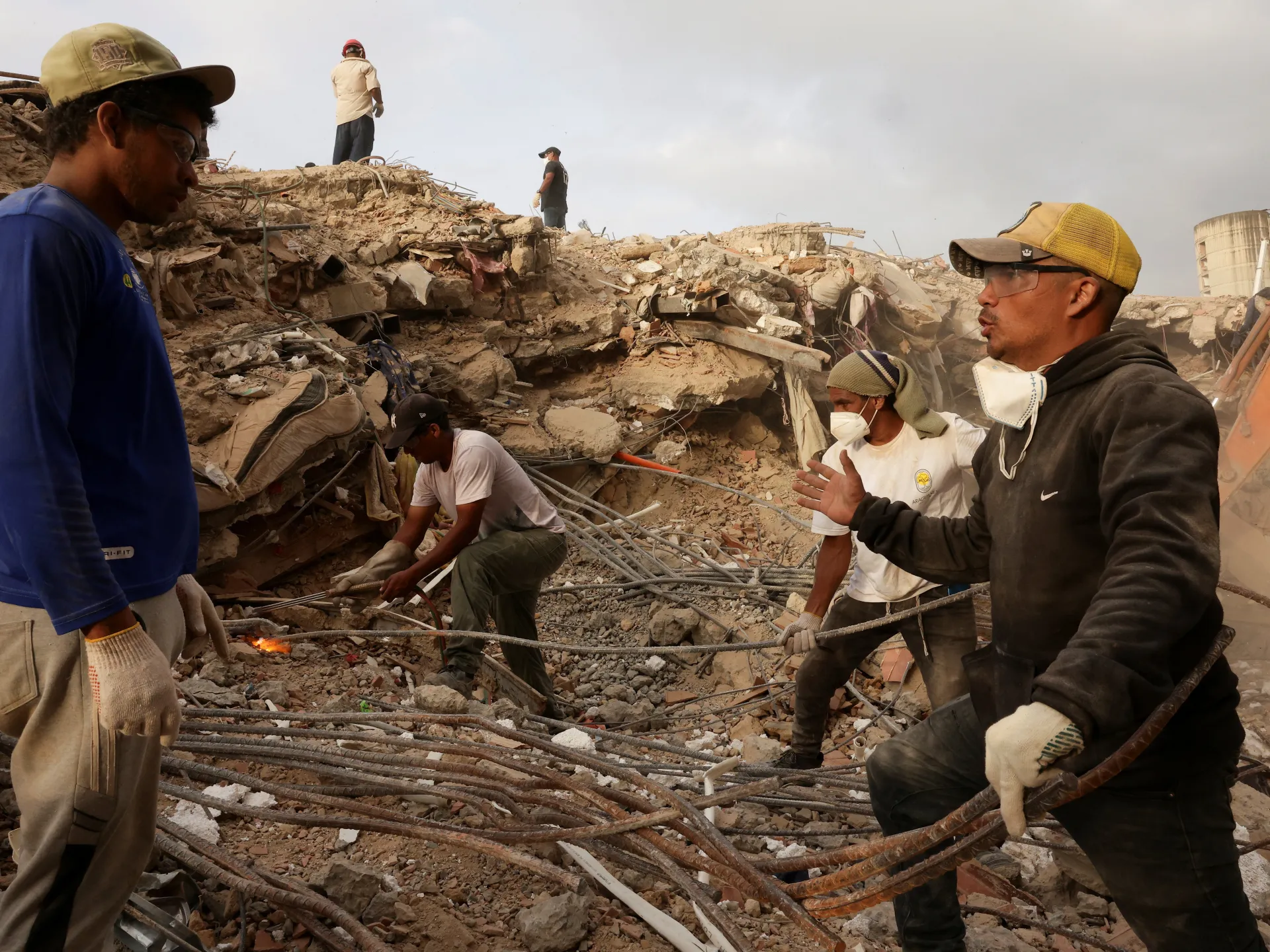
Weeks after twin earthquakes with magnitudes of 7.2 and 7.5 struck La Guaira, Venezuela, on June 24, the region remains in a state of protracted crisis. The official death toll has risen to more than 5,000, yet thousands of families continue to search for missing relatives amidst the rubble of collapsed apartment blocks. The disaster has created a significant administrative and humanitarian challenge, as the focus of operations has transitioned from immediate rescue to long-term recovery and debris clearance.
Ivan Chino, a resident of La Guaira, exemplifies the enduring struggle of those affected. Chino has spent nearly three weeks searching for the bodies of seven family members, including his parents, grandson, and two nieces, who disappeared when their building collapsed. While his wife and children survived, Chino and other volunteers have been forced to rely on manual tools such as shovels, pickaxes, and hammers to sift through concrete debris. He stated that the shortage of heavy machinery is the primary obstacle to safely moving large blocks and accelerating the recovery of remains.
The scale of the tragedy is reflected in the operational data released by authorities. Search and recovery teams have rescued approximately 280 people and recovered nearly 477 bodies. Dani Herrera, a search coordinator in La Guaira, confirmed that teams continue to recover victims and clear debris weeks after the initial event. The mission has evolved from racing against time to find survivors to a methodical process of retrieving the dead and helping families find answers.
To manage the influx of information, authorities have established temporary field offices where families submit reports, photographs, and personal details of missing relatives. Officials review this information, cross-check records, and work to identify those recovered from the rubble. For many residents, these offices represent a critical stage in the search, shifting the effort from physical labour to bureaucratic processing, though the outcome remains uncertain for many.
The lack of confirmed outcomes has left thousands of families in an emotional limbo, preventing them from holding funerals or beginning the mourning process. Without knowing the fate of a missing relative, there can be no grave or closure. The uncertainty has become a significant burden, with residents hoping for certainty rather than miracles, seeking to ensure their loved ones are remembered with dignity rather than as unconfirmed statistics.