Venezuela’s $50bn reconstruction challenge outpaces international aid pledges
With the UN humanitarian response plan underfunded by $566m, experts caution that political repression and lingering sanctions may derail recovery efforts despite recent policy shifts towards Washington.
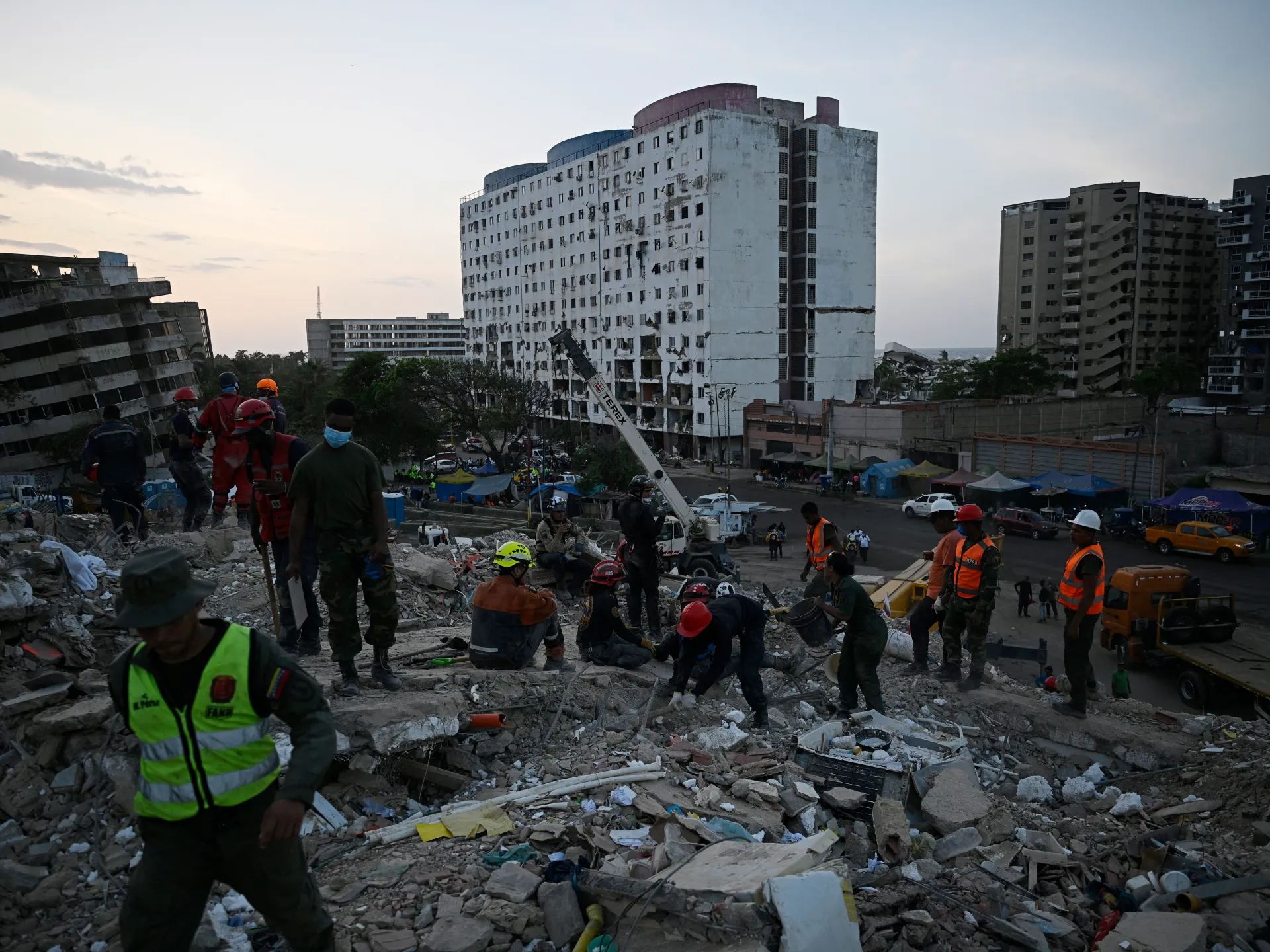
The World Bank has estimated that full recovery from the magnitude 7.2 and 7.5 earthquakes that struck Venezuela on 24 June 2026 could cost up to $50bn, a figure significantly higher than preliminary United Nations assessments. The disaster has resulted in more than 5,000 confirmed deaths and 17,000 injuries, with NASA reporting that over 58,000 buildings were destroyed or damaged. While physical damage is estimated at nearly $20bn, the institution notes that rebuilding to improved standards and clearing debris will drive costs higher, potentially keeping the country’s gross domestic product below pre-quake levels until 2036 without substantial public and private investment.
Interim President Delcy Rodriguez has moved to secure emergency financing, announcing that Venezuela has obtained $346m from the International Monetary Fund to address immediate humanitarian needs. This follows a pledge of $300m in assistance from the United States, which has exerted considerable influence over Caracas since the abduction of former President Nicolas Maduro in January. The US has also eased certain sanctions to facilitate aid flows, a move that aligns with Rodriguez’s recent policy shifts towards American priorities, though the administration maintains that further military pressure remains an option.
Despite these commitments, the United Nations humanitarian response plan remains critically underfunded, with a shortfall of approximately $566m against a required $931m for 2026. Only 39 per cent of the necessary funding has been secured, leaving the UN Office for the Coordination of Humanitarian Affairs to manage a crisis where 1.3 million people are expected to require assistance over the next six months. Additional contributions include $36.5m from the European Commission, $17m from the UN’s Central Emergency Response Fund, and $9m from Germany, alongside efforts by the Development Bank of Latin America and the Caribbean to channel private sector funds.
The scale of the human toll continues to mount as rescue operations transition from saving survivors to recovering remains. The UN estimates that up to 51,000 people may still be missing, with 18,000 left homeless. In the coastal region of La Guaira, families have spent weeks searching for loved ones with limited success, highlighting the logistical challenges facing authorities who have not released an official tally of the missing. The labour supply is projected to drop by 1 per cent this year, further complicating the economic recovery.
Civil society groups and some US lawmakers argue that the disaster has exposed pre-existing structural failures rather than creating new ones. Beatriz Borges of the Centre of Justice and Peace warned that ongoing political repression and government hostility towards humanitarian groups could hinder relief efforts, calling for political reforms to accompany physical reconstruction. Meanwhile, Democratic Congressman Chuy Garcia has urged the Trump administration to lift all remaining sanctions and restore access to frozen assets, arguing that such measures are essential to support a full humanitarian response in a country already grappling with widespread poverty and economic deterioration.