Valve overhauls Steam gifting and wishlist tools with email integration and categorisation
New features allow direct email gifting for same-region recipients and enable custom sorting of wishlists with targeted sale notifications.
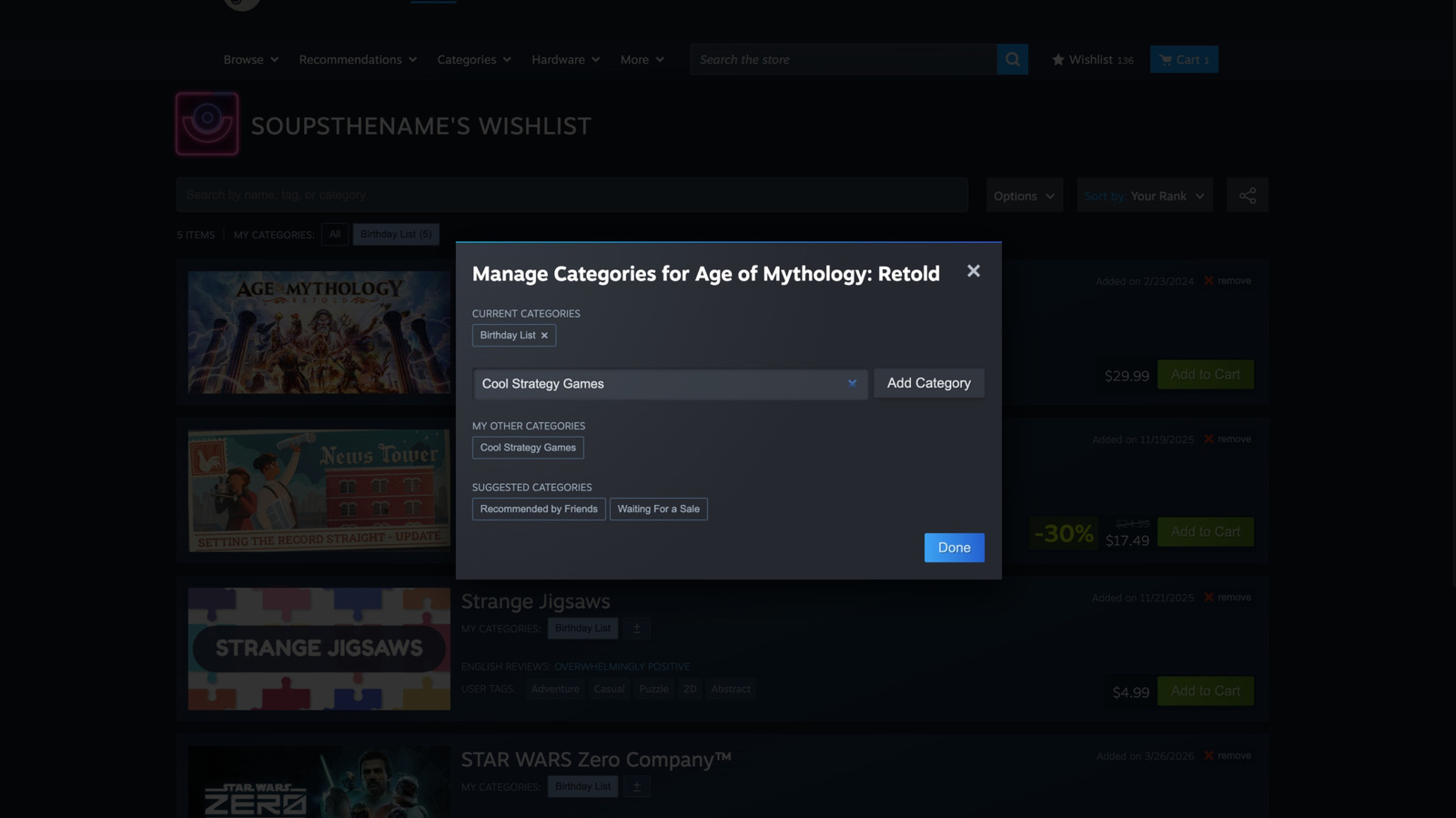
Valve has rolled out a significant update to the Steam platform, introducing streamlined guest gifting capabilities and enhanced wishlist organisation tools. The changes, reported by Engadget, aim to reduce friction in the purchasing process for both avid gamers and those less familiar with the ecosystem. The update expands how users can transfer game purchases and provides finer control over how saved items are managed and shared.
Under the new guest gifting framework, users can now send games directly via email to recipients who do not hold a Steam account. This functionality is restricted to transactions where the sender and recipient are located in the same country. To prevent lost revenue, the system automatically refunds the purchase if the recipient does not accept the gift within 30 days. Previously, gifting was largely limited to physical hardware, gift cards, or requiring the recipient’s specific Steam account credentials.
For international transactions, the requirements remain stricter. Users must still be connected as friends on Steam to gift games across borders. However, Valve has introduced automatic regional pricing adjustments at checkout, calculating the cost in the recipient’s local currency. This addresses a previous limitation where cross-border gifting lacked dynamic pricing adjustments, potentially simplifying the process for users purchasing gifts for friends in different markets.
The second major component of the update focuses on wishlist management. Users can now sort saved games into custom categories, functioning similarly to folders or tags. This allows for granular organisation, enabling users to filter their lists by specific interests or groups. Notifications regarding sale events can be toggled on or off for individual categories rather than applying to the entire list, giving users more precise control over their alert preferences.
Additional refinements accompany these core features. Users can generate shareable links for their entire wishlist or specific categories, facilitating easier collaboration or recommendation. The interface also allows users to preview game demos and play trailers by hovering over items within their wishlist. These updates collectively aim to make the platform more accessible for non-gaming audiences while providing power users with better organisational utilities.