US Treasury targets 60 entities in bid to 'asphyxiate' Iran’s economy
Washington has imposed sweeping sanctions on networks across Asia and Europe, focusing on digital assets, shipping and technology to disrupt Iran’s oil revenue and weapons procurement.
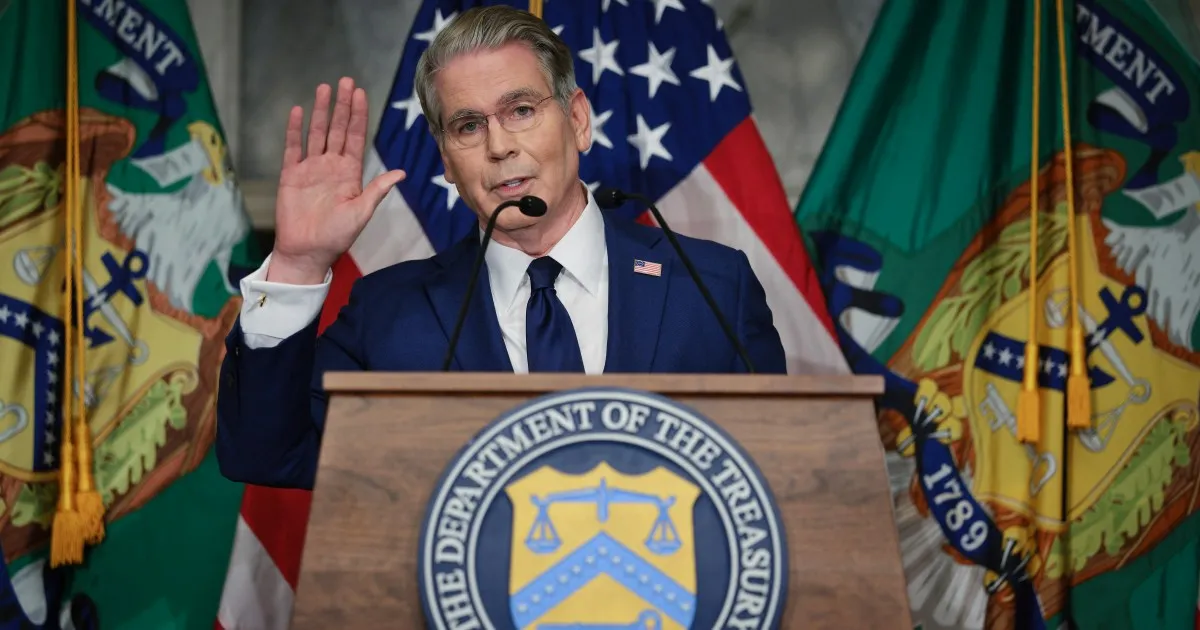
The United States has announced a new wave of economic sanctions targeting nearly 60 individuals and entities across Iran, China, Singapore and Europe. US Treasury Secretary Scott Bessent described the measures as a campaign of "economic asphyxiation" designed to sever the economic lifelines sustaining the Iranian regime. The sanctions were announced on Monday as the US-Israeli conflict with Iran approaches its six-month mark, occurring against a backdrop of diplomatic deadlock.
The Department of the Treasury stated that the measures focus on five key sectors: digital assets, technology, gold, aviation and shipping. According to Washington, these sectors sustain Iran’s economy and facilitate oil revenue generation, weapons procurement and cyberoperations. The sanctions specifically target companies and vessels involved in networks supporting Iran’s nuclear and missile programmes.
A primary focus of the new package is a procurement network comprising more than 20 people and entities across the Middle East and East Asia. The US Treasury accused this network of helping Iran obtain sensitive dual-use technology for nuclear research and ballistic missile development through front companies and covert financial channels. Iranian government ministries, including the Ministry of Intelligence and Security and the Ministry of Defence and Armed Forces Logistics, are also primary targets.
Specific entities sanctioned include Hong Kong-based Sweet Ocean Industrial Ltd and Shenzhen Sweet Ocean Technology Ltd, which are accused of acting as intermediaries for sensitive equipment. In Singapore, Azure Shipping Pte Ltd was targeted for its work with the National Iranian Tanker Company. The list also includes UAE-based businessmen Mohammad Ahmed Suhil Fattouh and Ivan Obukhov, who were accused of brokering deals for Iranian shadow fleets.
Notably, Chinese financial institutions suspected of facilitating Iran’s oil trade were omitted from the list. Bessent declined to identify countries that could face future secondary sanctions, stating that Washington would allow time for countries and companies to cut business ties with Iran. This cautious approach appears significant given that China has been Iran’s largest oil buyer for several years, and Beijing is a major supplier of critical minerals.
Iran has rejected the measures, with Economy Minister Ali Madanizadeh stating that Washington cannot achieve its goals by "severing the arteries" of the Iranian economy. China’s Foreign Ministry described the actions as "illegal unilateral sanctions" and warned that Beijing would take all necessary measures to safeguard its interests. Former UN special rapporteur Alfred-Maurice de Zayas warned that the US actions could lead to more countries decoupling from the dollar.