US to withdraw key air and naval assets from NATO Europe operations
European officials confirm significant reduction in US fighter jets and maritime surveillance aircraft, complicating defence planning amid rising Russian threats and Trump’s demands for increased allied spending.
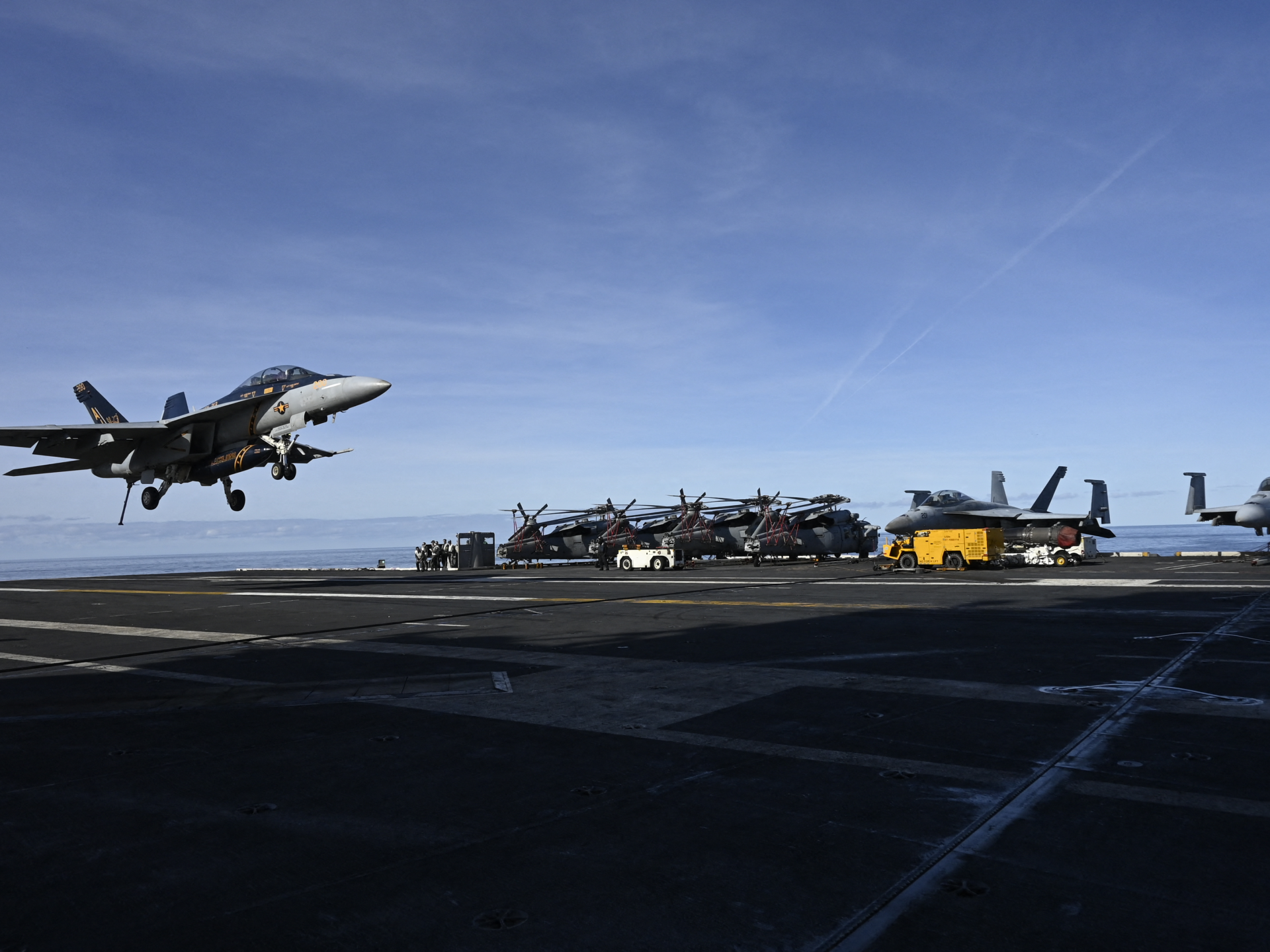
The United States is preparing to sharply reduce its air and naval assets designated for NATO operations in Europe, a move that aligns with a broader strategy to redirect military resources toward the Middle East, Asia, and the Americas. European officials have confirmed reports that the administration of President Donald Trump intends to significantly scale back the deployment of NATO-assigned fighter jets, maritime reconnaissance aircraft, and warships.
According to figures cited by European officials and reported by The New York Times, the number of F-16 and F-15E fighter jets allocated to NATO will decrease from approximately 150 to 100. Additionally, maritime surveillance aircraft are set to drop from 26 to 15, with eight aerial refuelling aircraft expected to be withdrawn completely. The plan also includes the redeployment of one of two bomber task force groups previously assigned to European defence, alongside the relocation of a missile-capable submarine and an aircraft carrier to other regions.
NATO officials have acknowledged the planned reductions, framing the pullback as a necessary step toward long-term sustainability. Allison Hart, a spokesperson for the alliance, told the Anadolu news agency that the change strengthens NATO’s defence plans by reducing over-dependence on a single ally. She described the shift as a reflection of broader changes within the alliance, aimed at putting NATO on a more sustainable footing for the decades to come.
Despite the alliance’s positive framing, the cuts are expected to impact NATO’s reconnaissance and long-range strike capacity, complicating defence planning for European member states. The reductions come at a time when Europe is increasingly focused on potential Russian military threats, with major troop movements along NATO’s eastern flank introducing instability to cross-Atlantic security. Washington’s shifting priorities are making it more difficult for European allies to identify clear defence priorities.
In response to the changing landscape, NATO’s Supreme Allied Commander, US General Alex Grynkewich, emphasised the need for rapid acquisition and fielding of long-range fires and drones to mitigate near-term risks. He stated during a Berlin airshow that these capabilities are essential for deterring and defending against potential aggression. Meanwhile, President Trump has continued to criticise NATO, describing the alliance as a “paper tiger” and urging European and Asian allies to increase defence spending to 3.5 percent of GDP.
Trump is expected to attend a NATO summit in Turkiye on July 7-8, an event that Secretary of State Marco Rubio has described as “probably the most important meeting in NATO’s history.” Rubio noted that the summit is necessary to clear up and fix outstanding issues, particularly regarding allied contributions and support for US initiatives, including the ongoing conflict involving Iran.