US strikes on southern Iran infrastructure widen war
Analysts suggest the destruction of bridges, tunnels and rail lines in Hormozgan province is designed to prevent military rebuilding and apply political pressure on Kharg Island without ground deployment.
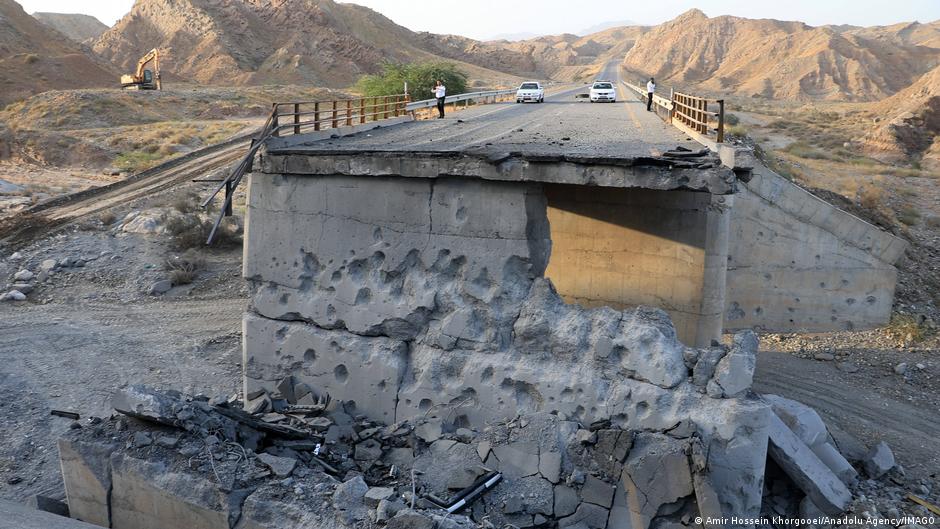
The United States has intensified military operations against critical infrastructure in southern Iran, marking a strategic shift from targeting coastal maritime installations to dismantling inland logistical networks. According to Iranian media and local officials, strikes over the past week have targeted bridges, tunnels, roads, rail lines, power facilities and desalination plants in Hormozgan province, resulting in at least eight fatalities.
The attacks, which began with strikes on six bridges in Khamir county and expanded to include tunnels and bridges near the provincial capital of Bandar Abbas, were executed in a deliberate pattern. The US military first targeted infrastructure west and north of the city, followed by a second wave hitting eastern and northern routes. This systematic destruction of transport and utility networks underscores a broader objective to hinder Iran’s ability to reposition forces and sustain military pressure in the region.
Shukria Bradoost, an international security analyst at Virginia Tech, told Deutsche Welle that the primary American goal remains reopening the Strait of Hormuz. However, she noted that Washington is moving beyond direct military threats to shipping by destroying the infrastructure that enables Iran to rebuild or reposition its forces. This shift reflects an effort to degrade Tehran’s logistical capacity while avoiding the complexities of a ground war.
Ahmad Vakhshiteh, director of the Moscow-based Center for Strategic Research on Developing Relations with the Middle East, suggested the US may be pursuing a "political seizure" of Kharg Island, Iran’s main oil export terminal, through repeated aerial attacks rather than deploying ground troops. By creating a perception that the island’s energy infrastructure is non-operational, Washington could increase domestic pressure on Iranian leaders without triggering a costly war of attrition.
The escalation follows a fragile truce and the recent burial of Ayatollah Ali Khamenei, which has intensified Iranian rhetoric with references to revenge. While Iran attempts to widen the energy crisis to shift the costs of war onto other nations, the Trump administration faces its own political and economic pressures. Both sides now navigate a complex landscape where military action is increasingly tied to regime survival and global energy stability.