US strikes Iran for 12th night as IRGC closes Strait of Hormuz
Washington continues air campaign while Tehran and Sana’ target shipping lanes in a widening conflict
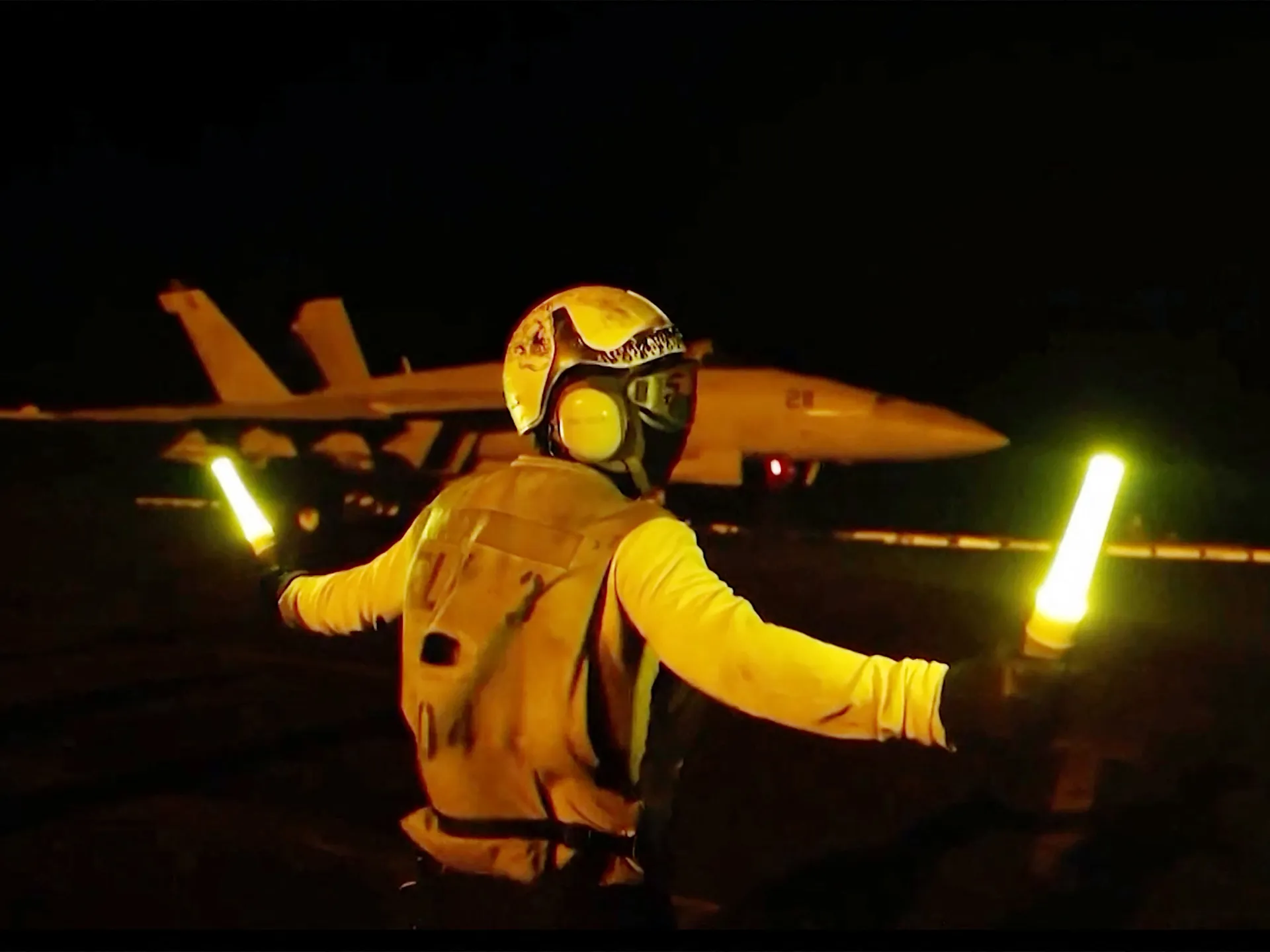
The United States conducted its 12th consecutive night of airstrikes against Iranian military targets on Thursday, intensifying a campaign that US Central Command (CENTCOM) described as aimed at degrading Tehran’s maritime and coastal surveillance capabilities. The strikes targeted missile storage facilities, air defence systems, and a power substation near the Bushehr nuclear plant, causing a brief power outage in the city.
Local officials reported significant casualties in western Iran, where US missiles struck the area around a passenger terminal in Shalamcheh, near the Iraqi border. The deputy governor of Khuzestan province confirmed two deaths and 11 injuries following the attack. Additional strikes were reported in the cities of Ramshir, Andimeshk, Sirik, and Jask, with reports of damage to an asphalt facility and two naval search and rescue vessels in Hormozgan province.
In response, Iran’s Islamic Revolutionary Guard Corps (IRGC) claimed it had struck US military assets in Kuwait and Jordan. The IRGC stated it destroyed a Patriot missile defence system, a drone hangar, and a THAAD radar at bases in both countries. The military branch argued that its actions were a necessary response to US violations of regional sovereignty, asserting that the presence of American forces infringes on the authority of Kuwaiti and Jordanian border guards.
Tensions in global shipping lanes escalated sharply as the IRGC declared the Strait of Hormuz closed to oil tankers. The guard claimed to have set a tanker ablaze in the strait after the vessel attempted to navigate a route it described as mine-laid under US orders. The IRGC warned that any ship attempting to pass through without coordination with Tehran would face similar consequences, effectively halting commercial traffic in the critical waterway.
Concurrently, Yemen’s Houthi rebels claimed responsibility for attacks on two Saudi oil tankers, the Encelia and the Layla, in the Red Sea. The Houthis described the operation as a “siege-for-siege” campaign, citing 12 years of what they termed a Saudi blockade against Yemen. Saudi state media confirmed the Encelia was hit, resulting in a fire at the bow, but reported that all crew members were safe. The UK Maritime Trade Operations Centre also confirmed a ship was targeted 70 nautical miles off the Saudi coast, causing a fire but no reported casualties.
As the conflict expands, US Defence Secretary Pete Hegseth has requested an additional $70 billion in war funding, while President Donald Trump has threatened further destruction of Iranian civilian infrastructure. The escalation marks a significant widening of the conflict, with disruptions now impacting both the Bab al-Mandeb strait and the Strait of Hormuz.