US State Department under pressure from White House as Iran tensions rise
America’s diplomats, who previously held global sway, are now facing significant pressure from President Donald Trump, coinciding with heightened tensions following the reported downing of a US helicopter.
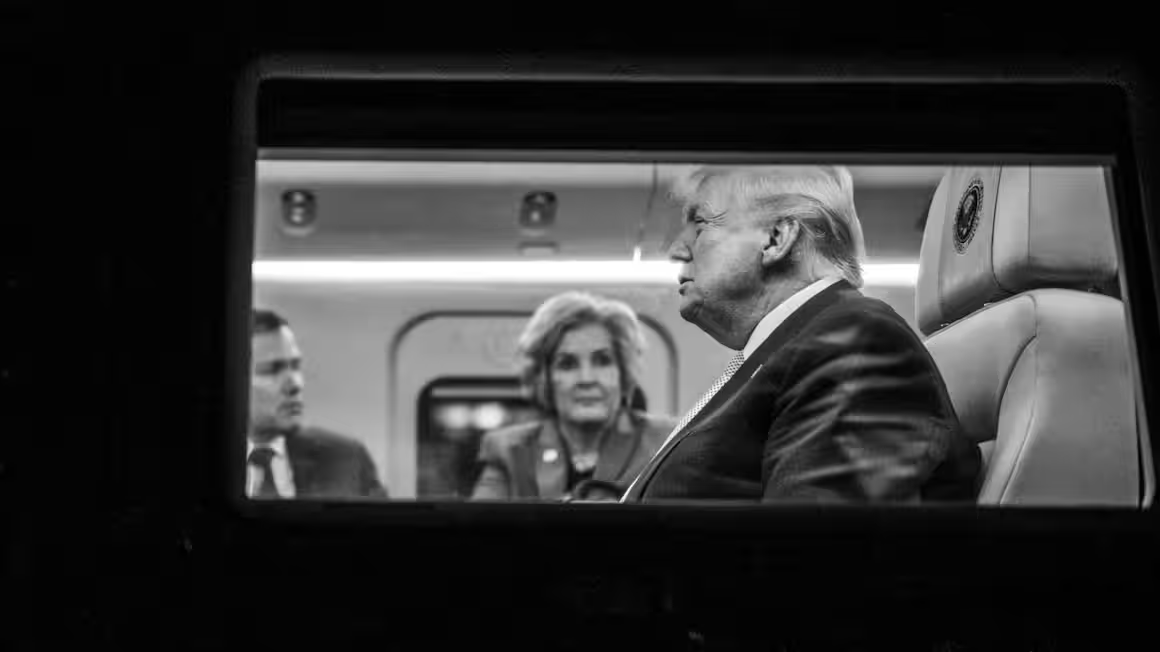
The US State Department is currently facing intense pressure from President Donald Trump, marking a notable shift from its historical position of global diplomatic influence, according to a report by the Financial Times. The publication characterises the current state of American diplomacy as the department being "besieged" by its own president, suggesting a significant change in the internal dynamics of US foreign policy execution.
This narrative of strained relations between the White House and the State Department emerges against a backdrop of escalating tensions with Iran. The situation intensified on Monday night when a US Army AH-64 Apache helicopter was reportedly shot down over the Strait of Hormuz. The incident has drawn immediate attention to the security of the vital waterway and the operational readiness of US forces in the region.
In response to the helicopter incident, President Trump issued a statement on Tuesday accusing Iran of the downing and vowing a necessary response. The President’s public accusations and commitment to action highlight the immediate security concerns driving current US policy, potentially overshadowing traditional diplomatic channels.
Prior to these developments, President Trump had met with Chinese President Xi Jinping in Beijing. Discussions during the meeting covered trade, artificial intelligence, and security in the Strait of Hormuz, indicating that high-level diplomatic engagement was still occurring even as tensions with Iran mounted. The meeting underscores the complex web of international relations the US is navigating, balancing major power dynamics with regional security crises.
The term "besieged" used by the Financial Times serves as a journalistic interpretation of the relationship between the President and the State Department. While the report suggests a loss of influence for American diplomats, it does not provide detailed accounts of specific operational constraints or internal departmental shifts. The exact circumstances of the helicopter downing remain subject to verification, with reports indicating that the full details of the incident are still being assessed.
As the US responds to the incident in the Strait of Hormuz, the interplay between executive action and diplomatic protocol remains a key focus for observers. The reported pressure on the State Department coincides with a period of heightened geopolitical activity, including ongoing discussions with China and direct confrontations with Iran. The long-term implications for US diplomatic efficacy and global influence are yet to be fully determined.
The Financial Times’ analysis points to a significant evolution in how US foreign policy is being managed, with the President taking a more direct and assertive role in responding to international incidents. This shift raises questions about the role of the State Department in shaping and implementing US strategy in an increasingly volatile global environment.