US Senate confirms Frank Garcia as top Africa envoy amid policy shift
Garcia’s appointment signals a pivot from aid to trade, with the Lobito Corridor highlighted as a model for securing critical mineral supply chains away from Chinese influence.
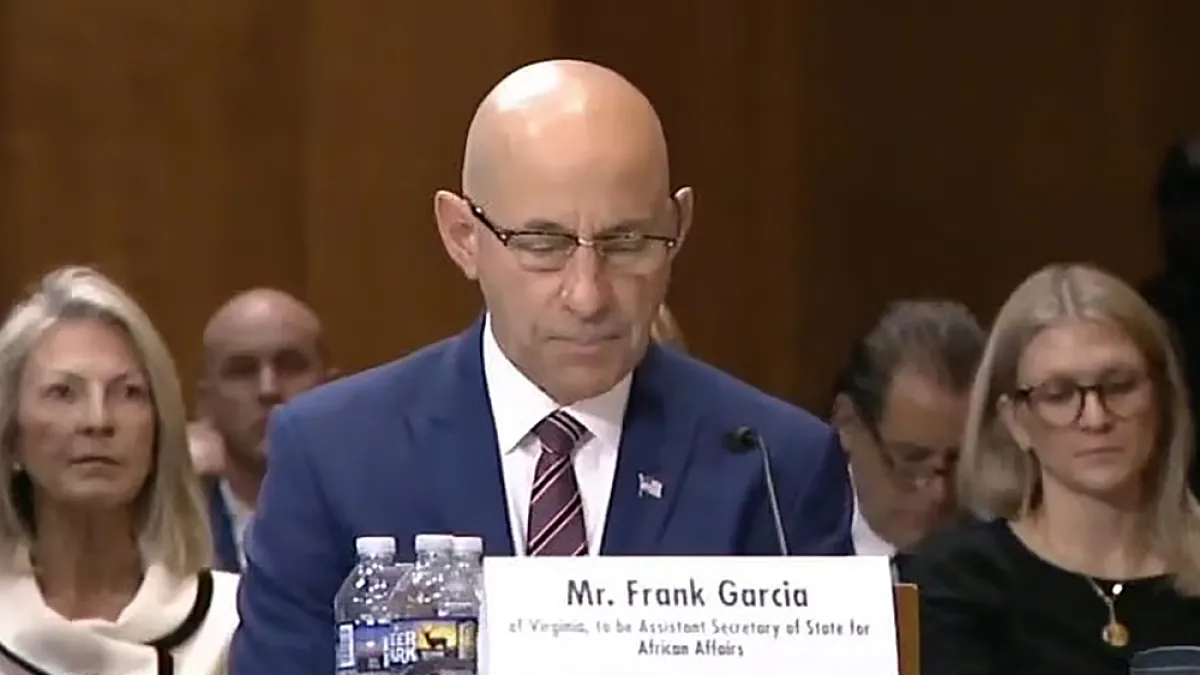
The US Senate has confirmed Frank Garcia as Assistant Secretary of State for African Affairs, ending a vacancy in Washington’s most senior diplomatic post for Africa that has persisted for more than a year. The approval was delivered as part of a broader block vote covering 49 nominees from the Trump administration, marking a significant step in filling one of the US’s most strategically important foreign policy roles.
Garcia, a former US Navy officer with 28 years of service, brings a background steeped in intelligence and defence. He spent approximately 15 years with the House Intelligence Committee, focusing on African affairs and participating in congressional delegations to the continent. His career also includes tenure as chief of staff at the National Reconnaissance Office and leading the defence consultancy Via Stelle between 2016 and 2021.
His confirmation follows a contentious process, having been approved by the Senate Foreign Relations Committee in March by a vote of 16 to six, with all initial opposition coming from Democratic senators. While the full Senate confirmation saw several Democrats ultimately support the appointment, Garcia’s profile has drawn scrutiny in some quarters. Nigerian newspaper The Whistler noted he is largely unknown among African policy and academic communities, citing a lack of significant published work on African affairs.
During his confirmation hearing on March 5, Garcia articulated a sharp departure from previous US engagement strategies. He argued that past commitments had prioritised aid and dependency, often being open-ended and focused on what he described as spreading divisive ideologies. Working through Secretary of State Marco Rubio, Garcia stated the administration is shifting towards trade and investment for mutual benefit, anchored in core US national interests and aligned with the America First approach.
Garcia identified the Lobito Corridor as a primary model for this new direction. The 1,300km rail and transport route links the Atlantic port of Lobito in Angola to the mineral-rich regions of the Democratic Republic of the Congo and Zambia. By upgrading this infrastructure to facilitate the export of copper, cobalt, and other critical minerals, the project aims to provide a faster westward route to global markets, reducing reliance on longer routes through southern and eastern Africa.
The United States and European allies are backing the corridor to secure alternative supply chains for critical minerals essential for electric vehicles and clean energy technologies. This effort positions the US in direct competition with China, which currently holds significant influence over mining and infrastructure networks across Central and Southern Africa. Garcia indicated that all US spending, including humanitarian aid, would be assessed based on its contribution to national security and economic interests.
The appointment fills a critical gap in US diplomatic capacity at a time of intensifying global competition for influence across the continent. While proponents argue the corridor could boost regional trade and create jobs in Angola, the DRC, and Zambia, critics suggest it may primarily serve as an export route for raw materials. Regardless of the debate, Garcia’s confirmation underscores a definitive pivot in US policy towards a more transactional and security-focused engagement with Africa.