US revives 2003 charges against former Cuban president Raúl Castro over 1996 plane downing
Acting Attorney General Todd Blanche announces murder and conspiracy charges at Freedom Tower in Miami, coinciding with new sanctions and an oil blockade that have exacerbated economic hardship on the island.
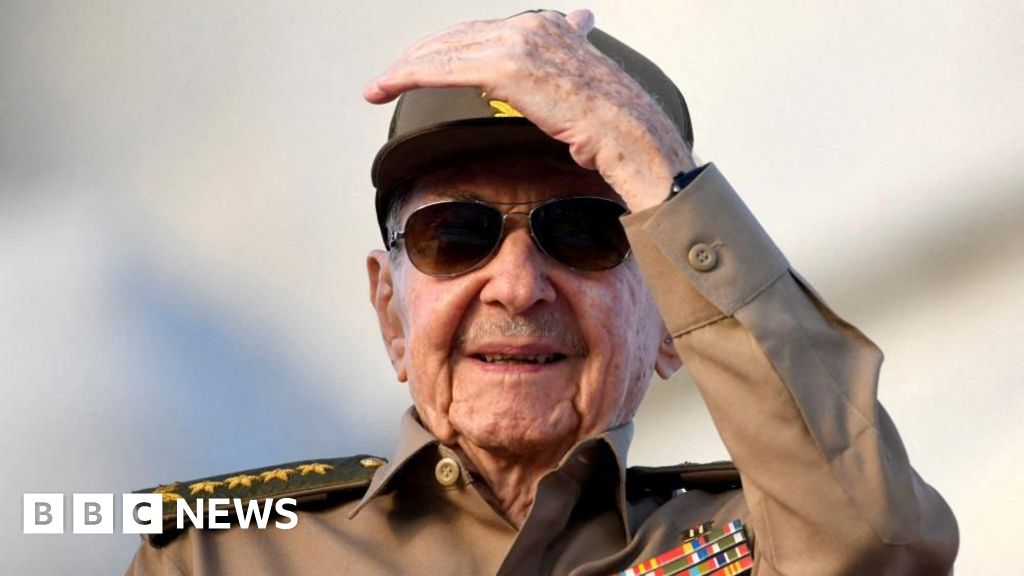
The United States has formally charged former Cuban president Raúl Castro with conspiracy to kill US nationals, murder, and destruction of aircraft in relation to the 1996 downing of two planes belonging to the Cuban American group Brothers to the Rescue. The indictment, revived from legal action originally brought in 2003, accuses Castro and five other individuals of killing four people, including three Americans. Acting Attorney General Todd Blanche announced the charges at Freedom Tower in Miami, confirming that a warrant for Castro’s arrest has been issued.
The specific charges include four individual counts of murder over the deaths of Armando Alejandre Jr, Carlos Alberto Costa, Mario Manuel de la Peña, and Pablo Morales. At the time of the incident, Castro held the position of Minister of the Armed Forces and faced international condemnation for the crash. Blanche stated that the United States expects Castro to appear in court, either voluntarily or through other means, despite the former leader’s age of 94 and his current status of having relinquished active government roles.
Cuban president Miguel Díaz-Canel condemned the charges as a political manoeuvre devoid of legal foundation, asserting that Cuba acted in legitimate self-defence within its jurisdictional waters. Cuban state media and officials accused the US of distorting facts and using the indictment to justify potential military aggression. Díaz-Canel also blamed the US for imposing collective punishment on the Cuban people, rejecting claims by US secretary of state Marco Rubio that the military-run conglomerate GAESA is responsible for the country’s ongoing blackouts and food shortages.
The announcement coincides with heightened US pressure on Cuba, including new sanctions on the country’s intelligence agency and an oil blockade that has contributed to severe economic hardship. Earlier on Wednesday, Rubio issued a message to the Cuban people timed to the country’s independence day, outlining a new path between the two nations while placing blame for economic distress on GAESA, which controls much of the island’s lucrative economic sectors.
Legal experts and analysts note the strategic implications of the indictment. Wiliam LeoGrand of American University suggested the strategy is to increase pressure gradually to force the Cuban government to surrender at the bargaining table. However, Roxanna Vigil of the Council on Foreign Relations warned that it is unlikely the Cuban regime will surrender without a fight, noting that any move involving the Cuban regime would be difficult for the Cuban diaspora in the United States to accept.
The US justice department explicitly declined to compare this case to the indictment of Venezuelan president Nicolás Maduro, noting that the US had previously staged a military operation to seize Maduro. President Donald Trump, when asked about the political aspect of the indictment, highlighted his relationship with Cuban-Americans and framed the action as a humanitarian effort. The announcement was met with enthusiasm by Cuban Americans in attendance, many of whom described the move as long-overdue justice.
Recent diplomatic conversations between US and Cuban representatives, including Raúl Castro’s grandson, are unlikely to be smoothed by these charges. Instead, the Cuban side has shown signs of further entrenching into its "no surrender, no concessions" position, with state media outlets blasting what they called false accusations. The indictment of Castro takes aim at a key figurehead of Cuba’s communist leadership as the country faces intense US pressure to make significant political and economic reforms.