US resumes maritime blockade of Iran as Hormuz tensions escalate
Oil prices rise 3% and Japan seeks alternative supply routes as US and Iran continue military exchanges over the strategic chokepoint.
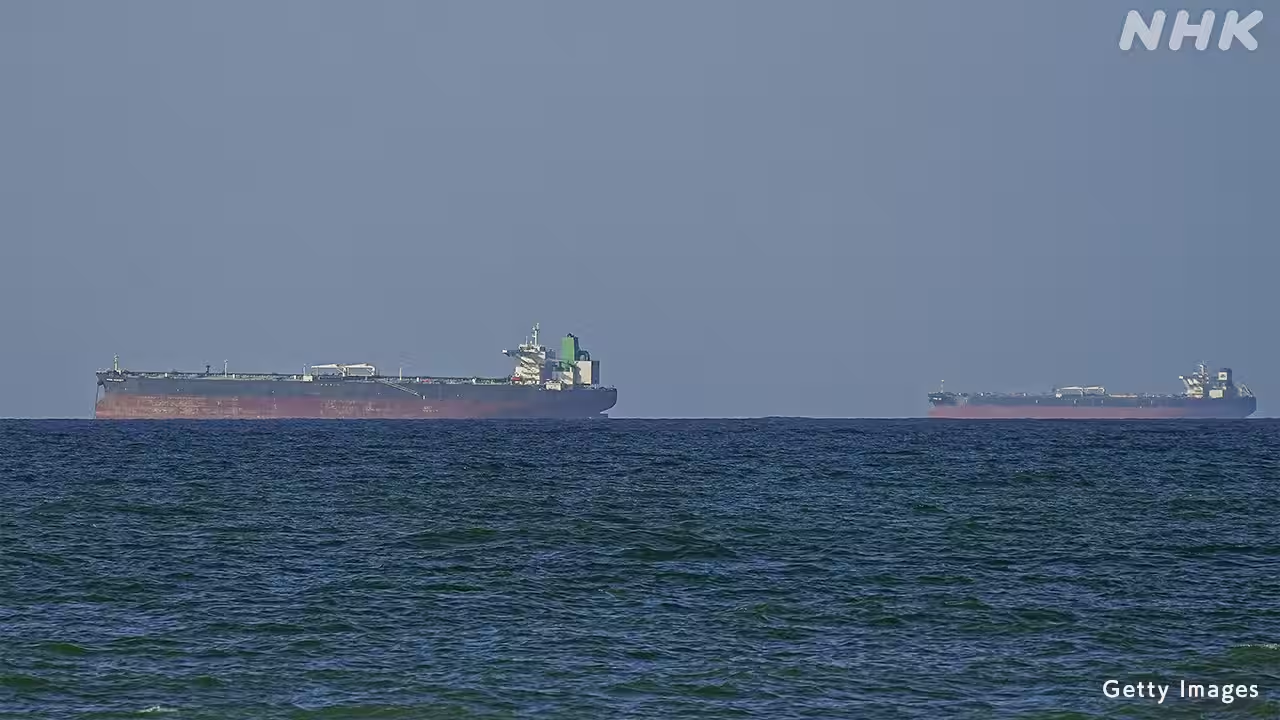
US President Donald Trump announced on 13 July the resumption of a maritime blockade against Iran, introducing a proposed 20% toll for commercial shipping transiting the Strait of Hormuz. The decision marks a significant escalation in policy rhetoric regarding the critical energy chokepoint, coming as the United States and Iran continue to exchange attacks and a fragile ceasefire appears to be fracturing.
The announcement follows a week of intensifying military posturing, including US airstrikes in southern Iran and Iranian strikes on two vessels attempting to pass through the strait. This latest development constitutes the fourth round of attack exchanges between the two nations within a single week, raising serious concerns about the stability of global oil supplies and the prospects for a diplomatic resolution.
In response to the blockade and the proposed tolls, Iran’s military command, Khatam al-Anbiya, declared the waterway closed to all traffic and threatened to target any vessel attempting to transit the Strait of Hormuz. The Iranian military’s assertion of a complete closure stands in direct contradiction to statements from US Central Command, which denied the strait was shut, maintaining that commercial ships continue to move freely through the region.
The geopolitical instability has already triggered market volatility, with oil prices rising by 3% following reports of the proposed tolls and the breakdown of ceasefire efforts. The uncertainty surrounding the exact duration and scope of the blockade measures has prompted international actors to reassess their energy security strategies.
Japan’s Ministry of Economy, Trade and Industry is currently advancing efforts to secure crude oil supplies via alternative routes to the Strait of Hormuz. As the situation remains fluid, the timeline for a potential ceasefire remains unclear, with both nations continuing to engage in military exchanges that threaten further disruption to global energy markets.