US President Trump to visit Beijing for high-stakes summit with Xi Jinping
Agenda focuses on stalled Iran conflict, trade disputes, and Taiwan relations amid pressure on both leaders to avoid diplomatic embarrassment.
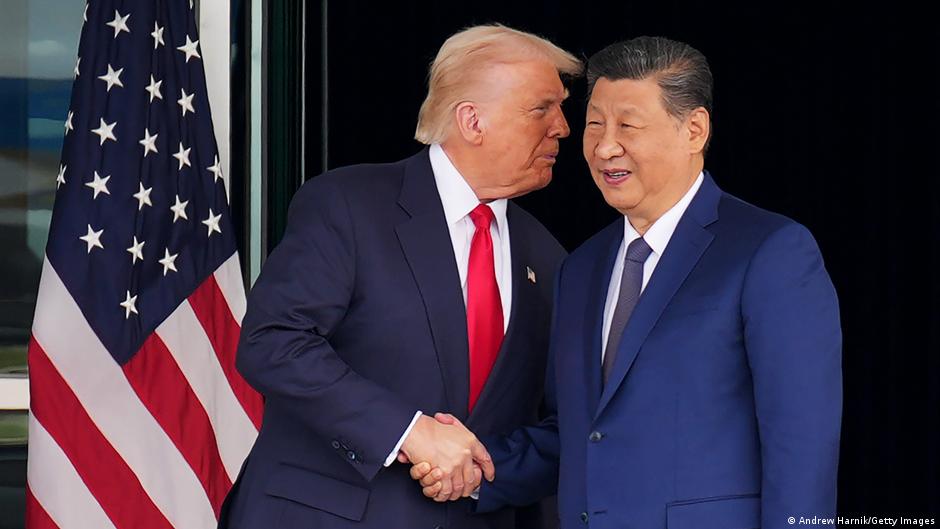
US President Donald Trump is scheduled to visit Beijing later this week to hold a summit with Chinese President Xi Jinping. The meeting aims to secure foreign policy successes ahead of the US midterm elections, with key agenda items including the ongoing conflict in Iran, trade disputes, and relations regarding Taiwan. Negotiators from both nations are expected to hold preliminary talks in Seoul, South Korea, before the leaders meet in Beijing.
Trump's poll numbers are currently low ahead of the November midterms, driving his need for a foreign policy victory. He seeks to leverage the meeting to improve his standing following stalled military strikes on Iran, while also discussing the release of pro-democracy figure Jimmy Lai and potential arms sales to Taiwan. Both leaders face pressure to avoid diplomatic embarrassment, with Beijing emphasising the One-China Principle and the US navigating its Taiwan Relations Act amidst global tensions over the Strait of Hormuz blockade.
The Strait of Hormuz remains effectively blocked since early March due to threats of Iranian strikes, cutting off approximately 20 per cent of global oil supply. Peace negotiations between Tehran and Washington are described as deadlocked, leaving the US to look toward China for potential mediation or distraction regarding the wider conflict. This energy crisis provides a critical backdrop for the upcoming diplomatic engagement.
Tensions persist over a trade deficit, with the US imposing tariffs on Chinese goods and China threatening to cut off rare earth mineral supplies. Previous meetings have failed to produce major breakthroughs, and the state of play remains in limbo. Trump's message to the Chinese leadership is clear: the world should not just buy Chinese products, and China should also buy US products to offset the trade surplus.
Beijing adheres to the One-China Principle, viewing Taiwan as a breakaway province. The US operates under the Taiwan Relations Act, which allows for the supply of defensive arms. In December, Trump approved a $11.1 billion arms sale to Taiwan, though delivery has not yet commenced. Trump has stated he will discuss with Xi whether the US should continue supplying defensive arms to Taiwan, noting that Xi would prefer the US not to do so.
Trump also indicated he will discuss the release of Jimmy Lai, who is currently serving a 20-year sentence in China. Beijing regards the question of Taiwan's legal status as a red line that must not be crossed in diplomatic relations with the United States. Washington's current official wording is that the US does not support Taiwan's independence, but Beijing expects a statement from the US president to be favourable to its position.
Analysts expect some form of agreement or big deal to be announced, though the specific outcomes of the upcoming summit remain unknown. It is unclear if the preliminary talks in Seoul will yield concrete progress before the leaders meet, and the extent to which China will leverage the Iran situation to mediate or distract from Taiwan issues is speculative.