US President Trump Cancels Planned Military Strikes on Iran Following Diplomatic Approval
The cancellation of imminent attacks on Iranian oil infrastructure marks a significant de-escalation in regional tensions, with the Dow Jones Industrial Average surging in response to the announcement.
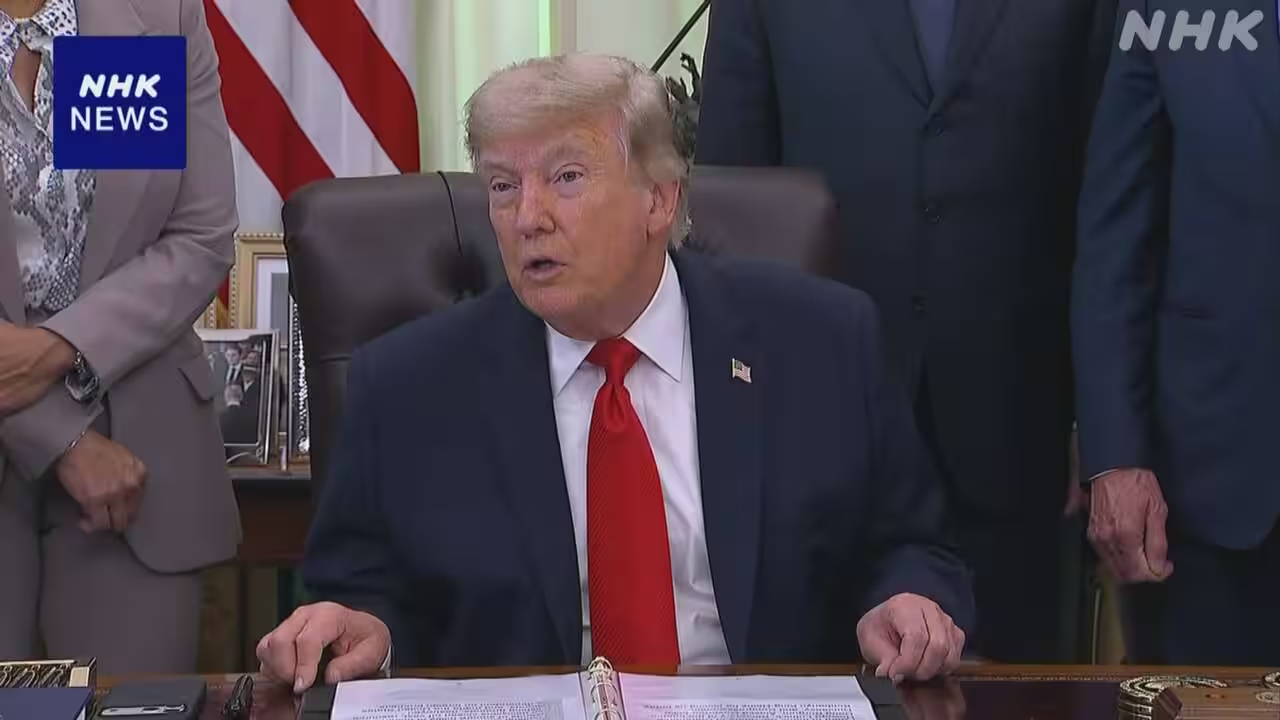
US President Donald Trump announced on June 11 (US Eastern Time) that he has cancelled a planned military attack on Iran, marking a sharp reversal from earlier threats to strike the nation "very hard" and seize control of its oil infrastructure. The decision, posted via social media, was attributed to the fact that the content of ongoing negotiations had been presented to and approved by the highest levels of the Iranian leadership.
The announcement signals a significant de-escalation in a period of heightened military posturing between the two nations. Prior to the cancellation, Trump had issued stark warnings regarding potential strikes, specifically targeting Kharg Island, a critical hub for Iran's oil exports. The pivot comes amidst a fragile ceasefire and follows a cycle of threats, including Iran’s recent warning to target vessels in the Strait of Hormuz and the shooting down of a US helicopter during recent engagements.
Financial markets reacted immediately to the news of the suspended hostilities. The New York Dow Jones Industrial Average rose by more than 1,000 points at one point during trading, driven by buy orders as investors responded to the reduced risk of regional conflict. This market movement underscores the economic sensitivity surrounding the geopolitical stability of the Middle East and the security of global energy supplies.
The cancellation follows high-level discussions that have reportedly progressed the terms of a peace agreement. While specific details of the negotiated contents have not been fully disclosed, the White House indicated that the approval from Iranian leadership was a key factor in halting the planned military action. This development occurs against a backdrop of broader diplomatic activity, including a recent summit in Beijing where US President Trump engaged with international business leaders on issues including trade, artificial intelligence, and Strait of Hormuz security.
Iran continues to face significant domestic challenges, including hyperinflation and military uncertainty, which may influence its engagement in these high-stakes negotiations. The long-term stability of the ceasefire remains uncertain, and it is unclear whether the cancellation of strikes will lead to a permanent resolution or if further escalation is possible. The situation remains fluid as the international community monitors the implementation of the agreed-upon negotiation terms.