US pauses $14bn Taiwan arms sale to conserve munitions for Iran conflict
The decision, announced during a Senate hearing, follows mixed signals from President Donald Trump and raises questions about US commitment to the island amid ongoing tensions with Beijing.
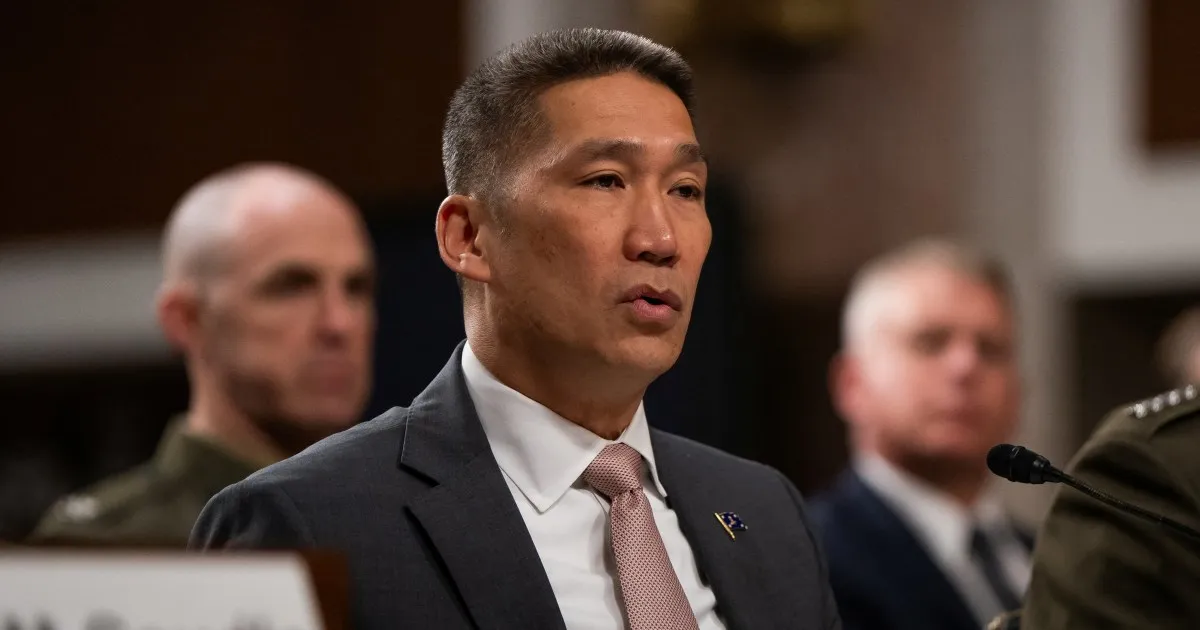
The United States has suspended a $14bn arms sale to Taiwan to ensure sufficient munitions are available for its ongoing conflict with Iran, Acting Navy Secretary Hung Cao confirmed during a Senate hearing on Thursday. The pause affects the largest-ever proposed weapons transfer to the island, which was approved by Congress in January but remains pending final presidential sign-off.
Cao told the Senate Appropriations Subcommittee on Defense that the decision was made to support "Epic Fury," the US military operation in Iran. While noting that current stockpiles are sufficient, Cao stated that foreign military sales would resume when the administration deems it necessary. He clarified that the final authority to approve or restart the package rests with Secretary of Defense Pete Hegseth and Secretary of State Marco Rubio.
The announcement comes amid complex diplomatic signals from President Donald Trump, who has suggested the arms package could serve as a negotiating lever with China. Trump, who recently discussed the sale with Chinese leader Xi Jinping in Beijing, told Fox News he might or might not approve the deal. This approach contrasts with the decades-old precedent of excluding Beijing from consultations on arms sales to Taiwan, a policy rooted in the 1979 Taiwan Relations Act.
Taiwanese Premier Cho Jung-tai responded to the suspension by affirming that Taipei would continue to pursue arms purchases. However, William Yang, a senior analyst at the Crisis Group, warned that the pause could exacerbate anxiety regarding US support and complicate efforts for the Taiwanese government to secure additional defence budgets in the near future.
The US and Iran agreed to a ceasefire on April 8, though a permanent peace deal has not yet been reached. Meanwhile, domestic opposition to the conflict is growing, with a recent poll indicating that 60 percent of Americans oppose the war. Trump has also indicated he may speak directly with Taiwanese President William Lai Ching-te, a move that would break with four decades of diplomatic protocol and likely provoke a strong reaction from Beijing.