US officials recoil from Trump’s escalating attacks on Canada
The trade dispute between Washington and Ottawa has moved beyond economic measures, with US government figures expressing discomfort at the President’s rhetoric towards their long-term ally.
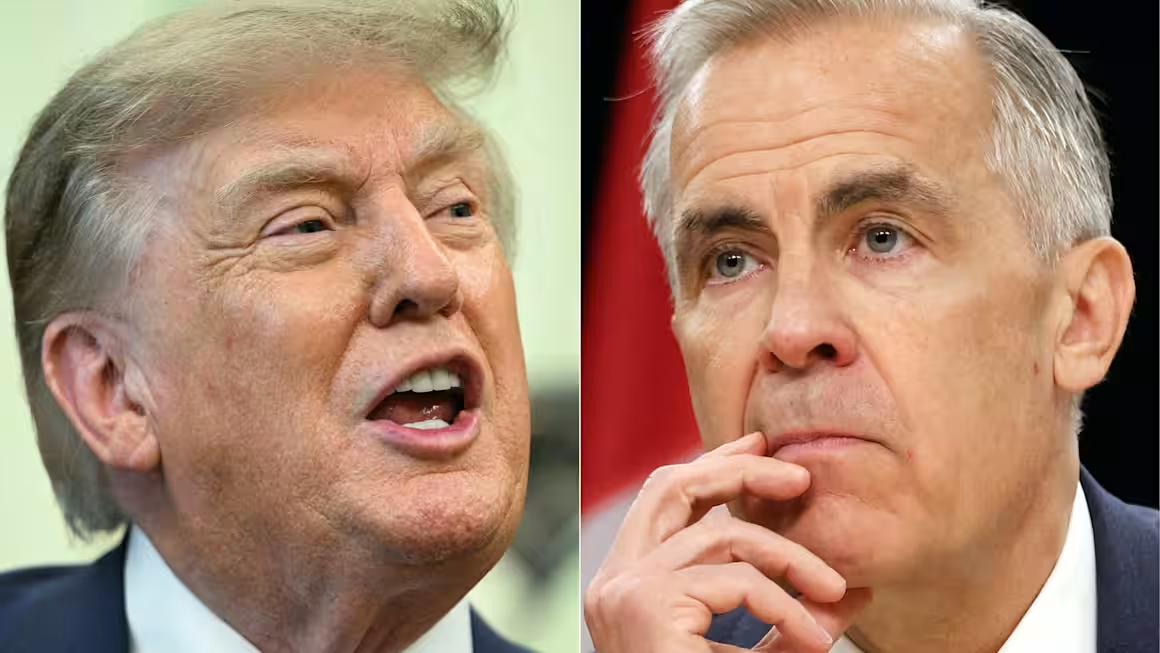
The deepening trade war between the United States and Canada has descended into a cycle of insults and recrimination, prompting a notable shift in sentiment within the US government. According to reporting by the Financial Times, senior US officials are recoiling from President Donald Trump’s escalating verbal attacks on their long-term ally, marking a significant departure from the typically measured tone of bilateral diplomatic relations.
This diplomatic tension sits against a backdrop of significant economic measures. The dispute has moved beyond standard tariff negotiations to include personal jabs, causing discomfort among Washington policymakers who are watching the relationship with their northern neighbour deteriorate. The reported reaction suggests an internal division or at least a degree of unease regarding the President’s approach to a key trading partner.
The economic stakes of the conflict remain high, anchored by a major tariff announcement that has further strained the bilateral relationship. President Trump previously announced a 50 per cent tariff increase on imports of cars, trucks, and auto parts from Canada. This substantial hike is scheduled to take effect on 1 January 2027, providing a concrete deadline for the ongoing negotiations and adding urgency to the diplomatic standoff.
For investors and market observers, the combination of high tariffs and personal recrimination signals a prolonged period of uncertainty. The automotive sector, in particular, faces direct exposure to the 50 per cent levy, which could reshape supply chains and cost structures for manufacturers operating across the North American border. The timing of the tariff implementation allows for a final window of negotiation, though the current tone suggests that a swift resolution may be elusive.
The Financial Times notes that the descent into insults indicates a breakdown in the usual diplomatic channels that typically manage such disputes. While the specific identities of the officials expressing discomfort have not been named, the characterisation of their reaction as "recoiling" implies a level of disapproval that is unusual for a close ally. This dynamic adds a layer of political risk to the economic calculations already in play.
As the trade war intensifies, the focus remains on whether the economic pain of the tariffs will force a de-escalation in rhetoric. Until then, the relationship between the two nations appears to be in a fragile state, with both economic policy and diplomatic goodwill under pressure.