US-Nigeria Airstrikes Kill 175 IS Fighters Amidst Growing Policy Debate
Washington expands its military footprint in the Sahel, yet analysts warn that kinetic force alone cannot dismantle the recruitment networks fueling the insurgency.
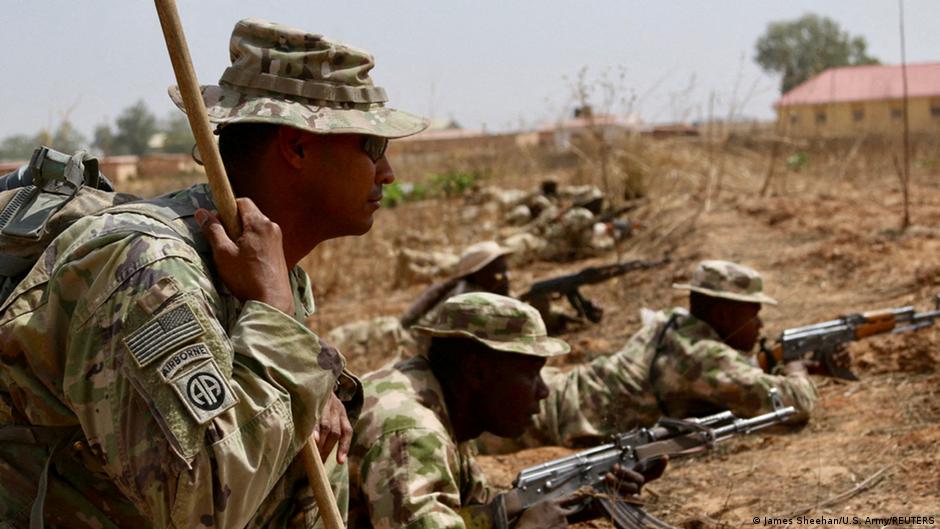
Joint airstrikes led by the United States and Nigeria have killed at least 175 fighters of the Islamic State terror group in the nation’s northeast, including Abu-Bilal al-Minuki, who US President Donald Trump identified as the group’s global second-in-command. The operation, confirmed by US Africa Command (AFRICOM), marks a significant escalation in American military involvement, shifting from a previously understood role limited to training and intelligence-sharing to active operational participation. Nigerian President Bola Tinubu publicly thanked President Trump for the support, describing the strikes as decisive against terrorist enclaves and expressing hope for continued cooperation.
AFRICOM commander General Dagvin Anderson stated during a Congressional hearing in Washington that Nigeria had been instrumental in the operation, particularly in target development and intelligence gathering. This collaboration builds upon a security partnership that dates back nearly two decades. However, the nature of this alliance has evolved rapidly. Following joint counterterrorism operations and airstrikes in late 2025, the United States expanded its military presence in Nigeria in early 2026. While Washington maintains that its deployment focuses on training, intelligence-sharing, and advisory support, recent combat operations suggest a more active and operationally significant role for US forces.
The expansion of US military activity has sparked domestic debate in Nigeria regarding transparency and the scope of the partnership. Malik Samuel, a senior researcher at Good Governance Africa, noted that the presence of US troops was originally intended to be limited to intelligence-gathering and training, explicitly ruling out combat operations. He argued that the Nigerian government has not been transparent about the exact roles US troops are playing, particularly given reports that American forces are directly participating in strikes. This lack of clarity has contributed to a divided public mood, where the military might displayed against the Islamic State is welcomed, yet the broader partnership leaves many questions unanswered.
Security concerns extend beyond transparency to the potential risks of civilian harm and the sustainability of the current strategy. Analysts warn that while the strikes are tactically effective, they do not address the root causes of the insurgency. The conflict, which began with the Boko Haram Islamist extremist insurgency in 2009, has since evolved to include the Islamic State West Africa Province (ISWAP). The United Nations estimates that more than 40,000 people have been killed and over 2 million displaced since the violence began. Despite AFRICOM’s mission to support African partner forces, there has been little improvement on the ground, prompting President Tinubu to declare a nationwide state of emergency in 2025.
Experts argue that relying solely on military force is not a long-term solution. Malik Samuel highlighted that while the joint strikes destroyed checkpoints, weapons caches, logistical hubs, and financial networks, they fail to address the elaborate recruitment processes of groups like Boko Haram, which include the use of child soldiers. He cautioned that sustained military operations increase the risk of civilian casualties in crossfire and that the long-term strategy must focus on preventing recruitment and reintegrating former fighters. As the US deepens its engagement, the challenge remains to balance immediate security gains with a sustainable political and social strategy.