US military drills in South Korea proceed despite presidential directive to scale back
Joint exercises continue as planned, highlighting a divergence between political rhetoric and operational execution in the region.
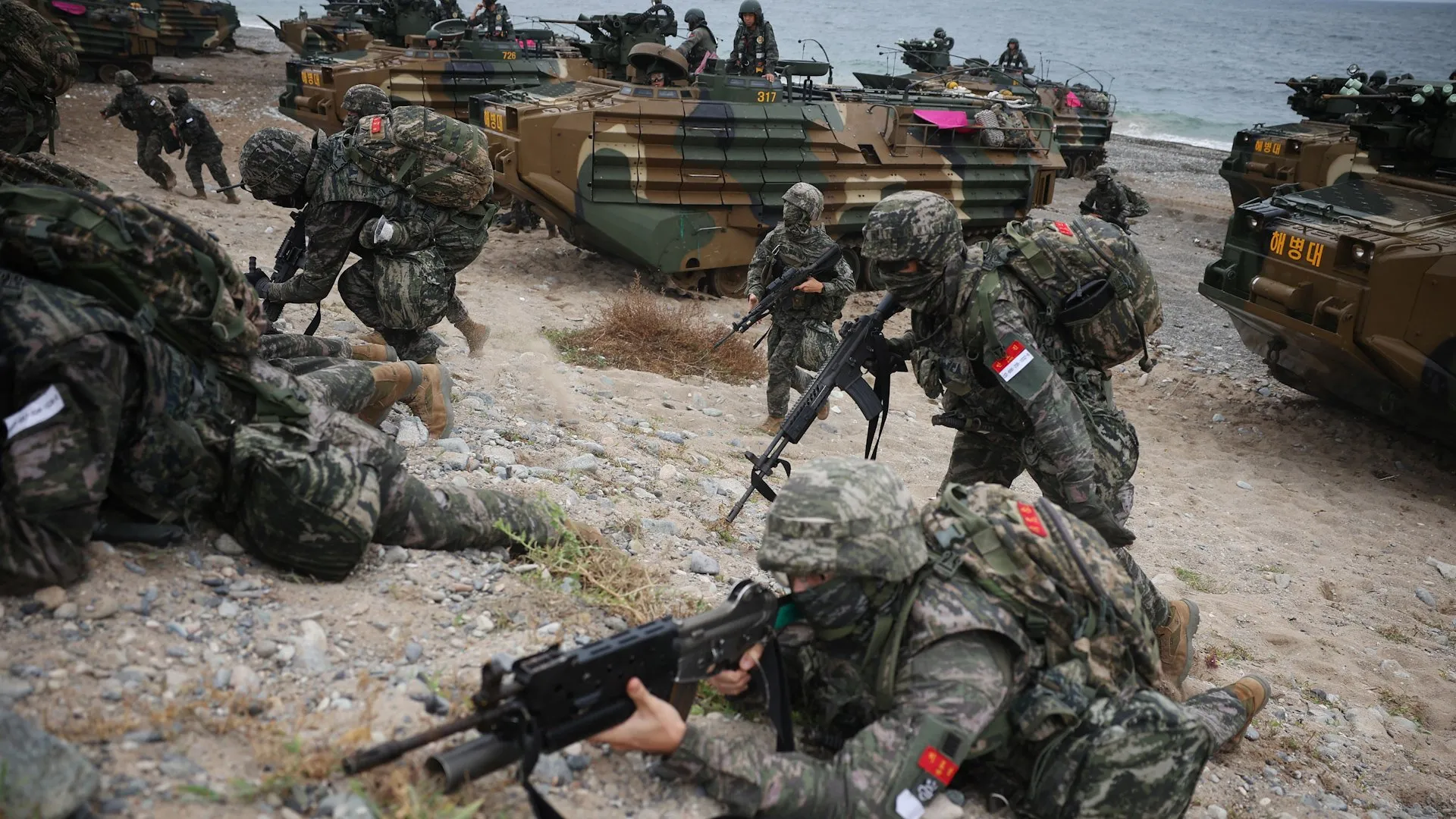
US President Donald Trump has issued a directive ordering the US military to scale back joint exercises with South Korea, a move that has created immediate friction between political statements and military operations. The order was released just hours before the commencement of the scheduled 11-day joint drills, prompting a complex response from both Washington and Seoul.
In the directive, President Trump characterised the upcoming exercises as "inappropriate and hostile". He further justified the reduction in scope by claiming that South Korea had refused to assist in a war against Iran. US Defence Secretary Pete Hegseth is associated with the implementation of this order, though specific operational details regarding the extent of the "scale back" versus earlier reports of a "substantial reduction" remain unclear.
Despite the presidential directive, the joint military exercises proceeded as planned on Monday. This adherence to the original timetable aligns with previous statements from South Korea’s defence ministry, which had affirmed its intention to conduct the drills as notified, regardless of political pressure. The operational reality on the ground thus diverged significantly from the President’s public rhetoric.
The incident underscores the structural complexities of the alliance, where military protocols often operate independently of sudden political shifts. While the President’s order cited specific geopolitical grievances, the South Korean defence ministry’s stance indicated a commitment to the pre-arranged security schedule, suggesting that the directive was interpreted as a political statement rather than an operational cancellation.
This development adds a layer of uncertainty to the region’s security landscape, particularly given the ongoing tensions involving North Korea and its leader, Kim Jong-un. The contrast between the White House’s assertion of hostility and the continued execution of the drills highlights the challenges of aligning diplomatic posturing with established defence commitments.
As the 11-day exercise continues, observers are monitoring whether the "scale back" measures will manifest in reduced troop presence or modified tactical scopes, or if the military apparatus will maintain the full scope of the original plan. The situation remains fluid, with the immediate outcome being the uninterrupted progress of the drills despite the high-level political intervention.
The event serves as a case study in the divergence between executive orders and military execution, raising questions about the authority and immediate enforceability of such directives in allied defence operations. The US military’s adherence to the schedule suggests a robust institutional framework that prioritises established operational plans over last-minute political adjustments.